



Introduction
You brush twice a day. You rinse with mouthwash. You pop a mint before every meeting. Yet somehow, that unpleasant odour lingers — and deep down, you’re afraid people are noticing.
You’re not alone. Millions of people silently struggle with bad breath causes and treatment questions they’re too embarrassed to ask aloud. The truth is, persistent bad breath (clinically called halitosis) is rarely about poor hygiene alone. It’s often a signal your mouth — or body — is telling you something important.
At City Smiles Dental Care in South Kolkata, we see patients from Garia, Tollygunge, Jadavpur, and surrounding areas who have tried everything over-the-counter and still can’t shake the problem. This guide gives you the honest answers you’ve been looking for.

What Actually Causes Bad Breath? (It’s More Than Just Food)
Most people assume bad breath is caused by eating garlic or skipping a brush. While those are contributing factors, the real culprits are often deeper.
The most common bad breath causes include:
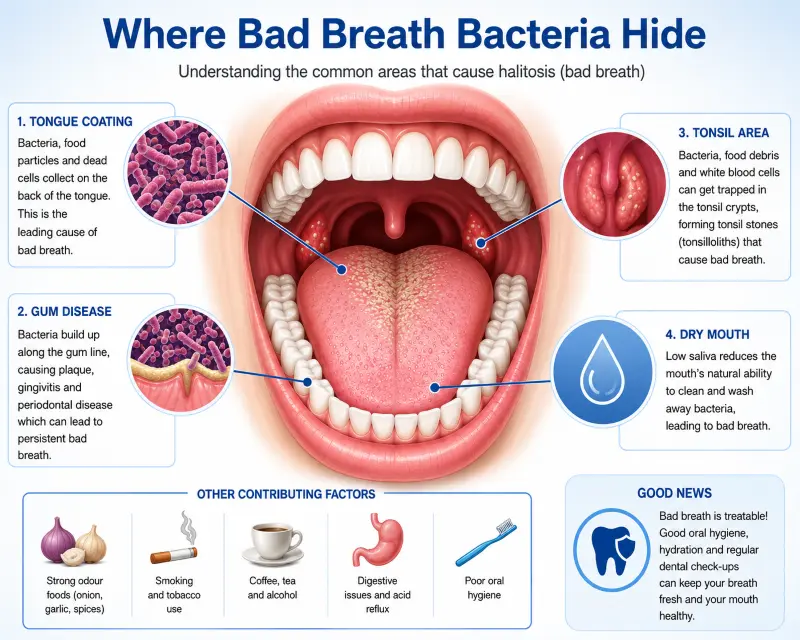
- Oral bacteria — Sulphur-producing anaerobic bacteria live on the back of your tongue and between teeth. These bacteria release volatile sulphur compounds (VSCs) that smell like rotten eggs.
- Dry mouth (Xerostomia) — Saliva is your mouth’s natural cleanser. When saliva production drops — due to stress, medications, or mouth breathing — bacteria multiply rapidly.
- Gum disease (Periodontitis) — Infected gum pockets trap food debris and bacteria far below the gum line, where brushing can’t reach.
- Dental cavities and cracked teeth — Decayed tooth structure becomes a breeding ground for odour-causing bacteria.
- Tongue coating — The rough surface of the tongue accumulates a thick layer of bacteria, dead cells, and food particles.
- Tonsil stones (Tonsilloliths) — Small calcified deposits that form in the crevices of the tonsils and emit a strong sulphurous smell.
- Systemic conditions — Diabetes, kidney disease, acid reflux (GERD), and respiratory infections can all cause distinct types of bad breath.
- Dietary habits — Coffee, alcohol, onions, and heavily spiced food contribute to transient but powerful odours.
Understanding the root cause is the only way to find a lasting solution. This is why a professional diagnosis always beats a home guess.
Why Does My Breath Still Smell Even After Brushing?
This is one of the most common questions our patients in South Kolkata ask — and the answer surprises most people.
Brushing only addresses the surfaces of your teeth. It does not:
- Clean the back third of your tongue (where most odour-producing bacteria live)
- Reach below the gum line into periodontal pockets
- Remove tonsil stones
- Address systemic causes like GERD or diabetes
- Replace lost saliva or treat dry mouth
If your breath smells even after brushing, there’s a high probability that one of the following is the issue:
- You have an active gum infection — even a mild, painless one
- Your tongue is not being cleaned properly
- You have untreated cavities acting as bacterial reservoirs
- You may have an underlying health condition
A 15-minute dental check-up can identify what brushing cannot. Book an assessment with us at City Smiles Dental Care.
Tongue Cleaning vs Mouthwash: Which One Actually Works?
There’s a popular belief that mouthwash is the answer to bad breath. Walk into any pharmacy and you’ll find dozens of brands making bold promises. So, which is more effective — tongue cleaning or mouthwash?
The honest answer: Tongue cleaning wins — but ideally, you need both.
Tongue Cleaning
The surface of the tongue is covered in tiny projections called papillae. Bacteria, food debris, and dead cells accumulate in these crevices throughout the day — especially at the back of the tongue.
Using a tongue scraper (not your toothbrush) once daily, preferably in the morning, can:
- Reduce VSC-producing bacteria by up to 75%
- Improve taste sensitivity
- Significantly reduce morning breath
Tip from our dentists: Always scrape from the back of the tongue to the front, rinsing the scraper after each pass. Do this before brushing.
Mouthwash
A good antibacterial mouthwash (containing cetylpyridinium chloride or chlorhexidine) can temporarily suppress bacterial activity. However:
- Its effect lasts only 2–4 hours
- It does not remove the physical coating on the tongue
- Alcohol-based mouthwashes can worsen dry mouth over time, making bad breath worse in the long run
Recommendation: Choose an alcohol-free, antibacterial mouthwash. Use it after brushing and tongue scraping — not as a replacement for either.
Is There a Permanent Solution for Bad Breath?
Yes, but it depends on correctly identifying the cause. Here’s what lasting halitosis treatment looks like:
Step 1: Professional Dental Diagnosis
A dentist will examine your:
- Teeth for cavities, cracks, and restorations
- Gums for signs of periodontal disease
- Tongue and throat
- Salivary flow and oral pH
This is where most permanent solutions begin. For patients across South Kolkata visiting City Smiles, a thorough diagnosis often reveals a fixable cause within the first appointment.
Step 2: Scaling and Root Planing (Deep Cleaning)
If gum disease is a contributing factor, professional scaling removes the tartar and bacteria that live below the gum line — areas that brushing can never reach. This is often the single most impactful treatment for chronic halitosis.
Step 3: Cavity Treatment
Untreated cavities harbour bacteria continuously. Fillings, root canals, or extractions (when necessary) remove these bacterial reservoirs permanently.
Step 4: Tongue Debridement
In severe cases of tongue coating, professional tongue cleaning during a hygiene appointment can reset the baseline and give patients a fresh start alongside home care advice.
Step 5: Addressing Systemic Causes
If the cause appears systemic — such as GERD, diabetes, or kidney disease — your dentist will coordinate with your physician for a comprehensive approach. We always refer appropriately and communicate openly with patients.
Step 6: Maintenance and Review
Permanent relief requires regular 6-monthly hygiene visits, consistent home care, and lifestyle adjustments (hydration, diet, tobacco cessation).
Explore our dental hygiene resources here for ongoing support.
Lifestyle Changes That Support Long-Term Fresh Breath
Treatment works best when supported by healthy daily habits. Our team recommends:
- Drink at least 2–3 litres of water daily — especially important in Kolkata’s humid climate, where dehydration happens faster than you think
- Eat at regular intervals — skipping meals causes your mouth to dry out and allows acid buildup
- Limit coffee, alcohol, and tobacco — all three dramatically reduce saliva flow and encourage bacterial growth
- Chew sugar-free gum after meals — stimulates saliva production naturally
- Clean between teeth daily — use floss or an interdental brush; a toothbrush alone cleans only 60% of tooth surfaces
- Replace your toothbrush every 3 months — a worn brush is ineffective at plaque removal
- Stay consistent with dental visits — 6-monthly check-ups catch problems before they become chronic
Small, consistent changes can make a remarkable difference in as little as two weeks.
Halitosis Treatment in Kolkata: What to Expect at a Clinic
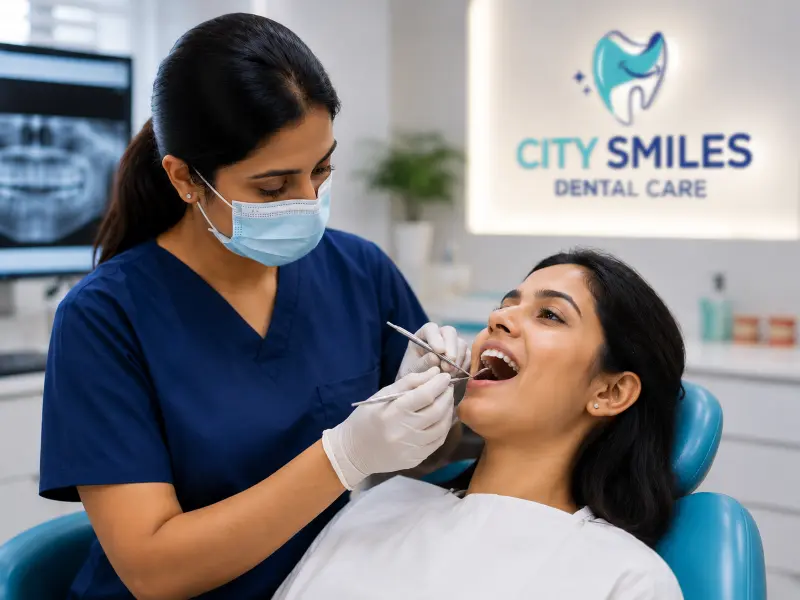
If you’ve been self-treating bad breath for months or years without lasting relief, it’s time to see a professional. Many patients in Kolkata delay visiting a dentist out of anxiety or assuming nothing can be done. That’s not the case.
At a dedicated halitosis appointment, you can expect:
- A detailed health and lifestyle history — no judgment, just facts
- An intra-oral examination — teeth, gums, tongue, tonsils
- A discussion of possible systemic contributors
- A customised treatment plan — never one-size-fits-all
- Practical home care guidance specific to your oral health status
We understand that bad breath is a sensitive and often emotionally distressing issue. Our team in South Kolkata treats every patient with complete confidentiality and compassion.
Find us on Google Maps and see what our patients have to say.
Why Choose City Smiles Dental Care for Bad Breath Treatment in South Kolkata?
Choosing the right dental clinic matters — especially for a condition as nuanced as halitosis. Here’s why patients from Garia, Tollygunge, Jadavpur, and beyond trust City Smiles:
Experience You Can Trust
Our dentists have years of clinical experience managing both simple and complex cases of bad breath. We approach every patient individually, identifying what’s really going on — not just prescribing a rinse and sending you home.
Modern Diagnostic Technology
We use up-to-date dental equipment to examine every possible cause of halitosis thoroughly, ensuring nothing is missed during diagnosis.
Rooted in South Kolkata
City Smiles Dental Care was built for this community. We understand local dietary habits (mustard oil, fish, heavy spices), the climate, water quality, and the cultural reluctance around dental visits. Our approach is accessible, friendly, and genuinely helpful.
Transparent, Patient-First Care
We explain every finding in plain language. We never recommend unnecessary procedures. And we’re always honest about what can — and what cannot — be fixed.
Book your appointment today and take the first step toward confident, fresh breath.
Conclusion
Bad breath is not something you simply have to live with. Whether it’s caused by bacteria on your tongue, gum disease hiding below the gum line, an untreated cavity, or an underlying health condition, there is a clear path to relief.
Understanding the bad breath causes and treatment options available to you is the first step. The second step is getting a proper diagnosis — because without knowing the exact cause, no product or home remedy will offer a permanent solution.
At City Smiles Dental Care in South Kolkata, we help patients from across the region — from Garia and Tollygunge to Jadavpur and beyond — finally resolve a problem that has quietly affected their confidence and social life for far too long.
You deserve fresh breath and the confidence that comes with it. Start here.
Frequently Asked Questions (FAQs)
1. What is the most common cause of bad breath?
The most common cause is the accumulation of odour-producing bacteria on the back of the tongue and in the gaps between teeth and gums. Gum disease is the leading dental cause of chronic halitosis.
2. Why does my breath still smell after I brush my teeth?
Brushing only cleans the visible tooth surfaces. It cannot reach below the gum line, clean the back of the tongue, or address non-dental causes like acid reflux or dry mouth. If brushing isn’t resolving your bad breath, a dental assessment is the next step.
3. Is there a permanent cure for bad breath?
Yes, in most cases. Once the root cause is identified and treated — whether it’s gum disease, cavities, tongue coating, or a systemic issue — bad breath can be significantly reduced or eliminated. Maintenance and consistent oral hygiene are key to keeping it away.
4. Does mouthwash cure bad breath?
Mouthwash provides temporary relief but does not cure bad breath. Its antibacterial effect lasts only a few hours, and alcohol-based mouthwashes can dry out the mouth, making things worse over time. It should complement, not replace, tongue cleaning and brushing.
5. Can bad breath be a sign of something serious?
In some cases, yes. Persistent bad breath can indicate advanced gum disease, uncontrolled diabetes, acid reflux (GERD), kidney problems, or respiratory infections. This is why a professional evaluation matters — particularly when over-the-counter remedies have not helped.
6. How often should I visit the dentist to manage halitosis?
For patients actively managing bad breath, we typically recommend a professional cleaning every 6 months, with follow-up assessments depending on the underlying cause. Your dentist will advise based on your specific case.
7. Is tongue scraping better than brushing the tongue with a toothbrush?
Yes. A tongue scraper is significantly more effective than a toothbrush at physically removing the bacterial coating from the tongue’s surface. The flat edge of a scraper covers more surface area and removes debris in a single pass rather than redistributing it.
📞 Ready to Breathe with Confidence?
Don’t let bad breath hold you back another day. At City Smiles Dental Care, South Kolkata, we offer expert halitosis diagnosis and treatment tailored to your specific needs.
👉 Book Your Appointment Now — Same-week appointments available for new patients.
Or find us on Google to check our location, hours, and patient reviews.