


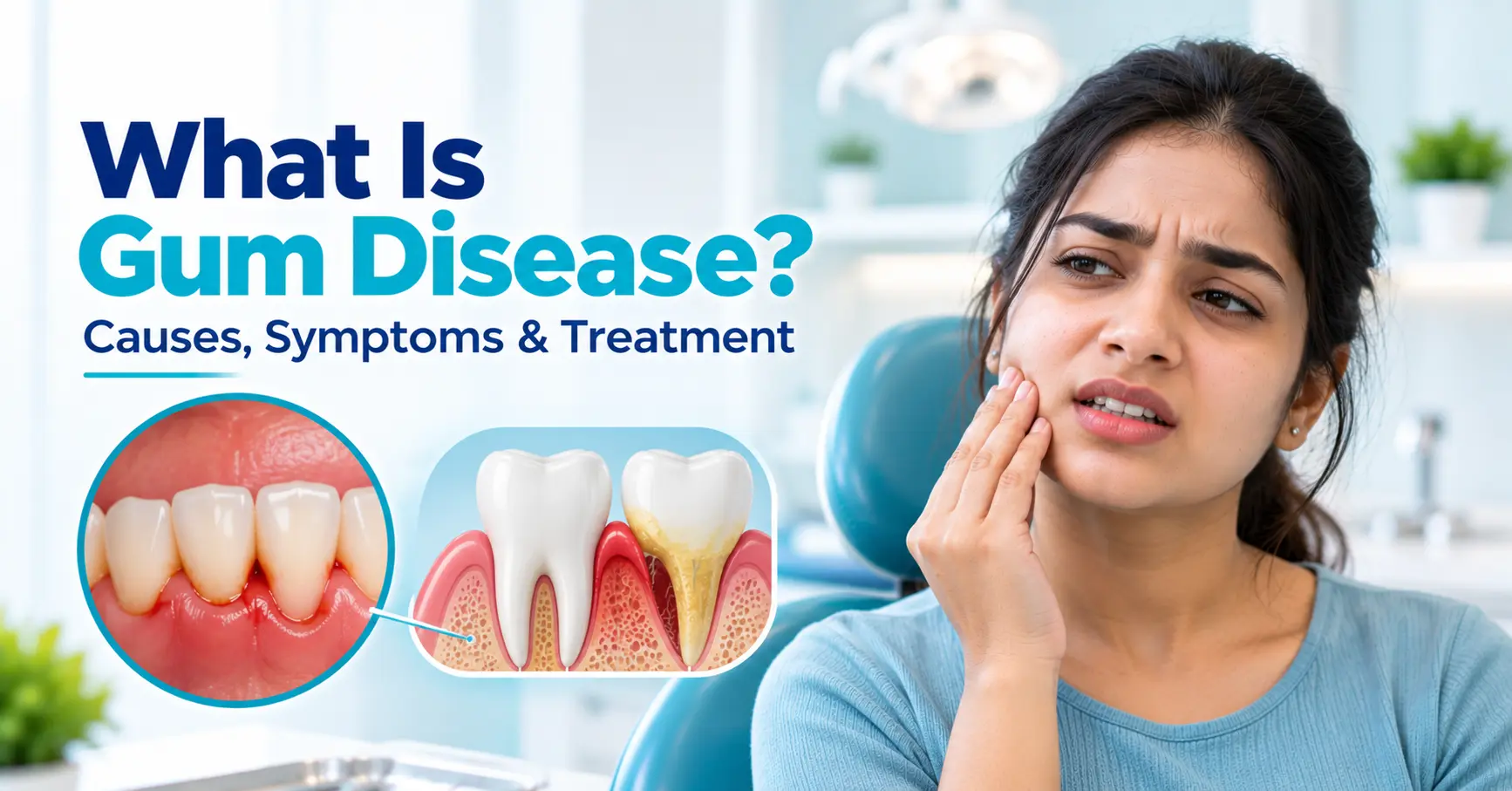
Rina, a 34-year-old working in Garia, noticed pink in the sink every morning for months. She assumed she was brushing too hard. By the time she visited a dentist, the problem was no longer just bleeding.
Her story is common. Gum disease is a bacterial infection of the gums and the bone around your teeth. It is painless in the early stages, which is why many people in South Kolkata ignore it until teeth feel loose. This guide explains the causes, symptoms and treatment options in plain language, so you know when to act.
What Is Gum Disease?
Gum disease, also called periodontal disease, is an infection and inflammation of the gums and the structures that hold teeth in place. It begins when plaque, a sticky film of bacteria, collects along the gumline. If plaque is not removed, the gums become inflamed and, over time, the bone supporting the teeth can break down.
There are two main stages. Gingivitis affects only the gums. Periodontitis affects the bone and ligaments as well.
Gingivitis vs Periodontitis
| Feature | Gingivitis | Periodontitis |
| What is affected | Gums only | Gums, ligaments and jawbone |
| Reversible? | Yes, with good care | Controllable, but bone loss is not reversed |
| Typical signs | Red, puffy, bleeding gums | Gum recession, pockets, bad breath, loose teeth |
| Pain | Usually none | Often none until advanced |
| Main treatment | Professional cleaning and home care | Deep cleaning below the gumline, sometimes surgery |
Gingivitis Symptoms and Warning Signs You Should Not Ignore
Common gingivitis symptoms include red or swollen gums, bleeding while brushing or flossing, and persistent bad breath. Healthy gums are firm, pale pink and do not bleed with normal brushing. Any change from this deserves a check.
Because gum disease is usually painless, the signs are easy to miss.
Early signs
- Gums that bleed when you brush or floss
- Red, shiny or puffy gums
- Tender gums
- Bad breath or a bad taste that does not go away
Signs the disease has progressed
- Gums pulling away from the teeth, making teeth look longer
- Pus between the teeth and gums
- Teeth that feel loose or shift position
- A change in how your bite fits together
Many patients tell us they thought bleeding was a sign of brushing too hard. In reality, healthy gums do not bleed from gentle brushing.
Gum Infection Causes and Risk Factors
The main gum infection cause is plaque left on the teeth and gumline. Within a few days, plaque hardens into tartar (calculus), which a toothbrush cannot remove. Bacteria in plaque and tartar irritate the gums and trigger inflammation.
Several factors make the problem worse:
- Poor brushing and flossing habits, especially skipping the gap between teeth
- Tobacco use, including smoking, gutka and paan with tobacco, which weakens gum healing
- Diabetes, which raises infection risk and slows recovery
- Hormonal changes, such as pregnancy and puberty
- Dry mouth, from medicines, mouth breathing or health conditions
- Crowded or irregular teeth, which trap plaque in hard-to-clean spots
- Family history and weak immune response
- Stress and poor nutrition
If you have more than one risk factor, regular check-ups matter even more.
How Is Periodontal Disease Diagnosed?
A dentist diagnoses periodontal disease through a gum examination, measurement of pocket depth around each tooth, and dental X-rays to check bone levels. Healthy pockets are shallow. Deeper pockets suggest that bacteria have moved below the gumline.
The examination is quick and should not be painful. It also tells us whether the problem is gingivitis or periodontitis, and which teeth are involved. Treatment recommendations always depend on this clinical examination, not on symptoms alone.
Gum Disease Treatment: What Works at Each Stage
Gum disease treatment depends on how far the disease has progressed. Gingivitis is treated with a professional cleaning and better daily care. Periodontitis needs deeper cleaning below the gumline, and advanced cases may need surgical treatment by a periodontist.
Stage 1: Gingivitis
- Professional removal of plaque and tartar
- Guidance on brushing technique and interdental cleaning
- A review after a few weeks to confirm the gums have healed
Most gingivitis settles once the plaque is under control.
Stage 2: Early to moderate periodontitis
Treatment usually involves scaling and root planing. The dentist cleans bacteria and tartar from below the gumline and smooths the root surfaces so gums can reattach. Your dentist may add a medicated rinse or local antibiotic in selected cases. Regular maintenance visits follow.
Stage 3: Advanced periodontitis
Deep pockets and significant bone loss may need gum surgery or bone-regeneration procedures. These are generally carried out by a periodontist. Some teeth with severe bone loss cannot be saved.
No treatment can promise a complete cure. The aim is to stop the infection, protect the remaining bone and keep your natural teeth for as long as possible.
Gum Disease and Other Dental Treatments
Gum health affects other dental care, so it is worth checking early.
- Root canal treatment: Deep gum pockets and infection of the tooth nerve can occur together and look similar. An accurate diagnosis decides whether you need gum care, a root canal, or both. You can read more about root canal treatment at City Smiles.
- Braces and aligners: Teeth are moved safely only when gums are healthy. Gum problems are also more likely when plaque collects around brackets. See our page on braces and orthodontic treatment.
- Children: Kids can get gingivitis too, especially around erupting teeth or when brushing is rushed. A pediatric dentist can teach children and parents the right routine.
How to Prevent Gum Disease at Home
You can prevent most gum disease with consistent daily care. Brush twice a day for two minutes with a soft brush and fluoride toothpaste. Clean between teeth once a day and book a dental check-up and cleaning every six months, or as advised.
A simple routine:
- Brush gently along the gumline in small circles
- Floss or use interdental brushes daily
- Replace your toothbrush every three months
- Stop or reduce tobacco use
- Keep diabetes well controlled
- Drink water through the day, especially if your mouth feels dry
Gum Disease Myths vs Facts
| Myth | Fact |
| “Bleeding means I am brushing too hard.” | Bleeding is usually a sign of gum inflammation. Healthy gums do not bleed with gentle brushing. |
| “Gum disease only affects older people.” | It can affect teenagers and young adults too. |
| “If it does not hurt, it is not serious.” | Gum disease is often painless until it is advanced. |
| “Mouthwash alone can cure it.” | Mouthwash cannot remove plaque and tartar. Mechanical cleaning is needed. |
| “Loose teeth always have to be extracted.” | Some can be stabilised if treated early. A clinical exam decides. |
When to See a Dentist in South Kolkata
See a dentist if your gums bleed for more than a week, if bad breath persists after brushing, or if gums are receding or teeth feel loose. Do not wait for pain. Early care is simpler, shorter and easier on your budget.
Patients from Garia, Baghajatin, Jadavpur, Tollygunge, Santoshpur and Dhakuria can visit City Smiles Dental Care for a clear, honest assessment. As our founder Dr. Sagnik Bhattacharya puts it, “Honest diagnosis, fair treatment planning, and patient-centric care.” If your gums need specialist periodontal treatment, we will tell you plainly and guide you on next steps.
FAQs
1. Can gum disease be cured?
Gingivitis can be fully reversed with professional cleaning and good home care. Periodontitis cannot be fully reversed because lost bone does not grow back on its own, but it can be controlled with timely treatment and regular maintenance.
2. What are the first signs of gum disease?
The first signs are red or puffy gums, bleeding when you brush or floss, and persistent bad breath. These gingivitis symptoms are usually painless, so they are easy to overlook.
3. Is bleeding gums always a sign of gum disease?
Not always, but it is the most common sign. Other causes include a hard toothbrush, vitamin deficiency, certain medicines and blood conditions. A dental examination can find the reason.
4. What causes gum infection?
Gum infection is caused mainly by plaque and tartar building up along the gumline. Smoking, diabetes, hormonal changes, dry mouth and crowded teeth raise the risk.
5. Can gum disease cause tooth loss?
Yes. In periodontitis the bone and ligaments holding the tooth weaken, and teeth can become loose and may need removal if the disease is not controlled.
6. Is gum disease contagious?
The bacteria involved can pass through saliva, but whether someone develops gum disease depends on their own oral hygiene, health and risk factors.
7. Does gum disease treatment hurt?
Gingivitis treatment is generally comfortable. Deeper cleaning is done with local anaesthesia when needed, so you should not feel pain during the procedure. Mild soreness afterwards is common.
8. How often should I get my gums checked?
Most adults benefit from a check-up and cleaning every six months. People with diabetes, smokers, pregnant women and those with a history of gum problems may need more frequent visits.
9. Is there a link between gum disease and diabetes?
Yes. Diabetes raises the risk of gum infection, and active gum disease can make blood sugar harder to control. Managing both together gives better results.
10. Can children get gum disease?
Yes, children can develop gingivitis, usually from poor plaque control. It is reversible with good brushing habits and professional guidance.
Conclusion
Gum disease is common, usually painless at first, and far easier to treat early. Knowing the gingivitis symptoms, understanding the gum infection causes and acting on bleeding gums can protect your teeth for years. Each person’s treatment depends on a proper clinical examination.
If your gums bleed, look swollen or feel tender, do not wait. Book an appointment at City Smiles Dental Care for a gum check in South Kolkata. You can also find directions, timings and patient reviews on our Google Business Profile, or call the clinic to speak with our team.
This article is for general education and does not replace a dental examination.