


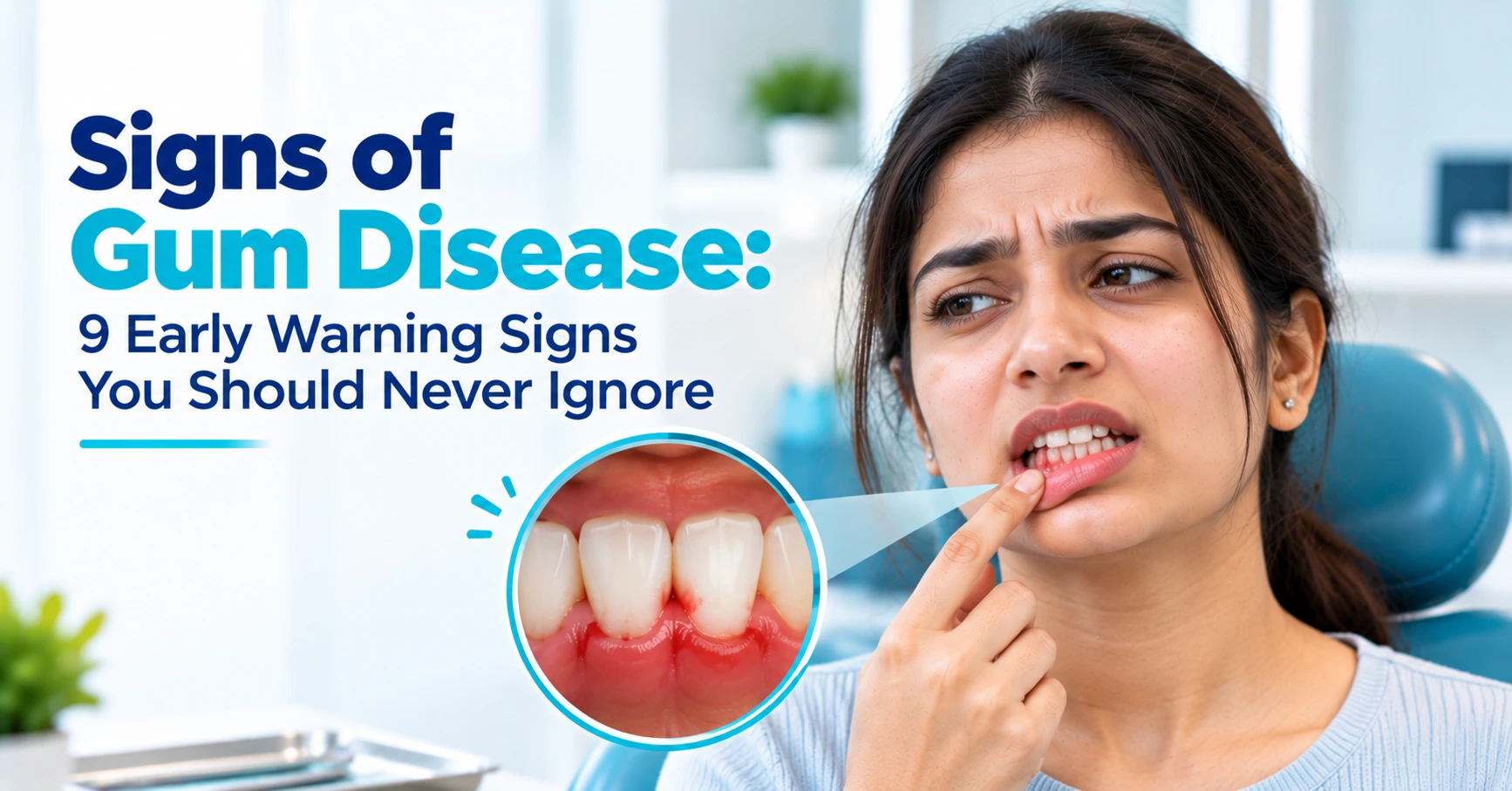
You spit after brushing and notice a pink tinge in the sink. Most people shrug it off and move on. That small detail is one of the most common signs of gum disease, and it is easy to miss because early gum disease rarely hurts.
At City Smiles Dental Care in South Kolkata, patients from Garia, Baghajatin, Jadavpur and Tollygunge often tell us they “only noticed a little blood” for months before booking a visit. This guide explains what to look for, what is normal, and when to get checked.
Quick answer: The early signs of gum disease are bleeding gums when you brush or floss, red or swollen gums, persistent bad breath, and tender gums. If these last more than two weeks, see a dentist. Early gum disease (gingivitis) is usually reversible.
What Counts as Gum Disease?
Gum disease is an infection and inflammation of the tissues that hold your teeth in place. It starts when plaque, a sticky film of bacteria, stays along the gumline. The earliest stage is gingivitis, and the advanced stage is periodontitis.
Gingivitis affects only the gums and can usually be reversed. Periodontitis affects the bone and fibres that support the tooth, and the damage cannot be undone, only controlled. This is why catching the early signs matters.
Healthy gums are pale pink, firm and snug around each tooth. They do not bleed during normal brushing.
9 Early Signs of Gum Disease You Should Never Ignore
Early gum disease signs include bleeding gums, redness, swelling, bad breath, tenderness and gums pulling away from the teeth. Later warnings include pus, loose teeth and a changing bite. Many of these appear without pain, so a mild symptom still deserves attention.
1. Bleeding Gums
Bleeding gums when you brush or floss are the classic early sign. Healthy gums do not bleed with normal brushing. Bleeding usually means the gum tissue is inflamed from plaque.
Many people respond by brushing more gently or stopping near the bleeding area. That lets more plaque build up, and the bleeding gets worse.
2. Red, Swollen or Puffy Gums
Inflamed gums look darker red or purplish and may appear shiny or rounded. The tissue between teeth can look puffy. This is one of the most visible gingivitis warning signs.
3. Persistent Bad Breath or a Bad Taste
Bacteria under the gumline release sulphur compounds that mouthwash only masks for a short time. Bad breath that returns soon after brushing, or a metallic taste, can point to gum trouble. Other causes exist, so an examination helps separate them.
4. Tender or Sore Gums
Gums may feel sensitive when you chew or brush. Mild soreness that keeps coming back is a signal, even if it is not severe.
5. Receding Gums
If teeth look longer than before, or you can see the root surface, gums may be pulling back. This can also cause sensitivity to cold drinks. Hard brushing can contribute, but gum disease is a common cause.
6. Gaps Opening Between Teeth
New spaces or “black triangles” between teeth can appear as gum and bone support is lost. This is a later sign and needs prompt attention.
7. Pus Around the Gums
Pus or a bad-tasting discharge along the gumline indicates an infection. See a dentist soon.
8. Loose or Shifting Teeth
Teeth that feel loose or have started to move suggest the supporting bone is affected. This is a sign of advanced gum disease.
9. A Change in Your Bite
If your teeth no longer fit together the way they used to, or dentures feel different, gum and bone changes may be involved.
Gingivitis Warning Signs vs Periodontitis
Gingivitis involves red, puffy gums that bleed easily, with no bone loss. Periodontitis involves gum pockets, receding gums, and loss of supporting bone, which can lead to loose teeth. Only a dental examination can tell which stage you are in.
| Feature | Gingivitis (early) | Periodontitis (advanced) |
| Bleeding | Bleeds when brushing or flossing | Bleeds easily, sometimes on its own |
| Gum appearance | Red, puffy | Receding, dark red, may show pus |
| Bone loss | None | Present |
| Teeth | Firm | May loosen or drift |
| Reversible? | Usually yes | Controlled, not reversed |
| Pain | Often none | May be mild or absent until late |
Why Gums Become Inflamed
Gum disease is mainly caused by plaque that is not removed well enough, which hardens into tartar. Other factors that raise the risk include tobacco use, diabetes, hormonal changes in pregnancy, some medicines and a dry mouth.
In India, smoking and chewing tobacco, paan or gutka are significant contributors. Crowded teeth and old, rough fillings can also trap plaque. If you have diabetes, gum health and blood sugar influence each other, so tell your dentist.
What to Do When You Notice Gum Problem Symptoms
If you notice early signs, improve cleaning at home and book a dental check. Brush twice a day for two minutes with a soft brush, clean between teeth daily, and do not skip the bleeding areas. If symptoms last beyond two weeks, get examined.
A simple starting routine:
- Brush gently along the gumline with a soft-bristled brush.
- Clean between teeth daily with floss or interdental brushes.
- Stop tobacco in any form.
- Do not ignore bleeding. Keep cleaning those areas gently.
- Book a check-up if there is no improvement in two weeks.
Home care helps, but it cannot remove hardened tartar. That needs professional cleaning.
How a Dentist Checks for Gum Disease
A dentist examines your gums, measures the space between gum and tooth with a small probe, and checks for tartar, bleeding and tooth mobility. X-rays may be advised if bone loss is suspected. Treatment depends on the stage.
For early gingivitis, a professional scaling (cleaning) and guidance on home care are often enough. If the condition is more advanced, the dentist will explain the options and the follow-up needed. Recommendations always depend on a clinical examination, and no outcome can be guaranteed.
Gum Disease Myths vs Facts
| Myth | Fact |
| Bleeding gums mean I am brushing too hard | Bleeding is usually from inflammation. Brushing technique matters, but do not ignore the bleeding |
| Gum disease always hurts | Early gum disease is often painless |
| Mouthwash alone fixes it | Mouthwash cannot remove plaque and tartar at the gumline |
| Only older people get gum disease | Gingivitis can affect teenagers and young adults too |
| Once I have gum disease, nothing can be done | Early stages are reversible and later stages can be controlled with proper care |
When to See a Dentist in South Kolkata
See a dentist if gums bleed for more than two weeks, if bad breath persists, or if you notice swelling, pus, receding gums or loose teeth. Do not wait for pain, because early treatment is simpler and more comfortable.
Patients from Garia, Baghajatin, Jadavpur, Tollygunge, Santoshpur and Dhakuria can visit City Smiles Dental Care in South Kolkata for an examination. You can also see our location and patient reviews on our Google Business Profile.
Frequently Asked Questions
1. Is bleeding when brushing normal?
No. Healthy gums do not bleed with gentle brushing. Occasional bleeding after starting to floss can happen for a few days, but bleeding that continues beyond two weeks should be checked by a dentist.
2. What is the first sign of gum disease?
The first sign is usually bleeding gums when brushing or flossing, often with mild redness or puffiness. Because it is painless, it is easy to overlook.
3. Can early gum disease be reversed?
Yes. Gingivitis can usually be reversed with professional cleaning and consistent home care. Once bone loss has occurred, the condition can be controlled but not fully reversed.
4. Does gum disease always cause pain?
No. Gum disease is often painless in the early and middle stages. Pain tends to appear late, which is why bleeding and bad breath should be taken seriously.
5. Can gum disease cause tooth loss?
Yes, if advanced periodontitis is left untreated, the supporting bone weakens and teeth can become loose. Early care greatly reduces this risk.
6. What causes bad breath from gum disease?
Bacteria below the gumline release smelly compounds. Mouthwash masks the smell only briefly. Treating the gum infection is what resolves it.
7. Is gum disease linked to other health conditions?
Gum disease and diabetes affect each other, and gum inflammation is more common during pregnancy. Tell your dentist about any health condition or medicines you take.
8. How often should I get my gums checked?
Most people benefit from a dental check-up and cleaning every six months. Your dentist may advise a different interval depending on your gum health.
Conclusion
Knowing the signs of gum disease gives you a real advantage. Bleeding gums, puffy red gums, lingering bad breath and gums that pull back are not things to wait out. Caught early, gingivitis is usually reversible.
If you have noticed any of these signs, the best step is a proper examination. At City Smiles Dental Care, we focus on honest diagnosis and clear communication, so you know exactly where your gums stand and what, if anything, is needed.
Noticed bleeding gums or other gum problem symptoms? Do not wait for pain. Book your appointment at City Smiles Dental Care in South Kolkata, or visit us from Garia, Baghajatin, Jadavpur, Tollygunge, Santoshpur or Dhakuria. Find directions and reviews on our Google Business Profile.
This article is for general information and does not replace a clinical examination. Treatment recommendations depend on your individual condition.