


Maintaining good oral hygiene in children involves more than just brushing. As parents explore ways to improve their child’s dental care routine, a common question arises: can kids use mouthwash safely?
Mouthwash is often associated with fresh breath and additional protection against cavities. However, when it comes to children, its use must be carefully guided. Not all mouthwashes are suitable for young kids, and improper use can lead to unintended risks.
Understanding when and how children can use mouthwash helps parents make informed decisions and build safe oral hygiene habits.
What Is Mouthwash and What Does It Do?
Mouthwash, also known as an oral rinse, is a liquid used to rinse the mouth after brushing. It helps:
- Reduce bacteria in the mouth
- Freshen breath
- Strengthen teeth (in fluoride-based rinses)
- Reach areas that brushing may miss
While mouthwash can be beneficial, it should not replace brushing or flossing.
Can Kids Use Mouthwash?
Yes, children can use mouthwash—but only under certain conditions.
Mouthwash is generally recommended for children above the age of 6 years, when they can:
- Rinse properly
- Avoid swallowing the liquid
- Follow instructions carefully
For younger children, mouthwash is usually not recommended because they may accidentally swallow it.
When Can Kids Start Using Mouthwash?
The right age depends on the child’s ability to spit out the liquid rather than swallow it.
Under 6 Years
- Mouthwash is usually not recommended
- Risk of swallowing is higher
- Brushing and flossing are sufficient
Above 6 Years
- Mouthwash may be introduced if needed
- Supervision is important
- Use child-specific formulations
Parents should ensure that children understand how to rinse and spit before introducing mouthwash.
Benefits of Mouthwash for Children
When used correctly, mouthwash can offer additional support in maintaining oral hygiene.
Extra Protection Against Cavities
Fluoride mouthwash can strengthen enamel and reduce the risk of cavities.
Helps Reach Difficult Areas
Mouthwash can reach areas between teeth and along the gum line where brushing may be less effective.
Freshens Breath
It helps maintain oral freshness, especially for children with bad breath.
Supports Orthodontic Care
Children with braces may benefit from mouthwash, as it helps clean around brackets and wires.
Parents exploring orthodontic treatments can also learn about different options in our guide on Ceramic Braces for Adults: Pros & Cons.
Risks of Using Mouthwash in Children
Despite its benefits, mouthwash must be used carefully in children.
Risk of Swallowing
Swallowing mouthwash—especially fluoride-based products—can cause stomach discomfort or excessive fluoride intake.
Not a Substitute for Brushing
Some children may rely on mouthwash instead of brushing, which can lead to poor oral hygiene.
Alcohol Content in Some Mouthwashes
Certain mouthwashes contain alcohol, which is not suitable for children. Always choose alcohol-free formulations.
How to Choose the Right Mouthwash for Kids
Selecting the right product is important for safety and effectiveness.
Parents should look for:
- Alcohol-free mouthwash
- Child-friendly flavors
- Fluoride-based (if recommended by a dentist)
- Age-appropriate labeling
Avoid adult mouthwashes unless specifically advised by a dentist.
How to Use Mouthwash Safely in Children
Proper usage ensures maximum benefit and minimal risk.
Parents should guide children to:
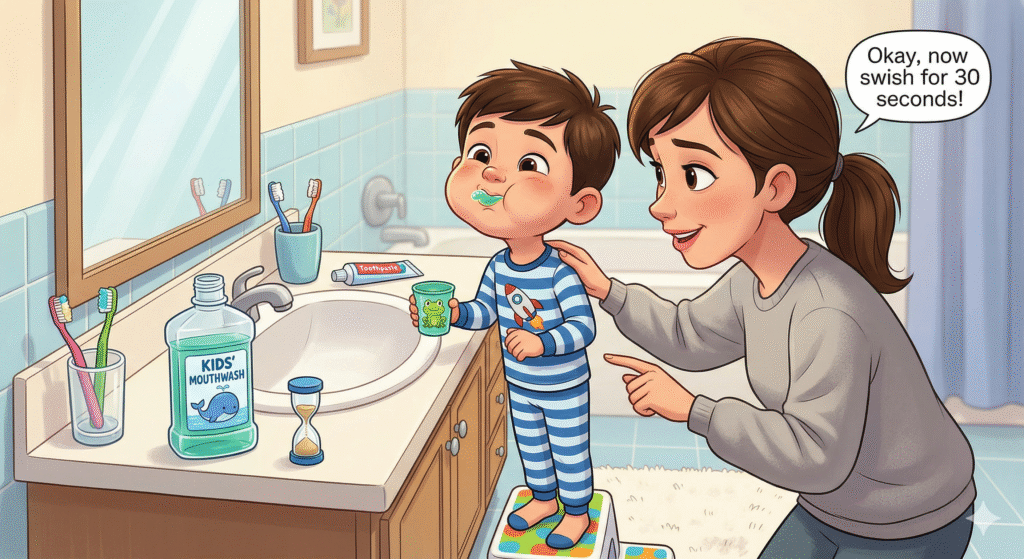
- Use a small amount (as directed)
- Rinse for 20–30 seconds
- Spit out completely
- Avoid eating or drinking immediately after
Supervision is essential, especially in the early stages.
Do All Children Need Mouthwash?
Not every child requires mouthwash as part of their daily routine.
Mouthwash may be recommended for children who:
- Are prone to cavities
- Wear braces or orthodontic appliances
- Have difficulty maintaining proper oral hygiene
- Experience gum problems
For children with good brushing habits and low cavity risk, mouthwash may not be necessary.
For example, if a child shows early signs of gum issues like bleeding, improving brushing habits is often the first step. Parents can learn more in our guide on Bleeding Gums in Children: Causes & Solutions.
Building a Complete Oral Hygiene Routine for Kids
Mouthwash should be seen as an additional step—not a replacement.
An ideal routine includes:
- Brushing twice daily with fluoride toothpaste
- Flossing once daily
- Regular dental checkups
- Balanced diet with limited sugar intake
Consistency in these habits is more important than adding extra products.
Common Mistakes Parents Should Avoid
Some common mistakes can reduce the effectiveness of oral care.
Parents should avoid:
- Introducing mouthwash too early
- Allowing unsupervised use
- Using adult mouthwash products
- Skipping brushing and relying on mouthwash
- Overusing fluoride products
Simple corrections in routine can make a significant difference.
Why City Smiles Dental Care Is the Right Choice for Pediatric Dental Care in Kolkata
At City Smiles Dental Care, we understand that parents often have questions about the safest oral hygiene practices for their children. Our approach focuses on guiding families with age-appropriate dental care recommendations, including whether mouthwash is necessary for a child’s routine. Each child receives a detailed evaluation to ensure their oral hygiene habits support long-term dental health. Located in South Kolkata, the clinic provides dependable and child-friendly dental care tailored to growing smiles.
Why parents choose City Smiles Dental Care:
- Guidance on safe oral hygiene practices
- Preventive and child-focused dental care
- Personalized recommendations for children
- Early detection of dental issues
- Gentle and comfortable dental environment
- Transparent and ethical care
- Trusted dental clinic in South Kolkata
Conclusion
So, can kids use mouthwash? Yes—but only when used correctly and at the right age. For children above 6 years who can rinse and spit properly, mouthwash can be a helpful addition to their oral hygiene routine. However, it should never replace brushing and flossing. With proper guidance and supervision, parents can safely include mouthwash as part of their child’s dental care routine.
FAQs
- At what age can kids start using mouthwash?
Usually after age 6, when they can rinse and spit properly. - Is mouthwash necessary for children?
Not always. It depends on oral hygiene habits and dental needs. - Can kids swallow mouthwash?
No. Mouthwash should always be spit out after rinsing. - Is fluoride mouthwash safe for kids?
Yes, when used in the correct amount under supervision. - Can mouthwash replace brushing?
No, brushing and flossing are essential for proper oral hygiene.