


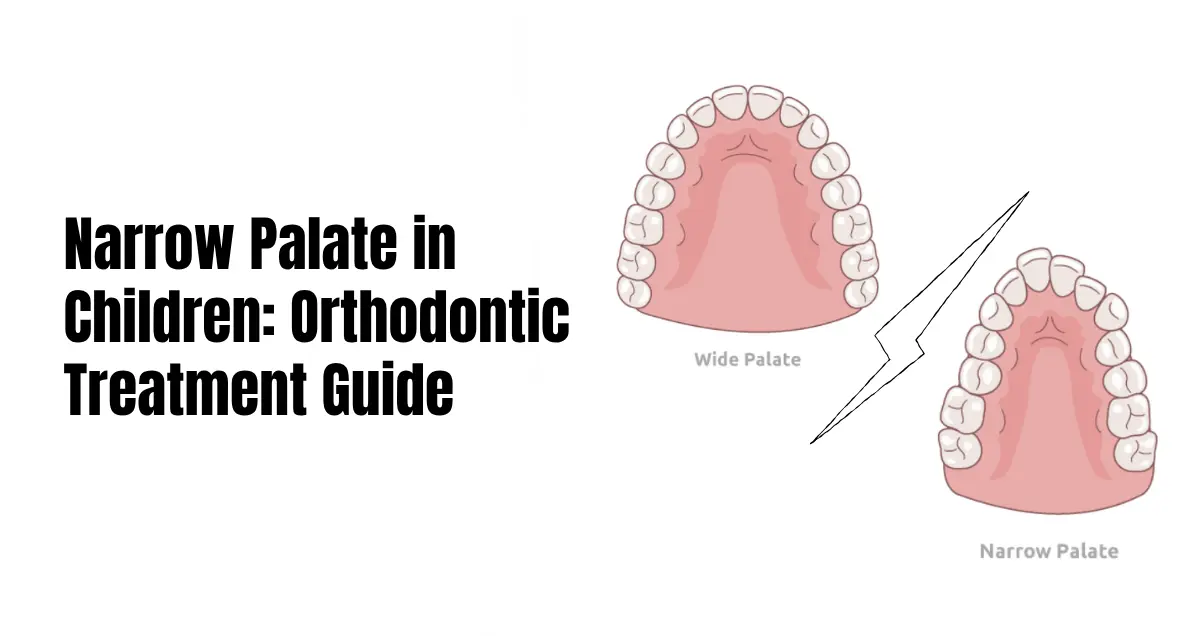
A child’s facial and dental development is closely linked to the growth of the upper jaw, also known as the palate. When the upper jaw is too narrow, it can affect how teeth align, how the child breathes, and even how the face develops over time. This condition is commonly referred to as a narrow palate in children.
Many parents may not notice this issue early, as it develops gradually. However, early detection and proper orthodontic treatment for narrow palate in children can prevent more complex dental problems in the future.
Understanding the causes, signs, and available treatment options can help parents make informed decisions about their child’s oral health.
What Is a Narrow Palate?
The palate is the roof of the mouth and forms the upper jaw. A narrow palate occurs when the upper jaw does not grow wide enough to properly accommodate all teeth.
This can result in:
- Crowded teeth
- Bite misalignment
- Difficulty breathing through the nose
- Changes in facial structure
A narrow palate is not just a dental issue—it can influence overall oral and facial development.
Why Early Detection Is Important
In children, the jawbones are still developing and are more adaptable. This makes early orthodontic intervention more effective.
If left untreated, a narrow palate can lead to:
- Severe crowding
- Crossbite or deep bite
- Speech issues
- Increased risk of orthodontic complications later
Early evaluation allows dentists to guide proper jaw growth and reduce the need for more complex treatments in adolescence or adulthood.
Causes of Narrow Palate in Children
Several factors can contribute to the development of a narrow palate.
Genetics
Jaw size and facial structure often run in families. If parents had orthodontic issues, children may be more likely to develop similar conditions.
Mouth Breathing
Children who habitually breathe through their mouth instead of their nose may develop a narrower upper jaw.
Parents who notice breathing issues can learn more about its impact in our related article on Mouth Breathing in Children: Dental & Facial Effects.
Thumb Sucking and Oral Habits
Prolonged thumb sucking or pacifier use can exert pressure on the palate, affecting its growth.
You can explore how these habits influence teeth alignment in our guide on Thumb Sucking & Teeth Alignment: When Parents Should Intervene.
Early Loss of Baby Teeth
Premature loss of baby teeth may disrupt the natural spacing needed for proper jaw development.
Signs of Narrow Palate in Children
Parents should watch for early signs that may indicate a narrow palate.
Common signs include:
- Crowded or overlapping teeth
- Crossbite (upper teeth sit inside lower teeth)
- Mouth breathing habit
- Difficulty chewing
- Speech issues
- Snoring or sleep disturbances
These signs often become more noticeable as permanent teeth begin to erupt.
How a Narrow Palate Affects Overall Development
A narrow palate can influence more than just teeth alignment.
Dental Effects
- Crowding of teeth
- Increased risk of cavities
- Difficulty maintaining oral hygiene
Facial Development
- Narrow facial appearance
- Improper jaw growth
- Imbalanced facial proportions
Breathing and Sleep
- Reduced nasal airflow
- Mouth breathing
- Potential sleep-related issues
Addressing these concerns early can significantly improve long-term outcomes.
Orthodontic Treatment for Narrow Palate in Children
Treatment focuses on expanding the upper jaw to create enough space for proper alignment.
Palatal Expansion (Rapid Maxillary Expansion)
This is the most common treatment for narrow palate in children.
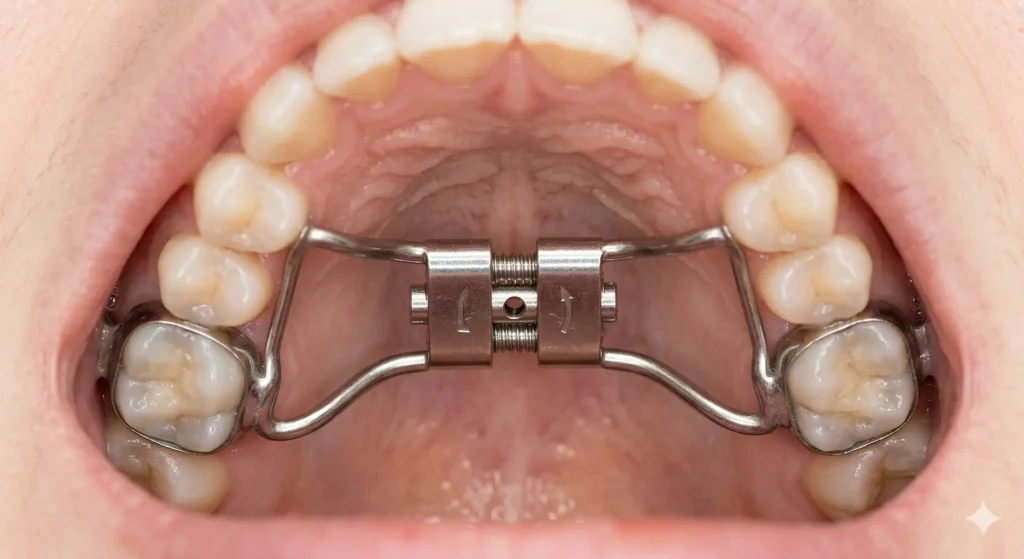
A palatal expander is a small device placed in the upper jaw. It gradually widens the palate by applying gentle pressure.
How Palatal Expansion Works
The expander is adjusted regularly, usually by parents under professional guidance.
The process involves:
- Gradual widening of the upper jaw
- Creation of space for teeth alignment
- Improvement in bite and jaw function
Because children’s bones are still growing, expansion is more effective at a younger age.
Braces After Expansion
Once the palate is widened, braces may be used to align the teeth properly.
Parents exploring orthodontic options can 5also read about different braces systems in our article on Damon Braces vs Traditional Braces: What’s the Difference?.
Best Age for Palate Expansion
Orthodontic treatment for narrow palate is most effective between ages 6 to 12 years, when the jaw is still developing.
After puberty, the bones become more rigid, making expansion more complex and sometimes requiring surgical intervention.
Early orthodontic evaluation is therefore highly recommended.
Is Palate Expansion Painful?
Palatal expansion may cause mild pressure or discomfort during the initial days. However, most children adapt quickly.
Common sensations include:
- Mild pressure in the upper jaw
- Temporary speech changes
- Slight difficulty eating initially
These effects are temporary and usually resolve within a few days.
How Long Does Treatment Take?
The expansion phase typically lasts:
- 2 to 4 weeks for active expansion
- Additional months for stabilization
After expansion, further orthodontic treatment such as braces may continue for several months depending on alignment needs.
Benefits of Early Orthodontic Treatment
Early treatment provides several long-term advantages:
- Prevents severe crowding
- Improves breathing and airway function
- Enhances facial development
- Reduces need for complex orthodontics later
- Improves oral hygiene and dental health
Investing in early orthodontic care can simplify future treatments.
Why City Smiles Dental Care Is the Right Choice for Orthodontic Treatment in Kolkata
At City Smiles Dental Care, we understand the importance of early orthodontic evaluation in children. Our approach focuses on identifying growth-related issues such as narrow palate at an early stage and providing appropriate treatment to guide proper jaw development. Each child receives a detailed assessment to ensure that treatment is planned according to their individual growth pattern. Located in South Kolkata, the clinic provides dependable orthodontic care designed to support healthy dental and facial development.
Why parents choose City Smiles Dental Care for orthodontic treatment:
- Early assessment of jaw and dental development
- Customized treatment planning for children
- Modern orthodontic solutions including palate expansion
- Focus on long-term oral health and facial balance
- Clear communication with parents
- Ethical and patient-first care
- Trusted dental clinic in South Kolkata
Conclusion
A narrow palate in children can affect not only teeth alignment but also breathing, facial growth, and overall oral health. Early orthodontic treatment, especially palatal expansion, offers an effective way to correct this condition while the jaw is still developing. Timely intervention helps prevent more complex dental problems and supports healthy growth.
Parents who notice signs of narrow palate should consider early evaluation to ensure the best possible outcomes for their child’s dental and facial development.
FAQs
- What causes a narrow palate in children?
It can be caused by genetics, mouth breathing, or prolonged oral habits. - At what age should palate expansion be done?
The ideal age is between 6 and 12 years. - Is palate expansion safe for children?
Yes, it is a safe and commonly used orthodontic treatment. - Does palate expansion hurt?
It may cause mild pressure initially but is generally well tolerated.