


The age group of 6 to 12 years is one of the most important stages in a child’s dental development. During this period, children begin to lose their baby teeth and develop permanent teeth. Establishing the best dental care routine for children aged 6–12 is essential to ensure strong, healthy teeth that last a lifetime.
At this stage, children also gain more independence, which can sometimes lead to inconsistent oral hygiene habits. Parents play a crucial role in guiding and reinforcing proper dental care practices.
A well-structured routine not only prevents cavities and gum problems but also builds lifelong oral hygiene habits.
Why Dental Care Is Important for Children Aged 6–12
During this phase:
- Permanent teeth begin to erupt
- Jaw and facial structures continue developing
- Eating habits become more varied
- School routines may affect brushing habits
If proper care is not maintained, children may develop:
- Cavities
- Gum problems
- Misaligned teeth
- Poor oral hygiene habits
Early prevention is always easier than treatment.
Daily Dental Care Routine for Kids
A consistent daily routine is the foundation of good oral health.
Brushing Twice a Day
Children should brush their teeth twice daily using fluoride toothpaste.
Parents should ensure:
- Brushing lasts at least 2 minutes
- All tooth surfaces are cleaned
- Gentle circular motions are used
Even at this age, supervision is recommended to ensure proper technique.
Flossing Once Daily
Flossing helps remove food particles between teeth where brushes cannot reach.
It is especially important because:
- Permanent teeth may erupt close together
- Food can get trapped easily
- Plaque buildup increases risk of cavities
Rinsing After Meals
Encouraging children to rinse their mouth with water after meals helps reduce food debris and acid buildup.
Parents who are considering additional oral hygiene tools often ask whether mouthwash is necessary. You can learn more in our detailed guide on Can Kids Use Mouthwash? What Parents Should Know (Internal link opportunity).
Building Strong Brushing Habits
Children aged 6–12 may rush through brushing or miss certain areas.
Parents can improve habits by:
- Using timers or brushing songs
- Demonstrating proper technique
- Choosing child-friendly toothbrushes
- Replacing brushes every 3 months
Consistency is key to forming good habits.
Common Dental Problems in This Age Group
Understanding common issues helps parents stay alert.
Cavities
Frequent consumption of sugary snacks increases the risk of tooth decay.
Gum Problems
Improper brushing can lead to gum inflammation and bleeding.
Parents who notice gum bleeding should understand its causes in our article on Bleeding Gums in Children: Causes & Solutions.
Misaligned Teeth
As permanent teeth erupt, alignment issues may become noticeable. Early orthodontic evaluation can help guide proper development.
Teeth Discoloration
Yellowing or staining may occur due to diet or enamel issues.
Parents can explore causes and solutions in our guide on Yellow Teeth in Children: Causes & Treatment Options.
Diet Tips for Healthy Teeth
Diet plays a major role in maintaining oral health.
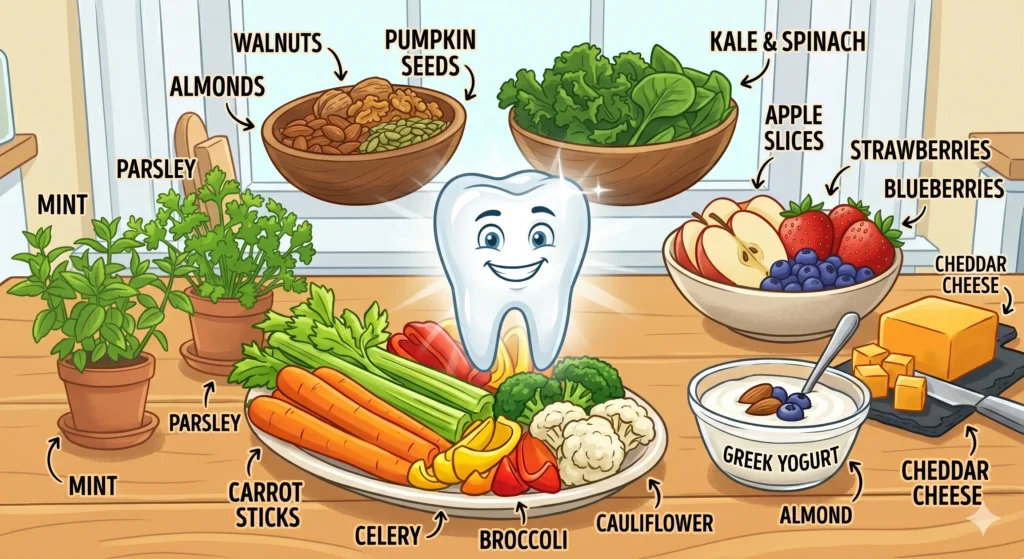
Foods That Support Healthy Teeth
- Milk and dairy products (rich in calcium)
- Fruits and vegetables
- Nuts and seeds
- Whole grains
Foods to Limit
- Sugary snacks and candies
- Soft drinks and packaged juices
- Sticky foods that remain on teeth
Encouraging healthy eating habits reduces the risk of cavities.
Importance of Regular Dental Checkups
Routine dental visits are essential for monitoring oral health.
Dentists can:
- Detect cavities early
- Evaluate tooth development
- Provide preventive treatments
- Guide proper oral hygiene practices
Regular checkups help prevent small problems from becoming serious.
Role of Parents in Maintaining Dental Routine
Even though children in this age group are more independent, parental involvement remains essential.
Parents should:
- Supervise brushing habits
- Encourage consistency
- Monitor diet
- Schedule dental visits
Positive reinforcement and encouragement help children stay motivated.
How to Make Dental Care Fun for Kids
Making oral hygiene enjoyable increases consistency.
Parents can:
- Use colorful toothbrushes
- Introduce reward systems
- Turn brushing into a game
- Brush together as a family
Creating a positive environment helps children develop lifelong habits.
Preventive Dental Treatments for Children
Dentists may recommend preventive measures such as:
Fluoride Treatments
Strengthen enamel and reduce cavity risk.
Dental Sealants
Protect chewing surfaces of molars from decay.
These treatments provide additional protection during the cavity-prone years
Signs Parents Should Not Ignore
Parents should seek dental advice if they notice:
- Tooth pain or sensitivity
- Bleeding gums
- Persistent bad breath
- Visible cavities or discoloration
- Difficulty chewing
Early detection ensures timely treatment.
Why City Smiles Dental Care Is the Right Choice for Pediatric Dental Care in Kolkata
At City Smiles Dental Care, we understand that children between 6 and 12 years require special attention as their permanent teeth develop. Our approach focuses on preventive care, early diagnosis, and guiding children toward proper oral hygiene habits. Each child receives personalized care to ensure healthy growth of teeth and gums. Located in South Kolkata, the clinic provides dependable and child-friendly dental services designed to support long-term oral health.
Why parents choose City Smiles Dental Care:
- Preventive and child-focused dental care
- Early detection of dental problems
- Guidance on proper oral hygiene habits
- Gentle and comfortable dental environment
- Personalized treatment planning
- Ethical and transparent care
- Trusted dental clinic in South Kolkata
Conclusion
The best dental care routine for children aged 6–12 involves consistent brushing, flossing, a healthy diet, and regular dental visits. This stage is critical for developing lifelong oral hygiene habits and ensuring the healthy growth of permanent teeth. With proper guidance and supervision, parents can help their children maintain strong, healthy smiles.
FAQs
- How often should children brush their teeth?
Children should brush twice daily for at least two minutes. - Is flossing necessary for kids?
Yes, flossing removes food particles between teeth and prevents cavities. - Can kids use mouthwash daily?
Only if recommended and used under supervision. - How often should children visit the dentist?
Every 6 months for routine checkups. - What is the most common dental problem in children?
Cavities are the most common issue in this age group.