


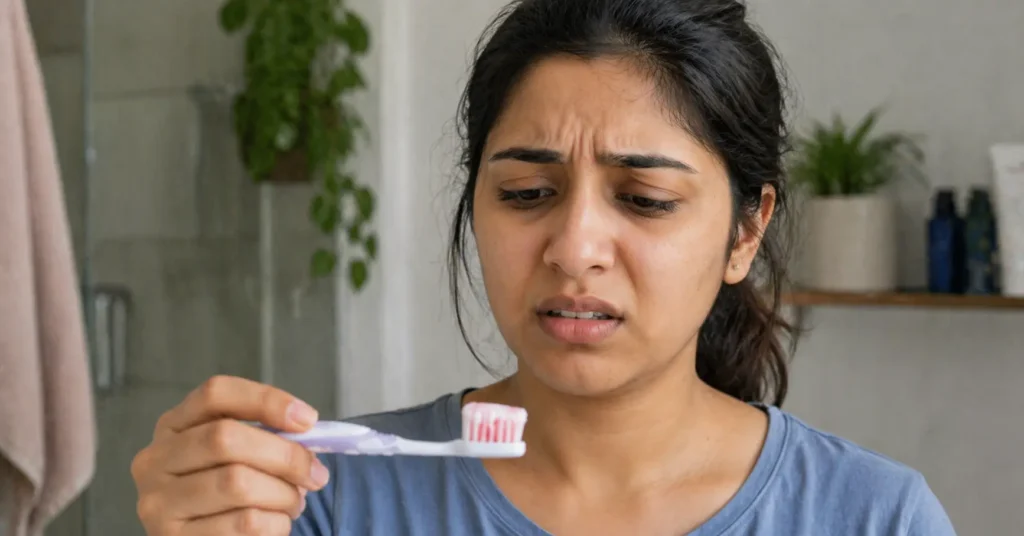
You’re brushing your teeth in the morning, half-awake, thinking about the day ahead. You spit into the sink — and there it is. A thin streak of pink. Or worse, a swirl of bright red.
Your stomach drops. Was it the toothbrush? The toothpaste? Are you brushing too hard? Is something seriously wrong?
If this has happened to you more than once, you’re not alone. Bleeding gums are one of the most common reasons patients walk into our South Kolkata clinic — and one of the most commonly ignored. Many people assume it’s “normal” or will “go away on its own.” It rarely does.
The truth is, bleeding gums are your mouth’s early warning system. And the right bleeding gums treatment — started early — can reverse the problem completely, often without any invasive procedures. This guide explains why your gums bleed, when to worry, and exactly what to do about it.
What Does “Bleeding Gums” Actually Mean?
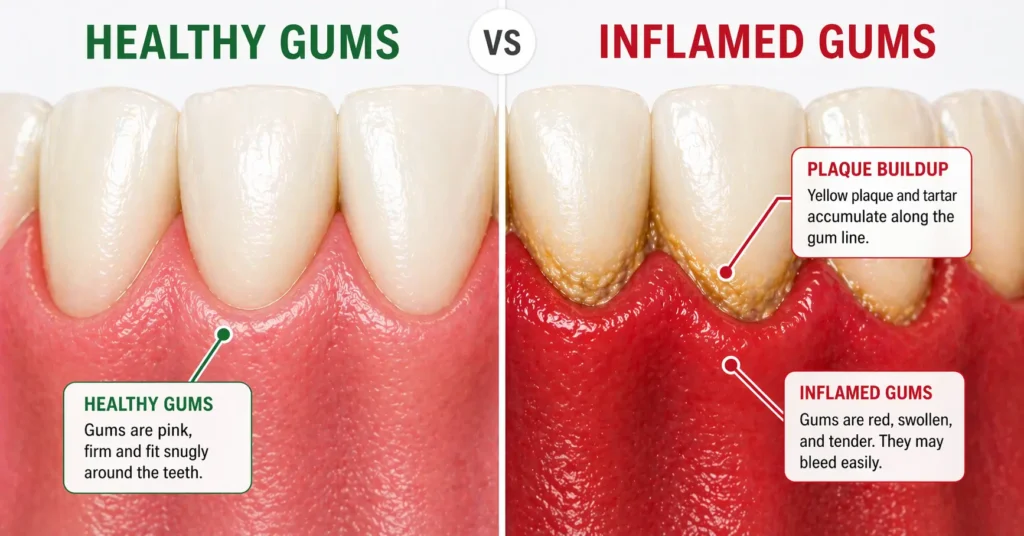
Bleeding gums (clinically called gingival bleeding) happen when the soft tissue around your teeth becomes inflamed and irritated — usually due to plaque and bacteria buildup along the gum line. Healthy gums are firm, pink, and don’t bleed when you brush, floss, or eat.
When your gums bleed regularly, it signals one of two things:
- Gingivitis — the early, reversible stage of gum disease
- Periodontitis — a more advanced, destructive stage that affects the bone supporting your teeth
Understanding the difference between gingivitis vs periodontitis is critical. Gingivitis can be completely cured with professional cleaning and better home care. Periodontitis, on the other hand, requires longer, more intensive treatment and can eventually lead to tooth loss if left untreated.
Why Do My Gums Bleed When I Brush? Common Causes
“Why do my gums bleed when I brush?” is easily one of the top three questions we hear every week. Here are the most common culprits:
- Plaque and tartar buildup — the #1 cause. Bacteria along the gum line inflame the tissue.
- Poor brushing technique — brushing too hard or with a stiff-bristled brush damages delicate gums.
- Skipping flossing — food debris between teeth ferments and irritates the gums.
- Hormonal changes — pregnancy, menstruation, or puberty can make gums more sensitive.
- Vitamin deficiencies — especially Vitamin C (scurvy) and Vitamin K.
- Diabetes — uncontrolled blood sugar makes gums more prone to infection.
- Smoking and tobacco use — impairs blood flow and delays gum healing.
- Certain medications — blood thinners, some antihypertensives, and oral contraceptives.
- Stress — weakens your immune response to bacterial infections.
- New dental work — a recently placed crown or filling that irritates the gum.
- Misaligned teeth — crooked teeth trap more plaque.
In humid climates like South Kolkata’s, bacterial buildup can happen faster than you’d expect — which is why regular professional cleaning matters even more here than in drier regions.
Symptoms to Watch Out For
Bleeding is often just the first sign. Your gums may be trying to tell you more. Look out for:
- Red, swollen, or tender gums
- Gums that bleed while brushing, flossing, or eating hard foods
- Persistent bad breath (halitosis) that mouthwash can’t fix
- A bad taste in your mouth, especially in the morning
- Gums that appear to be pulling away from your teeth (receding gums)
- Loose or shifting teeth
- Changes in your bite or how your teeth fit together
- Pus between your teeth and gums
- Sensitivity to hot or cold food and drinks
If you notice three or more of these, the condition has likely progressed beyond simple gingivitis. Don’t wait — book a consultation immediately.
Bleeding Gums Treatment: What Actually Works
The good news? Bleeding gums are highly treatable — especially when caught early. Here’s what effective bleeding gums treatment typically involves:
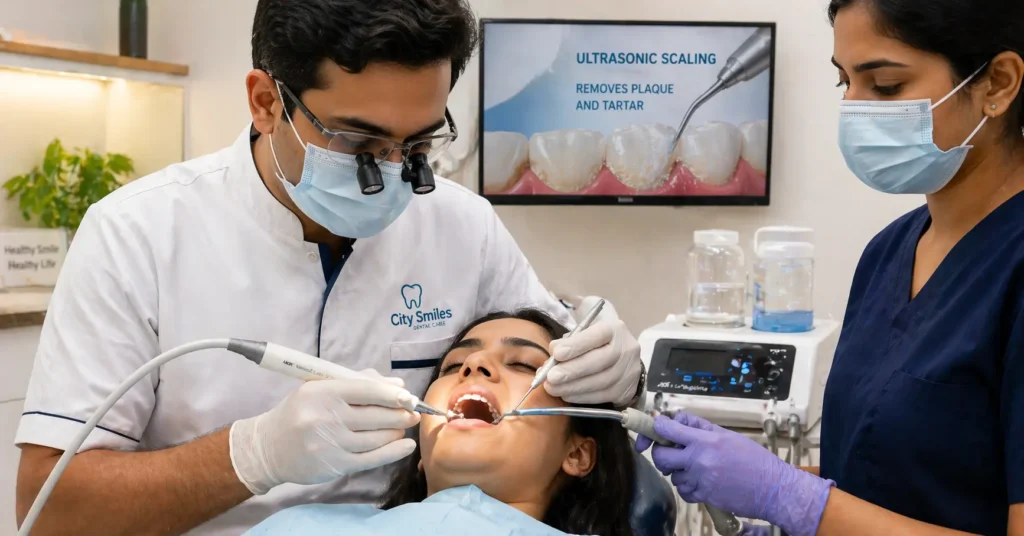
1. Professional Scaling & Polishing The cornerstone of treatment. Ultrasonic scaling removes hardened plaque (tartar) that regular brushing simply cannot dislodge. Most mild cases of gingivitis resolve within 1–2 weeks of a good scaling.
2. Root Planing (Deep Cleaning) For more advanced cases, the dentist cleans below the gum line, smoothing out tooth roots so gums can reattach properly. This is often done under local anaesthesia.
3. Antibacterial Mouth Rinses Prescription chlorhexidine rinses can significantly reduce bacterial load during the healing phase.
4. Laser Gum Therapy Advanced clinics use lasers to disinfect gum pockets, reduce inflammation, and promote faster healing — often with less bleeding and discomfort than traditional methods.
5. Flap Surgery (Advanced Periodontitis) In severe cases, minor surgery may be needed to access and clean deep pockets between teeth and gums.
6. Bone & Tissue Grafts When periodontitis has destroyed supporting bone, regenerative procedures can help restore what’s been lost.
7. Ongoing Maintenance Periodontal care isn’t one-and-done. Patients with a history of gum disease need professional cleanings every 3–4 months instead of the standard 6.
Bleeding Gums Home Remedies: What Helps, What Doesn’t
Before you reach for Dr. Google, here’s an honest take on bleeding gums home remedy advice you’ll find online:
What genuinely helps:
- Warm salt water rinses (½ teaspoon salt in a glass of warm water) — natural antiseptic
- Switching to a soft-bristled or electric toothbrush
- Gentle flossing every night (bleeding may actually increase for 3–5 days before improving)
- Drinking more water to flush out bacteria
- Adding Vitamin C-rich foods (guava, amla, oranges, bell peppers)
- Oil pulling with coconut oil (supportive, not a cure)
What doesn’t work (or makes things worse):
- Applying clove oil directly on gums (can burn tissue)
- Rubbing lemon or baking soda — too acidic/abrasive
- Stopping brushing because it hurts (the opposite of what you should do)
- Ignoring it and hoping it “heals on its own”
Home remedies can support professional treatment but cannot replace it. Tartar, once formed, cannot be removed by any toothpaste, mouthwash, or home remedy.
Gum Disease Treatment Cost in Kolkata (2026)
One of the most common worries is cost. Here’s an honest breakdown of typical gum disease treatment Kolkata pricing in 2026:
| Treatment | Approximate Cost Range |
| Consultation & Gum Examination | ₹300 – ₹800 |
| Scaling & Polishing (Both Arches) | ₹1,000 – ₹2,500 |
| Deep Cleaning / Root Planing (Per Quadrant) | ₹1,500 – ₹4,000 |
| Laser Gum Therapy (Per Session) | ₹3,000 – ₹8,000 |
| Antibacterial Gum Rinse (Prescription) | ₹300 – ₹600 |
| Flap Surgery (Per Quadrant) | ₹5,000 – ₹15,000 |
| Bone Grafting | ₹8,000 – ₹25,000 |
| Full-Mouth Periodontal Maintenance Package | ₹5,000 – ₹12,000 |
The scaling cost Kolkata patients should expect is usually ₹1,000–₹2,500 for a standard session — far less than what you’d spend treating advanced gum disease later. Think of scaling as an investment that protects you from tooth loss, implants, and years of complications.
When Should You See a Dentist?
If you’re asking whether it’s time to book an appointment — it probably is. Don’t delay if you experience:
- Gums that have been bleeding for more than a week
- Visible pus, swelling, or abscesses
- Loose adult teeth
- Persistent bad breath that doesn’t improve with brushing
- Receding gums or teeth appearing longer
- Pain while chewing
- Changes in the fit of dentures, crowns, or bridges
Early intervention is almost always simpler, cheaper, and more effective. Most patients are shocked at how much better their mouth feels after just one professional cleaning.
Prevention Tips: How to Stop Bleeding Gums Before They Start
The best bleeding gums treatment is the one you never need. Build these habits into your daily routine:
- Brush twice daily with a soft-bristled brush using gentle, circular motions
- Floss every single night — yes, every night
- Replace your toothbrush every 3 months (or sooner if bristles fray)
- Rinse with an antibacterial mouthwash once daily
- Use a tongue cleaner — 60% of oral bacteria live on the tongue
- Drink water after every meal, especially after sweet or sticky foods
- Quit smoking and tobacco in all forms
- Manage diabetes, stress, and hormonal conditions actively
- Get professional scaling every 6 months
- Don’t ignore early bleeding — address it in week 1, not month 6
Why Choose City Smiles Dental Care for Bleeding Gums Treatment
When it comes to gum health, experience and technology matter. Here’s why patients across Garia, Tollygunge, Jadavpur, Baghajatin, and greater South Kolkata trust City Smiles Dental Care:
Specialist-Led Periodontal Care Our team includes experienced dentists with specialised training in managing gingivitis, periodontitis, and complex gum conditions — from mild bleeding to advanced bone loss.
Advanced Technology We use ultrasonic scalers, laser gum therapy, intraoral cameras, and digital X-rays for precise diagnosis and virtually painless treatment. No more scraping discomfort of old-fashioned methods.
Personalised Treatment Plans Every mouth is different. We build custom care plans based on your gum condition, lifestyle, medical history, and budget — and we explain every step before we start.
Transparent Pricing Written estimates, zero hidden charges, and clear communication about what’s essential versus optional.
Convenient South Kolkata Location Easily accessible from Garia, Tollygunge, Jadavpur, Baghajatin, Naktala, and Rashbehari — with flexible evening and weekend appointments.
Check out our Google Business Profile for real patient reviews, or explore our comprehensive dental services to learn more about how we care for our patients.
Frequently Asked Questions (FAQs)
1. Why do my gums bleed when I brush my teeth? Most commonly, it’s due to plaque buildup along the gum line, which causes gingivitis. Other causes include hard brushing, hormonal changes, vitamin deficiencies, diabetes, smoking, or certain medications.
2. Is bleeding gums treatment painful? Modern treatment is virtually painless. Scaling and polishing feel like a gentle vibration, and deeper treatments are performed under local anaesthesia. Laser gum therapy is especially comfortable with minimal post-treatment soreness.
3. Can bleeding gums heal on their own? Mild cases sometimes improve with better brushing and flossing, but once tartar has formed, it won’t disappear without professional scaling. Ignoring the problem risks progression from gingivitis to periodontitis.
4. What’s the difference between gingivitis and periodontitis? Gingivitis is the early, reversible stage — gums are red, swollen, and bleed easily. Periodontitis is the advanced stage — the infection has spread to the bone supporting your teeth, potentially causing tooth loss.
5. How much does scaling cost in Kolkata? The typical scaling cost in Kolkata ranges from ₹1,000 to ₹2,500 for a standard cleaning of both arches at reputed clinics, depending on technology used and extent of tartar buildup.
6. Does salt water rinse really help bleeding gums? Yes, as a supportive measure. Warm salt water rinses are a natural antiseptic and reduce inflammation — but they cannot remove tartar or treat active gum disease. Use them alongside professional care, not instead of it.
7. How often should I get my teeth professionally cleaned? Every 6 months for most healthy adults. Patients with a history of gum disease, diabetes, smokers, or those with dental implants should consider every 3–4 months for best results.
Strong CTA
Don’t let a little pink on your toothbrush become a big problem years from now.
Bleeding gums are your body’s early alarm — and the earlier you respond, the easier the fix. At City Smiles Dental Care, our expert team delivers gentle, painless, and genuinely effective bleeding gums treatment right here in South Kolkata. From quick scaling sessions to advanced periodontal therapy, we treat the root cause — not just the symptoms.
👉 Book Your Gum Health Consultation Today — same-week slots available.
📍 Visit our South Kolkata clinic or explore our complete range of dental services.
Healthy gums. Healthy smile. Healthy you.