


You just had a tooth removed. Maybe it was a wisdom tooth that had been bothering you for months, or a damaged molar that couldn’t be saved. The extraction is done and now you’re sitting at home wondering: Am I doing this right? Why does it still hurt? Did I just dislodge the clot?
If those questions are running through your head, you’re not alone. At City Smiles Dental Care in South Kolkata, we see patients every week who are doing everything right and a few who unknowingly slow their own recovery. The difference almost always comes down to tooth extraction aftercare.
This guide covers everything: what to eat after tooth removal, how to recognise dry socket symptoms, how long to heal after extraction, and what to do if you suspect your clot has been dislodged. We’ve written it in plain language so you feel confident every day of your recovery.

What to Do in the First 24 Hours After Tooth Extraction
The first day is the most critical period of your tooth extraction aftercare. Here’s exactly what you should do:
Keep the gauze in place. Your dentist will place a gauze pad over the extraction site. Bite down gently and leave it there for 30–45 minutes. This pressure helps the blood clot form and that clot is what protects your healing socket.
Rest and avoid exertion. Skip your morning walk or gym session. Increased blood pressure can disrupt clot formation and cause prolonged bleeding.
Apply ice packs. For the first 24 hours, apply an ice pack to the outside of your cheek 20 minutes on, 20 minutes off. This reduces swelling significantly.
Sleep with your head elevated. Use an extra pillow to keep your head slightly raised. This reduces blood pooling near the extraction site.
Do NOT:
- Spit forcefully
- Drink through a straw
- Smoke or use tobacco in any form
- Rinse your mouth vigorously
- Touch the area with your tongue or finger
All of these actions create suction or pressure that can dislodge the blood clot leading to a painful condition called dry socket (more on that below).
What to Eat After Tooth Removal
One of the most searched questions we hear is: “What can I eat after tooth removal?” The short answer: soft, cool, and non-chewy foods are your best friends.
Safe foods for the first 3–5 days:
- Khichdi and soft rice (room temperature or lukewarm not hot)
- Curd and lassi (no straw)
- Mashed banana, papaya, and avocado
- Soft idlis without spicy chutney
- Scrambled eggs or paneer mashed softly
- Cold dal or vegetable soup (no hard vegetables)
- Ice cream or cold yoghurt (especially helpful in the first 24 hours)
Foods to strictly avoid:
- Hot food and drinks heat increases blood flow and can dissolve the clot
- Hard, crunchy foods like chips, puffed rice, or roasted peanuts
- Spicy dishes irritate the healing tissue
- Alcohol interferes with healing and reacts poorly with pain medication
- Chewy foods like meat, bread crusts, or tough rotis
Local tip for Kolkata patients: Avoid mishti doi with granola or any nuts on top. Plain mishti doi, however, can be a soothing option in small amounts.

Dry Socket: Symptoms, Causes, and What to Do
Dry socket (alveolar osteitis) is the most common complication after a tooth extraction and the most misunderstood.
What is dry socket?
When you have a tooth removed, a blood clot forms in the empty socket. This clot acts like a natural bandage, protecting the exposed bone and nerves underneath. Dry socket happens when that clot is dislodged or dissolves too early, leaving the bone exposed.
Dry socket symptoms to watch for:
- Severe, throbbing pain that begins 2–4 days after extraction often worse than the extraction itself
- Pain that radiates to your ear, jaw, or neck on the same side
- Visible empty socket you may see the bone when looking in a mirror
- Bad taste or odour from the area despite oral hygiene
- Swollen lymph nodes in the jaw or neck
Who is at higher risk?
- Smokers (the leading risk factor)
- Those who used a straw too soon
- People with poor oral hygiene
- Those on certain medications like oral contraceptives
- Patients who had a difficult or lengthy extraction
What to do if you think your clot was dislodged:
Do not panic. Call your dentist immediately. At City Smiles Dental Care, we handle post-extraction complications as a priority. Treatment involves cleaning the socket and placing a medicated dressing to promote healing it provides rapid pain relief, usually within hours.
If you’re in Garia, Tollygunge, Jadavpur, or anywhere in South Kolkata and experiencing these symptoms, don’t wait. Book an emergency appointment here.
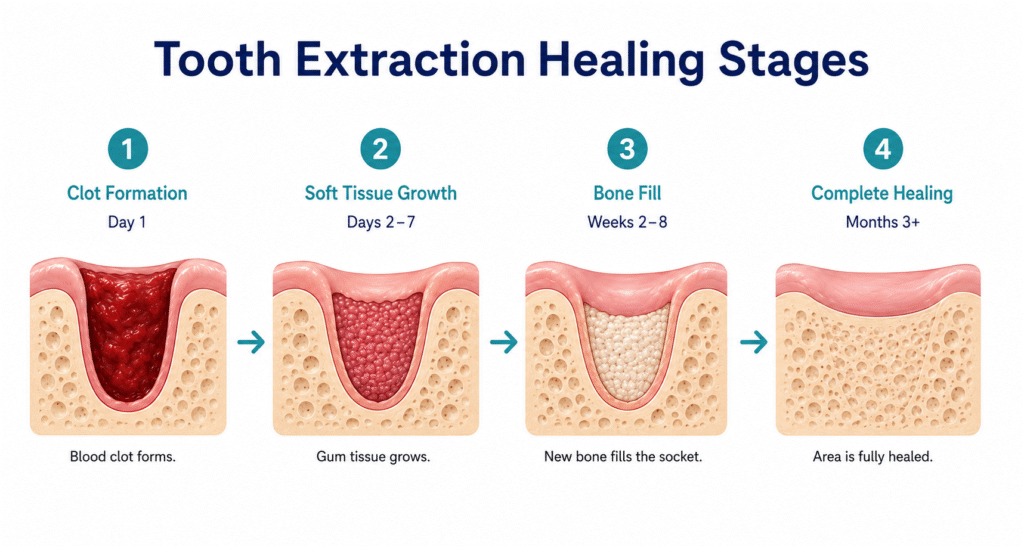
How Long Does It Take to Heal After Tooth Extraction?
“How long to heal after extraction?” is the question we answer most often. The honest answer: it depends on the type of extraction and how well aftercare is followed.
| Healing Stage | Timeline |
| Initial clot forms | Within 24 hours |
| Soft tissue closes over socket | 1–2 weeks |
| Bone begins to fill the socket | 3–6 weeks |
| Full bone and tissue healing | 3–6 months |
For simple extractions (single-rooted teeth with a straightforward procedure), most patients feel comfortable within 3–5 days. The extraction site may feel slightly tender for up to 2 weeks.
For surgical extractions (impacted wisdom teeth, multi-rooted teeth, or teeth broken at the gumline), expect:
- Significant swelling and discomfort for 5–7 days
- Stitches (if placed) are removed or dissolved within 7–10 days
- Full socket closure in 2–3 weeks
Signs your healing is on track:
- Swelling peaks at 48–72 hours, then gradually reduces
- Pain decreases day by day (not increasing)
- No foul taste or unusual discharge
Signs something may be wrong call your dentist:
- Pain worsening after day 3
- Fever above 38°C
- Pus or discharge from the site
- Numbness that isn’t improving
Oral Hygiene After Tooth Extraction: Cleaning Without Damaging
Keeping your mouth clean is essential but you must do it carefully in the days following extraction.
Day 1: Do NOT rinse, gargle, or brush near the extraction site. Leave the area completely undisturbed.
Day 2 onwards: Begin gentle salt water rinses half a teaspoon of salt in a glass of lukewarm water. Swish gently and let the water fall out naturally rather than spitting hard. Repeat after meals.
Brushing: Continue brushing the rest of your teeth normally, but keep the toothbrush away from the extraction socket for the first 3–4 days. When you do brush near it, use the gentlest possible pressure.
Mouthwash: Avoid alcohol-based mouthwashes during the first week they can irritate the healing tissue. Your dentist may prescribe a medicated rinse (such as Chlorhexidine) use it only as directed.
Managing Pain and Swelling at Home
Some discomfort after extraction is completely normal. Here’s how to manage it effectively:
Prescribed medications: Take your pain relief and antibiotics exactly as prescribed even if you feel better. Stopping antibiotics early is a common mistake that can lead to infection.
Over-the-counter pain relief: Ibuprofen (if not contraindicated) is often more effective than paracetamol for dental pain because it also reduces inflammation. Avoid aspirin it thins the blood and can increase bleeding.
Ice packs: Use for the first 24 hours only. After 24 hours, switch to warm compresses to help reduce swelling and improve circulation.
Elevation: Keep your head elevated even while resting or watching television this reduces pressure in the extraction area.
When to call your dentist:
- Bleeding that doesn’t stop after 2 hours of firm gauze pressure
- Swelling that worsens significantly after day 3
- Fever, difficulty swallowing, or difficulty breathing (the latter two require emergency care)
Why Choose City Smiles Dental Care for Your Dental Needs in South Kolkata
At City Smiles Dental Care, we understand that dental procedures especially extractions can feel stressful. Our approach is built on three pillars:
Experience You Can Trust Our dental team has extensive experience performing both simple and surgical tooth extractions. We take time to explain every step, so you leave our clinic confident about your recovery not anxious.
Modern Technology, Gentle Technique We use advanced imaging and minimally invasive techniques designed to reduce trauma to surrounding tissue. This means less swelling, faster healing, and a more comfortable recovery experience for our patients.
Rooted in South Kolkata We’re proud to serve patients from across South Kolkata including Garia, Tollygunge, Jadavpur, Regent Park, Behala, and beyond. As a local clinic, we know our community and we’re always a short drive away when you need us.
👉 Read more about our dental care services
📍 Find us on Google Maps and read patient reviews
📅 Book your appointment online
Conclusion
Tooth extraction aftercare isn’t complicated but it does require care and attention, especially in the first 72 hours. By protecting the clot, eating the right foods, maintaining gentle oral hygiene, and watching for dry socket symptoms, the vast majority of patients recover smoothly and comfortably.
If anything feels off during your tooth extraction recovery in Kolkata, don’t search for answers for hours on end call us. At City Smiles Dental Care, we’d rather you check in and find out everything is fine than wait too long with a complication.
Your recovery is our priority. Book a follow-up or consultation today.
Frequently Asked Questions
1. How long should I keep the gauze in after tooth extraction?
Bite firmly on the gauze for 30–45 minutes after your extraction. If bleeding continues, replace with a fresh piece and apply pressure for another 30 minutes. Avoid removing and checking it repeatedly, as this disrupts clot formation.
2. What can I eat after tooth removal on the first day?
On the first day, stick to cold or room-temperature soft foods: ice cream, cold yoghurt, cold dal, mashed banana, or soft curd rice. Avoid anything hot, spicy, crunchy, or chewy. Do not use a straw.
3. How do I know if I have dry socket?
Dry socket typically starts 2–4 days after extraction with severe, throbbing pain that may radiate to your ear or jaw. You may notice the socket looks empty (no clot visible) and there may be an unpleasant odour. Contact your dentist immediately dry socket is treated effectively in the clinic.
4. What happens if the clot is dislodged after tooth removal?
If you suspect your clot has been dislodged, do not try to replace it yourself. Call your dentist promptly. At City Smiles Dental Care, we’ll clean the socket and place a medicated dressing that provides pain relief and supports healing. Most patients feel significantly better within hours of treatment.
5. How long does it take to heal after tooth extraction?
For most simple extractions, you’ll feel comfortable within 3–5 days and the tissue will close within 1–2 weeks. Surgical extractions (such as impacted wisdom teeth) may take 2–3 weeks for the gum to fully close and 3–6 months for complete bone healing.
6. Can I brush my teeth after tooth extraction?
Yes but carefully. On the first day, avoid brushing near the extraction site entirely. From day 2, you can brush the rest of your mouth normally. After 3–4 days, you can very gently brush near the area. Use saltwater rinses (gentle, not vigorous) from day 2 after meals.
7. When can I resume normal eating after tooth extraction?
Most patients can return to a near-normal (soft) diet within 5–7 days. Avoid very hard, crunchy, or chewy foods for at least 2 weeks. The extraction site should be comfortable enough for gentle chewing within a week for simple extractions.
Written by the dental care team at City Smiles Dental Care, South Kolkata. For personalised advice, book a consultation with us or read more on our dental care blog.