


Losing a tooth changes small things first. You start chewing on one side. You cover your mouth when you laugh. You skip the guava at the family lunch in Garia because biting feels risky.
Then comes the bigger question: can I actually get this fixed permanently?
Dental implants are the closest modern dentistry comes to replacing a natural tooth — a titanium root topped with a lifelike crown. But before anyone talks brands, timelines, or costs, there’s a more important question every honest dentist asks first: are you a good candidate for dental implants?
At City Smiles Dental Care in South Kolkata, this is one of the most common questions we hear from patients across Jadavpur, Baghajatin, Tollygunge, and nearby areas. Many arrive convinced they’re ineligible — too old, too diabetic, “not enough bone.” Most of them are wrong. This guide explains who qualifies, who needs preparation first, and how implant eligibility is actually assessed.
Quick Answer: Who Qualifies for Dental Implants?
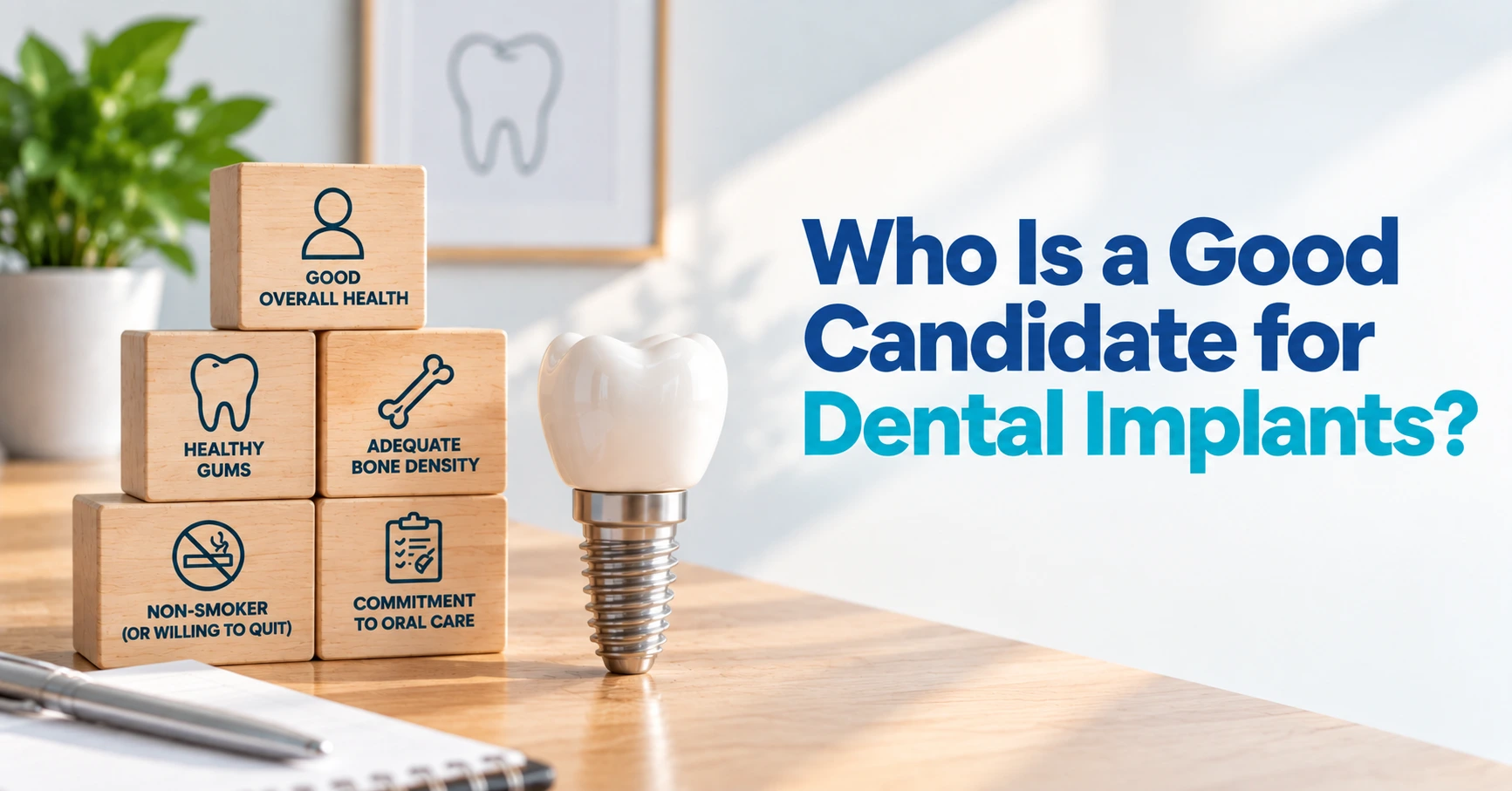
A good candidate for dental implants is an adult with one or more missing teeth, adequate jawbone density, healthy gums, and stable general health. Non-smokers with good oral hygiene habits have the highest success rates. Age is rarely a barrier — bone quality, gum health, and medical stability matter far more than the number on your Aadhaar card.
If you don’t tick every box today, you’re not automatically excluded. Many “borderline” patients become excellent candidates after preparatory treatment such as gum therapy or bone grafting.
Why Candidacy Matters Before You Commit to Implants
Implant candidacy matters because an implant’s success depends on your body’s ability to heal around it. The titanium post must fuse with your jawbone — a biological process called osseointegration that takes roughly three to six months. Poor bone, active infection, or uncontrolled health conditions can interfere with this fusion and cause implant failure.
A careful candidacy assessment protects you in two ways. It prevents you from investing time and money in a treatment likely to fail. And it identifies fixable problems — like gum disease or thin bone — that can be treated first, converting a “no” into a confident “yes.”
This is why reputable clinics never promise implants over the phone. At City Smiles Dental Care, every implant recommendation follows a clinical examination and imaging — because responsible dentistry starts with honest assessment, not sales.
7 Signs You Are a Good Candidate for Dental Implants
Most good implant candidates share seven characteristics. You don’t need to be perfect on all seven — but the more you match, the smoother your treatment journey is likely to be.
1. You Have One or More Missing Teeth
This sounds obvious, but it defines the starting point. Implants replace missing teeth — whether you lost one tooth to an accident, several to decay, or most of them over the years. Implants can support a single crown, a bridge for multiple missing teeth, or even a full-arch restoration for patients tired of loose dentures.
If a tooth is badly damaged but still present, extraction followed by an implant may be planned as a single coordinated journey.
2. Your Jawbone Is Fully Developed
Implants are generally placed only after jaw growth is complete — typically after age 18. Placing an implant in a still-growing jaw can leave it misaligned as the bone develops around it.
There is no upper age limit. We’ve seen patients in their 70s heal beautifully. What matters at any age is bone quality and overall health, not the birth year.
3. You Have Adequate Bone Density
Bone density is the single most important clinical factor in implant eligibility. The implant post needs enough healthy bone — in both height and width — to anchor securely, the way a screw needs solid wood rather than crumbling plywood.
Bone naturally shrinks in areas where teeth have been missing for years, which is why long-delayed replacements sometimes need extra planning. The good news: insufficient bone is a solvable problem. Bone grafting, sinus lifts, and modern narrow-diameter implants allow many patients with bone loss to proceed successfully after preparation.
Your bone density for implants is measured precisely with dental X-rays or a 3D CBCT scan — never guessed by looking in a mirror.
4. Your Gums Are Healthy
Healthy gums are the foundation the implant lives in. Active gum disease (periodontitis) is one of the leading causes of implant failure, because the same bacteria that destroy support around natural teeth can attack the tissue around implants — a condition called peri-implantitis.
Bleeding gums, persistent bad breath, or gums pulling away from teeth are signs to address before implant surgery. Gum treatment first, implant second — that sequence dramatically improves long-term success.
5. You Are in Reasonably Good General Health
Implant placement is a minor surgical procedure, so your body needs to be healthy enough to heal well. You don’t need to be an athlete — you need stability. Well-controlled blood pressure, managed diabetes, and no active untreated infections are the practical benchmarks.
Your dentist will review your medical history and current medications, and may coordinate with your physician for complex cases. This isn’t red tape; it’s how safe implant dentistry works.
6. You Don’t Smoke — or Are Willing to Pause
Smoking restricts blood flow to the gums and jawbone, slows healing, and measurably increases implant failure rates. Smokers can still receive implants, but the risk profile changes.
The most practical advice: pause smoking for at least one to two weeks before surgery and throughout the initial healing period — longer is better. Many of our patients have used their implant journey as the push to quit entirely.
7. You Are Committed to Oral Hygiene and Follow-Ups
Implants don’t decay, but the gums and bone around them still need protection. A suitable implant patient is someone willing to brush twice daily, clean between teeth, and attend periodic check-ups.
Think of it as protecting an investment. With proper care, implants routinely last 15–25 years or more — often a lifetime.
Health Conditions That Affect Implant Eligibility (But Rarely Rule You Out)
Certain health conditions require extra planning before implants — but in modern practice, very few are absolute barriers. Here’s how the most common concerns are actually handled.
Diabetes
Uncontrolled diabetes slows healing and raises infection risk. Well-controlled diabetes, however, is compatible with successful implants. If your HbA1c is in a stable range and you follow your physician’s plan, implant success rates approach those of non-diabetic patients. Your dentist may simply time treatment carefully and monitor healing more closely.
Gum Disease (Periodontitis)
Active gum disease must be treated first — through deep cleaning (scaling and root planing) and, in advanced cases, periodontal therapy. Once your gums are stable and you’re maintaining them well, implant candidacy is typically restored.
Low Bone Density and Bone Loss
Told you “don’t have enough bone”? That verdict is often decades out of date. Bone grafting rebuilds deficient areas using graft material that your body integrates over a few months. Sinus lift procedures do the same for the upper back jaw. These are routine, well-established procedures — not experimental measures.
Osteoporosis and Bone Medications
Osteoporosis itself doesn’t automatically exclude you. However, certain long-term bone medications (bisphosphonates) require careful evaluation, because they can affect jawbone healing. Always share your full medication list with your dentist — decisions here are made case by case, often in consultation with your physician.
Other Medical Considerations
Recent heart events, ongoing cancer treatment (radiation to the jaw area or chemotherapy), immune-suppressing conditions, and uncontrolled clotting disorders call for individualized assessment and timing. In many of these situations, implants aren’t off the table — they’re simply scheduled for the right moment in your health journey.
Who May Not Be a Suitable Patient for Implants Right Now?
A small group of patients are advised to delay or reconsider implants. This includes teenagers whose jaws are still growing, patients with untreated gum infection, heavy smokers unwilling to pause, patients with uncontrolled systemic disease, and those currently undergoing head-and-neck radiation.
Notice the pattern: almost every item on that list says right now. Growth completes. Gum disease gets treated. Diabetes gets controlled. For most people, “not a candidate” really means “not yet” — and a clear preparation plan bridges the gap.
For patients who genuinely cannot proceed with implants, alternatives like dental bridges and well-fitted dentures remain valid options, and an honest clinic will explain the trade-offs of each.
Implant Eligibility at a Glance
| Factor | Good Candidate | Needs Preparation First | Usually Advised to Wait |
| Age | Any adult with completed jaw growth | — | Under ~18 (jaw still growing) |
| Bone density | Adequate height and width | Bone grafting or sinus lift for deficient areas | Severe untreated bone pathology |
| Gum health | Healthy, no bleeding | Active gum disease → treat first | Untreated advanced periodontitis |
| Diabetes | Well-controlled | Poorly controlled → stabilise first | Uncontrolled with complications |
| Smoking | Non-smoker | Willing to pause around surgery | Heavy smoker unwilling to pause |
| Oral hygiene | Consistent daily care | Coachable habits | Unwilling to maintain hygiene |
| General health | Stable, medications reviewed | Physician coordination needed | Active untreated systemic illness |
How Dentists Assess Implant Candidacy: What to Expect at Your Consultation
Implant candidacy is confirmed through a structured clinical assessment, not a questionnaire. A typical implant consultation involves four steps: a detailed medical and dental history, a clinical examination of your gums and remaining teeth, imaging (digital X-rays and often a 3D CBCT scan) to measure bone density and locate nerves and sinuses, and a personalised treatment plan discussion.
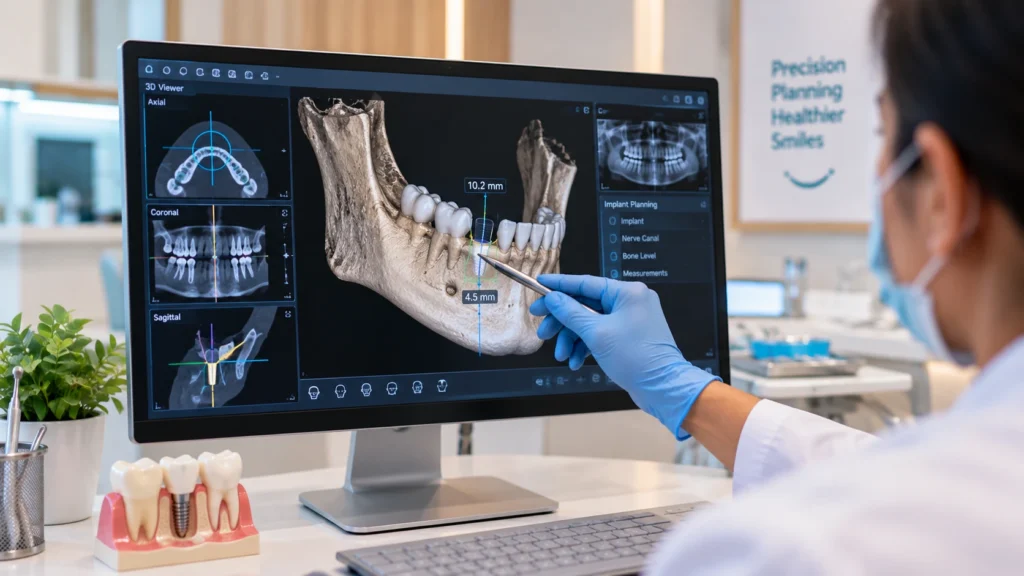
Here’s what that looks like in practice:
- History and conversation. Your dentist asks about medications, health conditions, smoking, and — importantly — what you want from treatment.
- Clinical examination. Gum health, bite alignment, and the condition of neighbouring teeth are checked, since implants must work in harmony with everything around them.
- Imaging. Scans reveal exactly how much bone is available and in what shape — the difference between guessing and planning.
- Your personalised plan. You learn whether you’re ready now, need preparatory treatment, or should consider alternatives — along with realistic timelines.
At City Smiles Dental Care, we follow this personalised planning approach for every implant patient from South Kolkata and surrounding neighbourhoods like Santoshpur and Dhakuria. No two jaws are alike, and no two implant plans should be either.
Myths vs Facts About Dental Implant Candidacy
Myth: “I’m too old for implants.” Fact: There is no upper age limit. Healthy patients in their 60s, 70s, and beyond receive implants successfully every day. Bone quality and health stability matter — age doesn’t.
Myth: “Diabetics can’t get implants.” Fact: Well-controlled diabetes is compatible with implant treatment. Control, not the diagnosis itself, is what dentists assess.
Myth: “I was told I don’t have enough bone, so that’s final.” Fact: Bone grafting and sinus lift procedures routinely rebuild deficient bone. Many patients rejected years ago are excellent candidates today.
Myth: “If I wear dentures, implants aren’t for me anymore.” Fact: Long-term denture wearers are among the happiest implant patients. Even with some bone shrinkage, implant-supported options can often restore stable chewing.
Myth: “Missing one tooth isn’t worth an implant.” Fact: A single missing tooth causes neighbouring teeth to drift and the opposing tooth to over-erupt, while the bone beneath quietly shrinks. Replacing one tooth protects many.
FAQs About Being a Candidate for Dental Implants
Am I too old to get dental implants? No. There is no maximum age for dental implants. As long as your jawbone is healthy, your gums are free of active disease, and your general health is stable, implants can succeed at 45 or 75. Dentists assess biology, not birthdays.
Can I get dental implants if I have diabetes? Yes, if your diabetes is well-controlled. Stable blood sugar allows normal healing and osseointegration. Your dentist may coordinate with your physician and monitor recovery more closely, but controlled diabetes is not a barrier to implant eligibility.
What happens if I don’t have enough bone for implants? You can usually still get implants after bone grafting. A graft rebuilds bone height and width over three to six months, after which the implant is placed into the strengthened area. Sinus lifts serve the same purpose in the upper back jaw.
Can smokers get dental implants? Yes, but with higher risk. Smoking reduces blood supply to healing tissue and increases failure rates. Most dentists recommend stopping at least one to two weeks before surgery and throughout healing to protect your investment.
How soon after a tooth extraction can I get an implant? It varies from immediately to about three to six months. In favourable cases, an implant can be placed the same day as extraction. When infection or bone loss is present, the site heals first. Your dentist decides based on imaging and gum condition.
Is gum disease a permanent barrier to implants? No. Active gum disease must be treated before implant placement, but once your gums are healthy and stable, candidacy is typically restored. Untreated periodontitis, however, is a leading cause of implant failure — sequence matters.
Do I qualify for implants if I’ve worn dentures for years? Very often, yes. Long-term denture use causes gradual bone shrinkage, so a scan is needed to assess remaining bone. Depending on findings, options range from standard implants to grafting followed by implant-supported dentures.
How do dentists test bone density for implants? With dental imaging — usually digital X-rays and a 3D CBCT scan. These show the exact height, width, and quality of your jawbone and map nerves and sinuses, allowing precise, safe implant planning.
Can teenagers get dental implants? Generally no. Implants are placed only after jaw growth is complete, usually from age 18 onwards. Until then, temporary replacements maintain space and aesthetics without interfering with natural development.
Conclusion: Find Out If You’re a Candidate — the Right Way
Most adults with missing teeth are closer to implant eligibility than they think. The real question is rarely whether you’re a candidate for dental implants — it’s what preparation, if any, you need first. Healthy gums, adequate bone density, stable general health, and a commitment to daily care form the foundation. Almost everything else — bone loss, gum disease, diabetes — is manageable with the right plan.
The only way to know for certain is a proper clinical examination with imaging. A checklist can inform you; only a dentist can confirm you.
Ready to Find Out If Dental Implants Are Right for You?
If missing teeth are affecting how you eat, speak, or smile, don’t settle for guessing about your eligibility. The team at City Smiles Dental Care offers thorough implant consultations — including clinical examination and imaging-based bone assessment — for patients across South Kolkata, including Garia, Baghajatin, Jadavpur, Tollygunge, Santoshpur, and Dhakuria.
Book your implant consultation online and get a clear, honest answer about your candidacy — along with a personalised plan if preparation is needed first.
You can also find directions, timings, and patient reviews on our Google Business Profile.
One consultation. A clear answer. A permanent smile within reach.