


“You need a root canal.”
For most patients, those five words trigger an avalanche of questions — and a fair amount of panic. If you’ve just heard them from your dentist, you’re probably searching for honest root canal FAQs right now, hoping someone will tell you the truth: Will it hurt? Is it safe? Can I just take antibiotics instead? What will it cost in Kolkata?
You deserve straight answers, not vague reassurance. That’s why our endodontic team at City Smiles Dental Care in South Kolkata has compiled the 25 root canal questions patients ask us most often in our Baghajatin clinic — answered the same way we’d answer them chairside, in plain language, with no sugar-coating.
Bookmark this RCT patient guide. By the end, you’ll know exactly what to expect, what things cost, and when it’s time to stop Googling and see a dentist.
What Are Root Canal FAQs Really About? The Basics First
Before we get into pain, cost, and recovery, let’s clear up the three foundational root canal questions almost every patient starts with.
1. What exactly is a root canal treatment?
A root canal (RCT) is a procedure that removes infected or inflamed soft tissue — called the pulp — from inside your tooth. The hollow canals are then cleaned, disinfected, and sealed with a biocompatible filling material. The goal is simple: eliminate the infection and save your natural tooth instead of extracting it.
2. Is the “root canal” the treatment or a part of my tooth?
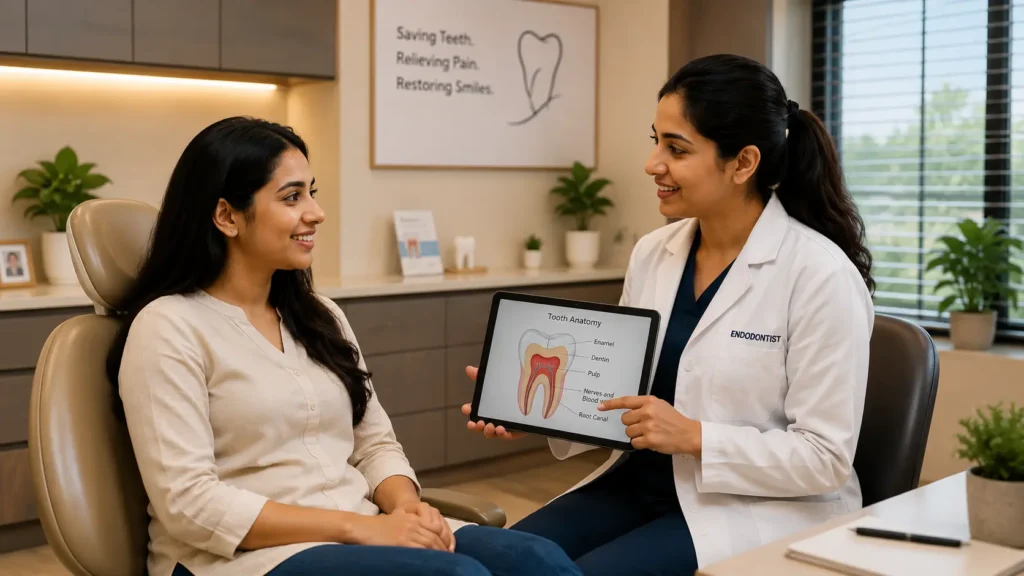
Both, actually — and this confuses many patients. The root canal is the natural hollow channel inside each tooth root that houses nerves and blood vessels. “Root canal treatment” is the procedure that cleans out these channels when they become infected.
3. Why can’t the tooth just heal on its own?
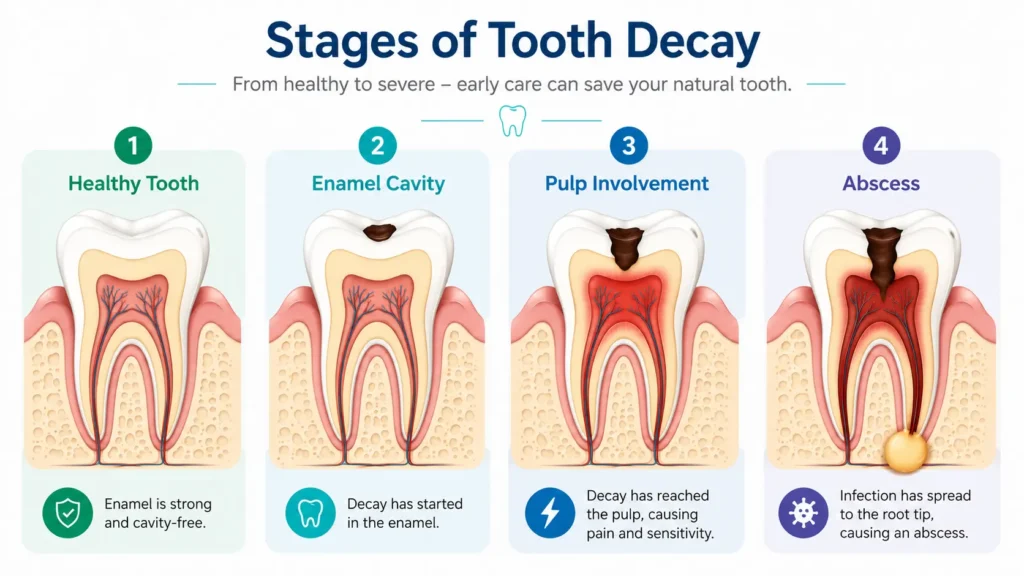
Unlike skin or bone, the pulp inside a tooth has no way to repair itself once it’s badly infected. It sits in a sealed, rigid chamber with a very limited blood supply. Once bacteria take over, the infection can only spread — down the root, into the jawbone, and sometimes into surrounding tissues. That’s why timely endodontic treatment matters.
Why Do Teeth Need a Root Canal? Causes Explained
These root canal questions come from patients who want to understand why this happened to them — and whether they could have prevented it.
4. What causes the pulp to get infected in the first place?
The most common causes we see at our South Kolkata clinic are:
- Deep decay that has travelled through the enamel and dentine into the pulp
- Cracked or fractured teeth, often from chewing hard foods or nighttime grinding
- Repeated dental procedures on the same tooth over the years
- Trauma or injury — a knock during sports or an accident, even if the tooth didn’t visibly chip
- Advanced gum disease allowing bacteria to reach the root tip
5. Can a tooth need a root canal even if it doesn’t hurt?
Yes — and this surprises many patients. When the pulp dies completely, the pain can vanish, tricking you into thinking the problem is gone. The infection, however, continues silently at the root tip. This is often discovered on a routine X-ray. A pain-free tooth is not always a healthy tooth.
6. I had a filling done years ago. Why does that tooth need RCT now?
Fillings restore the tooth’s structure, but very deep fillings sit close to the pulp. Over the years, micro-leakage, new decay at the edges, or gradual pulp stress can push the nerve past its ability to cope. It’s not that the earlier filling “failed” — it’s that the tooth’s condition progressed.
7. Does ignoring a cavity always lead to a root canal?
Not always, but often. A small cavity caught early needs only a simple filling. Left untreated for months or years, decay advances toward the pulp. We’ve written more about this decision point in our guide on root canal vs. filling — the difference usually comes down to how early you act.
Symptoms — How Do You Know You Need a Root Canal?
Of all the endodontic FAQs we receive, symptom-related ones are the most urgent. Here’s what your tooth may be trying to tell you.
8. What are the classic warning signs?
- Toothache that is persistent, throbbing, or wakes you at night
- Sensitivity to hot or cold that lingers for more than 30 seconds after the trigger is removed
- Pain when biting or chewing on one specific tooth
- Swelling or a pimple-like bump (gum boil) near the tooth
- A tooth that has turned grey or dark compared to its neighbours
9. My sensitivity comes and goes. Is that serious?
Brief sensitivity that disappears instantly usually points to enamel wear or minor decay. Sensitivity that lingers — where the ache continues long after the cold drink is gone — suggests the pulp is inflamed. Lingering pain is one of the most reliable early indicators endodontists look for.
10. What is that pimple on my gum near the painful tooth?
That’s likely a sinus tract — a small drainage channel the body creates to release pus from an abscess at the root tip. It may burst, taste unpleasant, and reduce pressure temporarily, but it is a clear sign of active infection that needs treatment, not monitoring.
11. Can a root canal problem cause face swelling or fever?
Yes. When infection spreads beyond the root into surrounding tissues, you may develop facial swelling, fever, or a bad taste in the mouth. This is a dental emergency. If you’re anywhere in South Kolkata — Garia, Jadavpur, Tollygunge, or nearby — seek same-day care rather than waiting it out.
The Treatment — Your RCT Patient Guide, Step by Step
This is the heart of any good RCT patient guide: what actually happens in the chair, and the honest answers to the fears that keep patients away.
12. Should I just extract the tooth instead? It seems simpler.
We hear this daily, and the honest answer is: saving your natural tooth is almost always the better long-term choice. Extraction feels cheaper today, but the empty space causes neighbouring teeth to drift, affects chewing, and eventually requires an implant or bridge — which costs significantly more than an RCT and crown combined. No replacement matches the strength and natural feel of your own tooth.
13. Can’t antibiotics cure the infection without a root canal?
No — and this is one of the most important root canal answers in this entire guide. Antibiotics travel through the bloodstream, but a dead or dying pulp has little to no blood supply. Medication can calm the surrounding swelling temporarily, but the bacteria inside the canals remain untouched. The infection will return. Antibiotics are a supporting act, never the cure.
14. Does a root canal hurt? Be honest.
Honestly: modern root canal treatment feels very similar to getting a deep filling. Local anaesthesia numbs the tooth completely before we begin. Most of our patients at City Smiles report that the procedure itself was far more comfortable than the toothache that brought them in. Some mild tenderness for 2–3 days afterward is normal and manageable with routine painkillers.
The “agonising root canal” reputation comes from decades-old techniques. It simply doesn’t reflect today’s endodontics.
15. What happens during the procedure, step by step?
- Diagnosis and X-ray to map the canals and confirm the infection
- Local anaesthesia so the tooth and surrounding area are fully numb
- Isolation with a rubber dam to keep the tooth clean and dry
- Access opening — a small opening is made in the crown of the tooth
- Cleaning and shaping of the canals with fine rotary instruments
- Disinfection with medicated solutions to eliminate bacteria
- Filling and sealing the canals with gutta-percha
- Restoration — a filling, followed by a crown to protect the tooth
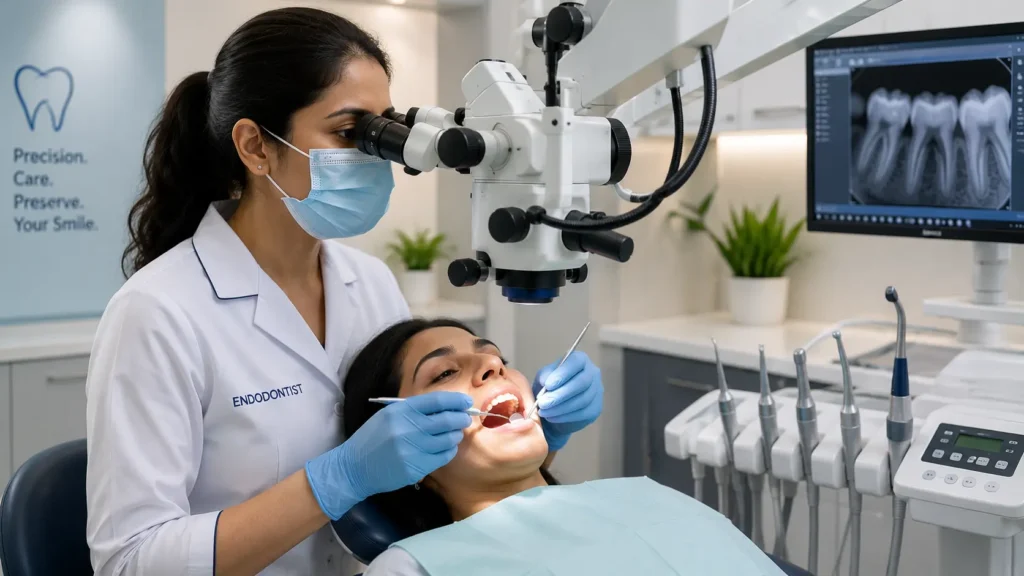
At our clinic, complex cases are performed under magnification. Our microscopic root canal approach lets us locate hidden canals and clean more thoroughly than the naked eye allows.
16. How many sittings will I need?
Many root canals today are completed in a single visit of 60–90 minutes. Teeth with severe infection, complex canal anatomy, or retreatment cases may need two to three shorter visits. Your endodontist will tell you upfront after seeing your X-ray — there should never be surprise extra sittings.
Root Canal Cost in Kolkata — Honest Answers
Cost questions dominate every list of endodontic FAQs, so let’s address them without evasion.
17. How much does a root canal cost in Kolkata?
Root canal costs in Kolkata vary based on several genuine factors — which tooth is involved, how complex the canal anatomy is, whether it’s a first-time treatment or a retreatment, and the type of crown chosen afterward. Front teeth (single canal) cost less than molars (three to four canals). Rather than quote a number that may not match your case, we encourage you to book a consultation at City Smiles Dental Care, where you’ll receive a clear, itemised estimate before any treatment begins — no hidden additions later.
18. Why do prices differ so much between clinics?
Differences usually reflect the technology used (rotary instruments, apex locators, microscopes), the operator’s training, the quality of filling materials, sterilisation standards, and whether the quote includes the crown. A suspiciously low quote often excludes the crown — which is essential, not optional. Always ask what the quoted price covers.
19. Is a root canal cheaper than extraction plus an implant?
Significantly, yes. An extraction may cost little upfront, but replacing that tooth with an implant and crown typically costs several times more than a complete RCT with crown. Saving the natural tooth is both the biologically and financially sound decision in most cases.
When to See a Dentist
20. How long can I safely delay a recommended root canal?
There’s no safe delay window once infection is confirmed. Some teeth stay quiet for months; others flare into a painful abscess within days. Delay also allows infection to destroy more bone around the root, which can lower the treatment’s success rate. If your dentist has recommended RCT, book it within days, not months.
21. What should I do if severe tooth pain starts at night or on a weekend?
Rinse with warm salt water, take an over-the-counter painkiller as per its label, keep your head elevated, and avoid chewing on that side. Do not place aspirin against the gum — it burns the tissue. Then contact an emergency dentist first thing. Patients across Baghajatin, Santoshpur, Dhakuria, and Garia can reach us through our appointment page for priority same-day slots.
Prevention — Can You Avoid a Root Canal?
22. What actually prevents root canals?
- Brush twice daily with fluoride toothpaste and clean between teeth once a day
- Treat small cavities early — a ₹-small filling today prevents a bigger procedure tomorrow
- Wear a night guard if you grind your teeth
- Use a mouthguard for contact sports
- Limit frequent sugary snacks and acidic drinks between meals
- Visit your dentist every six months so problems are caught on X-ray before they hurt
23. Are root canals safe? I read online that they cause illness.
Root canal treatment is safe and thoroughly studied. The claim that root canals cause systemic disease traces back to research from the 1920s that was discredited decades ago; it survives today only as internet misinformation. Modern endodontics, backed by decades of peer-reviewed evidence, shows that removing infection through RCT protects your overall health — the real risk lies in leaving an abscessed tooth untreated.
Aftercare and Long-Term Success
24. How long will my root canal-treated tooth last?
With a well-fitted crown and normal oral hygiene, a root canal-treated tooth can last 15–20 years or more — often a lifetime. The single biggest factor in longevity is getting the crown placed promptly. An unprotected back tooth can crack under chewing forces, undoing the entire treatment.
25. What can and can’t I eat after a root canal?
For the first few days, chew on the opposite side and avoid very hard, sticky, or chewy foods (nuts, hard candy, chikki, sticky sweets). Once your permanent crown is placed, you can eat normally — that’s the whole point of saving the tooth. Mild tenderness while the area settles is normal; sharp or worsening pain is not, and warrants a call to your dentist.
Why Choose City Smiles Dental Care in South Kolkata
When you’re trusting someone with a procedure this precise, experience and technology matter.
- Endodontic expertise: Our team performs root canal treatments daily, including complex retreatments and curved-canal molars, with protocols refined over years of clinical practice.
- Advanced technology: Rotary endodontics, digital X-rays, apex locators, and magnification-assisted (microscopic) root canals mean cleaner canals, fewer sittings, and higher success rates.
- Honest treatment planning: You’ll always know your diagnosis, your options — including doing nothing — and your full cost before we begin.
- Local trust: Families from Baghajatin, Garia, Jadavpur, Tollygunge, Santoshpur, and Dhakuria have made us their neighbourhood dental home. See what your neighbours say on our Google Business Profile.
- Comfort-first care: From anxious first-timers to patients with previous bad experiences, our approach is gentle, unhurried, and fully explained at every step.
Conclusion
If you arrived here anxious, we hope these root canal FAQs have replaced fear with facts. The honest summary: modern root canal treatment is comfortable, safe, and the best way to keep your natural tooth for decades. Antibiotics can’t replace it, extraction is rarely the smarter option, and the sooner you act, the simpler — and more affordable — your treatment will be.
Every tooth and every patient is different, though. The 25 root canal answers above are your starting point; a proper diagnosis is the next step.
Quick-Answer FAQs
Q1. How long does a root canal take? Most single-visit root canals take 60–90 minutes. Complex or infected teeth may need two to three shorter appointments.
Q2. Can I drive home after a root canal? Yes. Only local anaesthesia is used, so you remain fully alert. You can drive, work, and resume your day normally.
Q3. Do I really need a crown after RCT? For back teeth, yes — a crown protects the treated tooth from cracking under chewing forces. Some front teeth may manage with a strong filling; your dentist will advise.
Q4. Can a root canal fail? Success rates are high, but a small percentage of cases may need retreatment, usually due to hidden canals or a delayed crown. Microscopic techniques reduce this risk considerably.
Q5. Is root canal treatment safe during pregnancy? Generally yes, especially in the second trimester, and treating an infection is safer than leaving it. Inform your dentist about your pregnancy so imaging and medication are adjusted.
Q6. Where can I get a painless root canal near Baghajatin or Garia? City Smiles Dental Care in South Kolkata offers advanced, comfort-focused root canal treatment with transparent pricing. Book an appointment online for a consultation.
🦷 Don’t Let One Infected Tooth Decide Your Smile’s Future
Every day you wait, the infection spreads a little further — and the treatment gets a little more complex. The tooth you save this week could serve you for the next 30 years.
Book Your Root Canal Consultation at City Smiles Dental Care →
Same-week appointments available for patients across South Kolkata — Baghajatin, Garia, Jadavpur, Tollygunge, Santoshpur, and Dhakuria. Prefer to check us out first? Read real patient reviews on our Google Business Profile.
Your natural tooth is worth saving. Let’s save it together.