


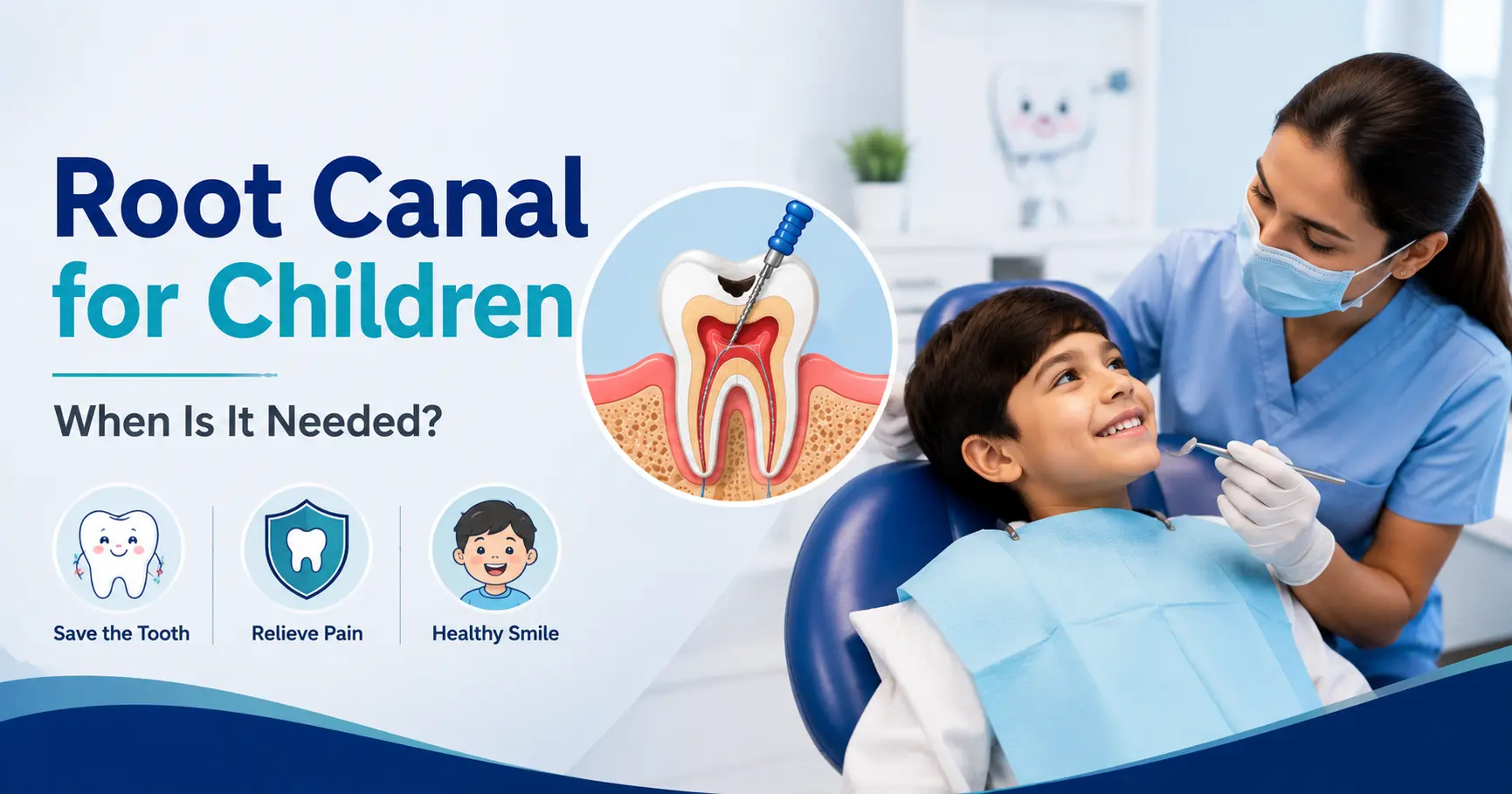
Most parents hear the words “root canal” and immediately feel uneasy. When those words are directed at their child, the reaction is often even stronger. Questions come flooding in: Is this really necessary? Will it hurt? Can’t we just remove the tooth?
These are completely understandable concerns — and the answers matter more than most parents realise. Understanding when and why a root canal for children becomes necessary can help you make a calm, informed decision rather than an anxious one.
What Is a Root Canal for Children?
A root canal for children is a dental procedure that removes infected or damaged pulp tissue from inside a tooth. The pulp is the soft inner layer of a tooth that contains nerves and blood vessels. When decay or injury reaches this layer, it causes pain, infection, and — if untreated — the potential loss of the tooth.
In children, the procedure is adapted for smaller teeth, developing roots, and a patient who needs gentle, reassuring care. It is not the same as an adult root canal, and it is far less dramatic than most parents imagine.
Baby Teeth and Permanent Teeth: Two Different Procedures
The terminology for pediatric root canal treatment varies depending on which tooth is affected and how deep the infection has spread.
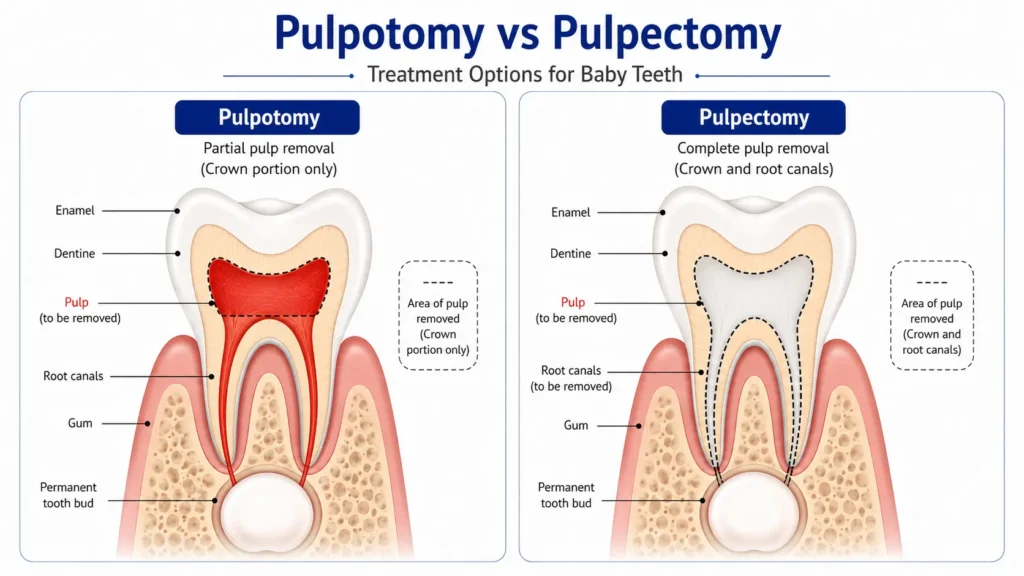
Pulpotomy (Partial Pulp Removal)
A pulpotomy removes only the infected portion of pulp in the crown of the tooth — the part above the gumline. The root canals themselves are left untouched. This is the most common procedure for baby (primary) teeth with early pulp involvement.
A medicated material is placed to protect the remaining healthy pulp, and a stainless steel crown is typically placed over the tooth to restore its strength.
Pulpectomy (Complete Pulp Removal)
A pulpectomy removes all pulp tissue — from both the crown and the root canals. This is performed when infection has spread deeper into the tooth. In children, a pulpectomy for kids uses a resorbable filling material that dissolves naturally as the baby tooth eventually loosens and makes way for the permanent tooth beneath it.
Both procedures are followed by a protective crown to restore function and prevent reinfection.
When Does a Child Actually Need a Root Canal?
A pediatric root canal is recommended when tooth decay or injury has reached the inner pulp of the tooth. Your child’s dentist will typically confirm this through a clinical examination and an X-ray.
The most common reasons include:
- Deep tooth decay that has progressed beyond the outer enamel and dentine into the pulp
- A dental abscess — a pus-filled infection at the root of the tooth
- Tooth injury or trauma — a knocked, cracked, or fractured tooth that has exposed or damaged the pulp
- Spontaneous toothache — pain that occurs without eating, suggesting pulp inflammation or infection
- Failed or insufficient cavity treatment — decay that was not treated early enough
Not every toothache means a root canal is needed. Only a clinical examination can confirm whether the pulp is reversibly or irreversibly affected.
Signs Your Child May Need Pediatric Root Canal Treatment
Parents often ask what to watch for. While only a dental examination can provide a definitive diagnosis, these signs are worth taking seriously:
- Persistent or throbbing toothache that does not resolve
- Sensitivity to hot or cold that lingers after the food or drink is gone
- Visible darkening or discolouration of the tooth
- Swelling of the gum near the affected tooth
- A small pimple-like bump on the gum (a dental fistula or sinus tract)
- Your child flinching or refusing to eat on one side of the mouth
- Fever accompanying dental pain
If your child is showing any of these signs, an early appointment is strongly advisable. The sooner an infected tooth is assessed, the more treatment options remain available.
Families across Garia, Baghajatin, Jadavpur, Santoshpur, and Tollygunge frequently bring their children to City Smiles Dental Care for exactly this kind of prompt dental assessment.
Why Saving a Baby Tooth Matters
One of the most common responses from parents is: “It’s just a baby tooth — why not simply remove it?”
This is a fair question, and the answer has real implications for your child’s long-term dental health.
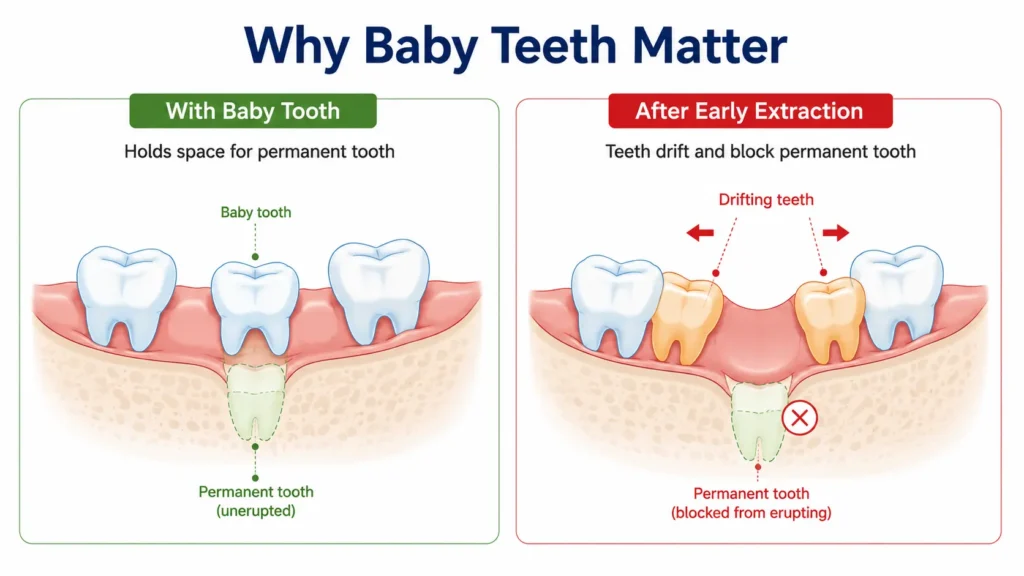
Baby teeth are not temporary placeholders that can be discarded without consequence. They serve several critical functions:
- Space preservation: Baby teeth hold the space in the jaw that the permanent tooth needs. Losing a baby tooth early causes neighbouring teeth to drift inward, narrowing that space and causing crowding when the permanent tooth eventually erupts.
- Chewing and nutrition: A missing molar in a young child affects their ability to chew effectively, which can impact diet and nutrition.
- Speech development: Front teeth play a role in forming certain sounds. Premature loss can affect speech development.
- Jaw and bone development: The roots of baby teeth stimulate bone growth. Early loss can affect the development of the jaw structure.
If a baby tooth must be extracted for any reason, a space maintainer is usually placed to prevent drift — but that adds another step, another procedure, and additional cost. Preserving the natural tooth with a child root canal treatment is almost always the preferred approach when clinically feasible.
What to Expect During the Procedure
For many parents, knowing what will happen during the procedure significantly reduces anxiety. Here is a straightforward overview of what a pediatric pulpotomy or pulpectomy typically involves:
- Clinical assessment and X-rays — The dentist examines the tooth and takes an X-ray to assess the extent of pulp involvement.
- Local anaesthesia — The area around the tooth is numbed. Most children feel only mild pressure, not pain.
- Isolation — A rubber dam is placed to keep the area clean and dry during the procedure.
- Access and removal — The dentist creates a small opening in the tooth and removes the infected pulp tissue.
- Cleaning and medication — The canals are cleaned, and in a pulpectomy, filled with a biocompatible, resorbable material.
- Crown placement — A stainless steel crown is fitted over the tooth to restore its full function and protect it from reinfection.
The entire procedure typically takes one to two appointments. The child is comfortable throughout, and most children recover quickly with little to no discomfort afterwards.
Is It Painful? Addressing the Biggest Fear
The honest answer: the procedure itself should not be painful. Local anaesthesia is administered before any work begins, and the child should feel little more than pressure.
Some mild soreness may be present for a day or two after the procedure, which typically responds well to children’s paracetamol or ibuprofen as directed by the dentist.
The fear of pain is often far worse than the reality of the procedure — particularly when a gentle, experienced dental team works with children regularly. At City Smiles Dental Care, the approach to treating children involves taking time to build trust with young patients, explaining what is happening in simple terms, and proceeding at a pace that keeps the child calm and comfortable.
Pulpectomy vs. Extraction: Which Is Better?
| Factor | Pulpectomy (Root Canal) | Extraction |
| Preserves the tooth | Yes | No |
| Prevents space loss | Yes | No (space maintainer needed) |
| Prevents crowding | Yes | Not always |
| Complexity | Moderate | Lower |
| Follow-up required | Crown placement | May need space maintainer |
| Long-term outcome | Natural tooth retained until natural shedding | Gap until permanent tooth erupts |
| Recommended when | Tooth is restorable and pulp is affected | Tooth is non-restorable or severely damaged |
In most clinical situations where the tooth is structurally sound and the infection is manageable, a baby tooth root canal is strongly preferred over extraction.
Myths vs. Facts: Pediatric Root Canal
| Myth | Fact |
| Root canals are extremely painful for children | The procedure is performed under local anaesthesia. Most children experience minimal discomfort. |
| Baby teeth don’t need root canals because they fall out anyway | Baby teeth can remain in the mouth until age 11–12. Losing them early causes spacing, crowding, and developmental issues. |
| A root canal will affect the permanent tooth underneath | A pulpectomy uses resorbable filling material that does not interfere with the developing permanent tooth. |
| Extracting the tooth is cheaper and simpler | Extraction often leads to the need for a space maintainer, orthodontic treatment later, and longer-term costs. |
| Children can’t tolerate root canal procedures | With proper anaesthesia, patient management, and a calm environment, children tolerate these procedures well. |
FAQs: Root Canal for Children
1. At what age can a child have a root canal? There is no minimum age. If a baby tooth has infected pulp — whether in a toddler or a 10-year-old — a pulpotomy or pulpectomy may be recommended. The procedure is adapted to the child’s age and tooth type.
2. How do I know if my child’s toothache needs a root canal or just a filling? A toothache that is spontaneous, wakes your child at night, or persists after the trigger (food, cold drink) is removed suggests pulp involvement. A filling is sufficient only when decay has not reached the pulp. Only an X-ray and clinical examination can determine which is needed.
3. Is a pulpectomy the same as a root canal? Yes. A pulpectomy is the specific term for a complete root canal procedure performed on a primary (baby) tooth. It removes all pulp tissue from the crown and roots, followed by a resorbable filling and a protective crown.
4. Will a pediatric root canal affect the permanent tooth? No. The filling material used in a pulpectomy for kids is designed to resorb naturally as the baby tooth loosens, making way for the permanent tooth without interfering with its development.
5. How long does a child root canal treatment take? Most procedures are completed in one to two appointments. Each appointment typically takes 45 to 75 minutes depending on the complexity of the case.
6. Can my child eat normally after the procedure? After the anaesthesia wears off, soft foods are recommended for the first 24 hours. Once the stainless steel crown is in place, the child can eat normally.
7. What happens if we don’t treat the infected tooth? An untreated infected baby tooth does not simply resolve on its own. The infection can spread to surrounding teeth, bone, and — in severe cases — adjacent developing permanent teeth. Timely treatment is always the safer choice.
8. Is the stainless steel crown permanent? The stainless steel crown placed after a pediatric root canal is meant to last until the baby tooth naturally falls out. It is strong, durable, and requires no special maintenance beyond normal brushing and flossing.
9. How much does a root canal for children cost in South Kolkata? The cost depends on the tooth involved, the type of procedure required, and the condition of the tooth. For an accurate estimate tailored to your child’s specific needs, we recommend booking a consultation at City Smiles Dental Care.
10. Can I accompany my child during the procedure? At City Smiles Dental Care, we prioritise keeping children calm and comfortable. Our team will discuss the approach with you before the procedure so you know exactly what to expect.
Conclusion
A root canal for children sounds alarming — but in the right clinical context, it is one of the most valuable treatments available for a young patient. It eliminates pain, clears infection, and preserves a tooth that the child genuinely needs for years to come.
Choosing to save a baby tooth is not a small decision. It directly protects your child’s smile, spacing, and oral development long before their permanent teeth have fully arrived.
If your child has been experiencing tooth pain, swelling, or sensitivity — or if their dentist has mentioned the possibility of a pediatric root canal — the best next step is a thorough clinical assessment. At City Smiles Dental Care in South Kolkata, our team assesses every child individually and explains every treatment option clearly before anything is recommended.
Book an Appointment at City Smiles Dental Care
Your child does not need to be in pain. If you are concerned about a tooth — whether it is a toothache, swelling, or a recent knock — bring them in for a gentle, thorough examination.
We welcome families from across South Kolkata including Garia, Baghajatin, Jadavpur, Tollygunge, Santoshpur, and Dhakuria.