


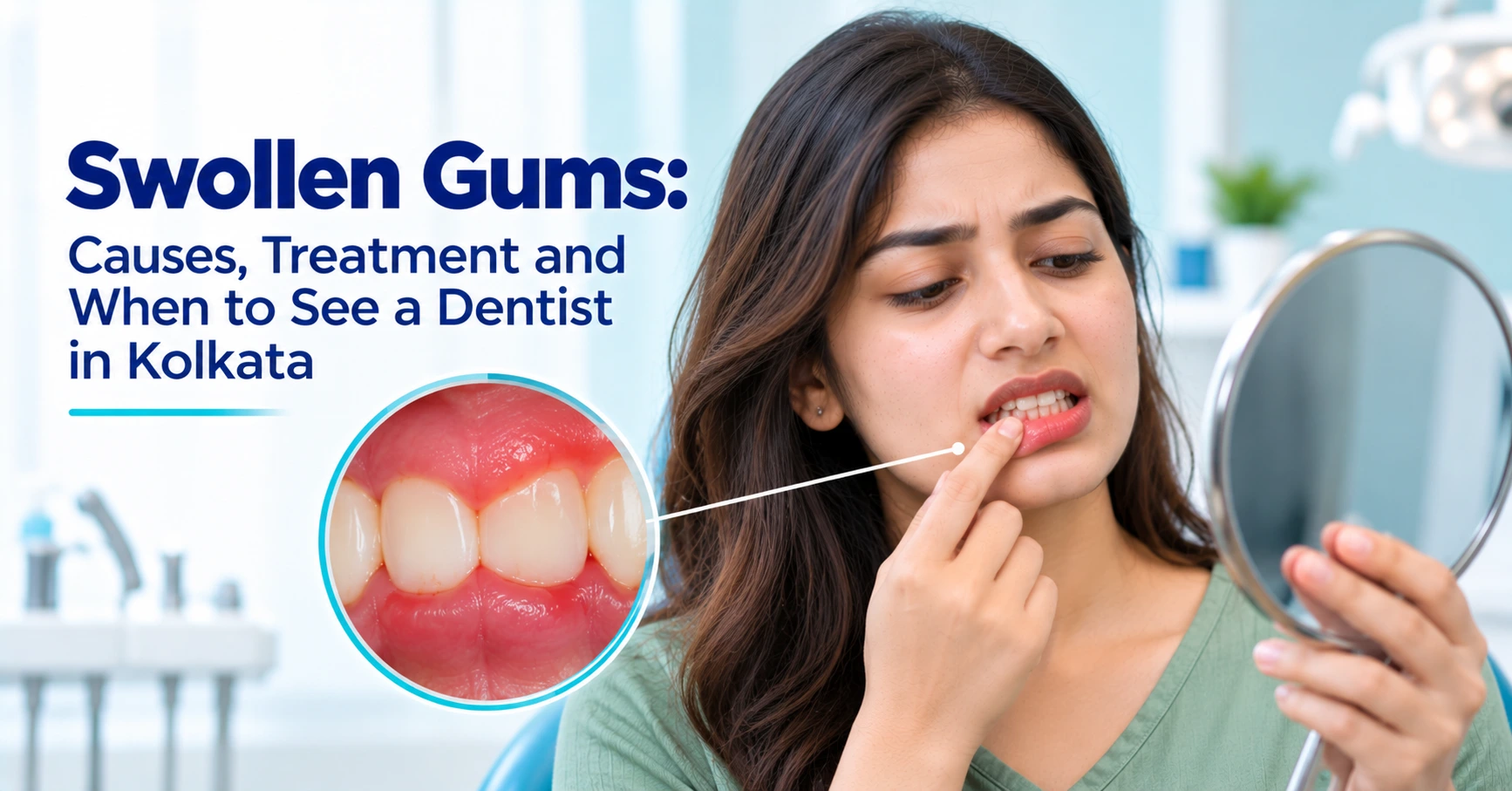
Swollen gums are puffy, red or tender gum tissue around one or more teeth. They usually point to inflammation caused by plaque, infection or an irritant, and they are your mouth’s early warning that something needs attention.
Many people ignore a little puffiness for weeks because it does not hurt much. That delay is the most common reason mild gum inflammation turns into a bigger problem. This guide explains the causes, what treatment looks like and what you can safely do at home.
Note: this article is for education. It cannot replace a clinical examination, and the right treatment depends on what your dentist finds.
What Are Swollen Gums?
Quick answer: Swollen gums, also called inflamed or puffy gums, are gum tissues that have become red, soft, shiny or enlarged because of irritation or infection. Healthy gums are firm, pale pink and do not bleed with gentle brushing. Any change from that is worth noticing.
Gums swell when the body sends extra blood and immune cells to a spot under attack. Usually the attacker is bacteria in plaque, the sticky film that forms on teeth every day. Sometimes it is a hormone shift, a medicine or an injury.
A typical situation: a patient notices pink in the sink while brushing for two weeks, then a puffy edge near one back tooth. They assume it will settle. Often it does not, because the plaque or hardened tartar causing it is still there.
Common Causes of Swollen Gums
The most common cause of swollen gums is plaque-driven gum inflammation called gingivitis. Other causes include gum infection, abscess, hormonal changes, certain medicines, vitamin deficiency, food stuck between teeth, braces, and partly erupted wisdom teeth. A dentist can tell these apart.
Plaque and gingivitis
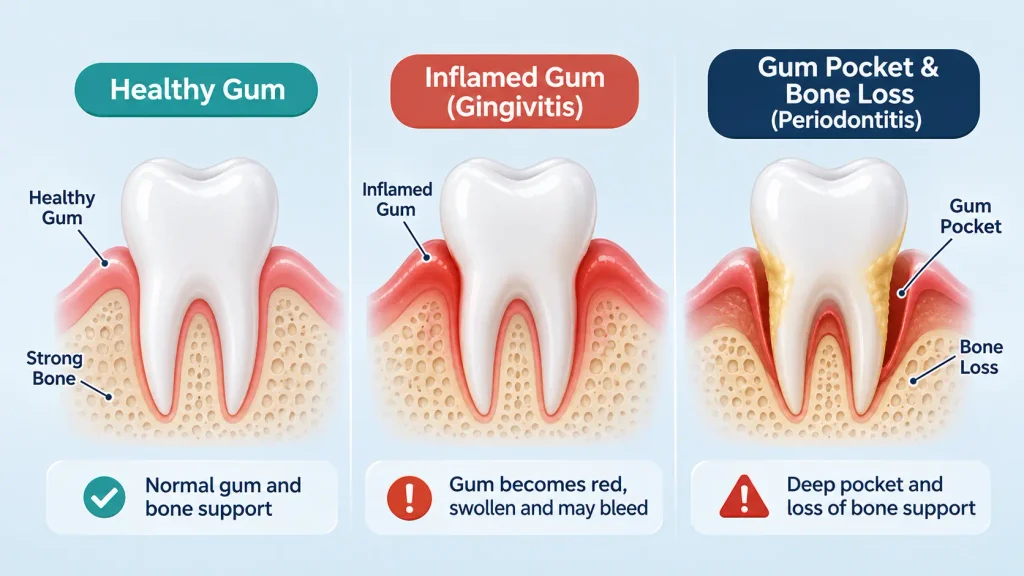
When plaque stays on the gumline, bacteria irritate the tissue and it swells and bleeds easily. Plaque that hardens into tartar cannot be brushed away and keeps the irritation going. This is the most frequent reason for inflamed gums, and the stage most likely to reverse.
Gum infection and abscess
If inflammation goes deeper, it can become periodontitis, where infection damages the tissue and bone supporting the tooth. A gum abscess is a pocket of pus that forms near a tooth and causes a painful, localised swelling. A deep cavity or a dead tooth nerve can also cause a swelling that looks like a gum problem.
Hormonal, medication and nutritional causes
Pregnancy, puberty and menstrual changes make gums more reactive to plaque. A few medicines, including some used for blood pressure, seizures or after organ transplants, can cause gum overgrowth. Poor nutrition, especially low vitamin C, can also leave gums swollen and bleeding.
Braces, aligners, wisdom teeth and food trapping
Brackets and wires make cleaning harder, so plaque collects at the gumline and puffiness is common in the first months of orthodontic treatment. A partly erupted wisdom tooth creates a flap where food hides and gets infected. Even a trapped piece of food or a rough filling edge can inflame one small area.
Gingivitis vs Periodontitis vs Abscess
Gingivitis is reversible gum inflammation with no bone loss. Periodontitis is a deeper infection that damages the bone around teeth and needs professional treatment. A gum abscess is a localised pocket of pus that is painful and needs prompt dental care.
| Feature | Gingivitis | Periodontitis | Gum abscess |
| What it is | Surface gum inflammation | Infection with bone and tissue loss | Pus pocket near a tooth |
| Typical signs | Red, puffy, bleeding gums | Gum recession, bad breath, loose teeth | Sharp swelling, pain, bad taste |
| Pain level | Mild or none | Often painless until advanced | Moderate to severe |
| Reversible? | Yes, with cleaning and care | Can be controlled, not fully reversed | Needs drainage and cause treatment |
| Urgency | Book a check-up | See a dentist soon | See a dentist promptly |
Symptoms That Suggest a Gum Infection
Signs of gum infection include persistent swelling, bleeding, pus, a bad taste or smell, gums pulling away from teeth, tooth looseness and pain when chewing. Fever or swelling in the face means the infection may be spreading and should not wait.
Look out for:
- Gums that bleed without brushing or stay puffy for more than a week
- Pus or a pimple-like bump on the gum
- Persistent bad breath that mouthwash does not fix
- Gums that look longer or have pulled back from the tooth
- A tooth that feels loose or hurts on biting
A pimple-like bump on the gum is a common sign of a deeper tooth infection. If the nerve of the tooth is the source, the swelling will return until the tooth itself is treated. In such cases our endodontist, Dr. Sagnik Bhattacharya, evaluates whether the tooth can be saved. In his words, “Saving natural teeth using minimally invasive, evidence-based dentistry is always my priority.”
Puffy Gums Treatment at the Dentist
Treatment depends on the cause. It usually starts with an examination and X-ray if needed, followed by professional cleaning to remove plaque and tartar. Deeper infection or a tooth-related abscess needs targeted treatment, and gums often settle once the cause is removed.
A typical treatment journey looks like this:
- Examination: the dentist checks gum colour, bleeding, pocket depth and the teeth nearby.
- Imaging when needed: an X-ray shows bone levels and whether a tooth infection is involved.
- Professional cleaning: plaque and tartar are removed above and below the gumline as the case requires.
- Treating the source: a cavity, a faulty filling edge, an erupting wisdom tooth or an infected tooth nerve is addressed.
- Home care plan: you are shown how to clean around the affected area.
- Review: gums are re-checked to confirm they are healing.
If the swelling comes from an infected tooth, root canal treatment may be recommended instead of simply treating the gum. We aim for “Honest diagnosis, fair treatment planning, and patient-centric care.” Your dentist will explain the findings before any treatment begins, and no outcome can be promised before an examination.
Safe Home Care While You Wait for Your Appointment
You can rinse with warm salt water, brush gently with a soft brush, clean between teeth with care and avoid tobacco. These steps may ease mild swelling for a short time, but they do not remove tartar or cure an infection.
- Warm salt water rinse: half a teaspoon of salt in a glass of warm water, swished gently, a few times a day.
- Soft brush, gentle technique: angle the bristles at the gumline. Hard scrubbing makes swelling worse.
- Clean between teeth: floss or an interdental brush, gently, to remove trapped food.
- Avoid tobacco and alcohol-heavy mouthwash: both irritate gums.
- Cold compress for outside swelling or injury: applied to the cheek, not inside the mouth.
Do not try to pop a gum bump, apply raw garlic, clove oil or crushed tablets directly on the gum, or take antibiotics left over from an earlier illness. These can burn tissue or hide the problem without solving it. Home care is a bridge to the dentist, not a replacement.
Swollen Gums in Children
Children can get swollen gums from poor brushing, a loose or erupting tooth, a cavity, a mouth ulcer or an infection. Because a baby tooth abscess can spread quickly, a child with puffy gums and pain, pus or fever should see a pediatric dentist soon.
Parents often wonder whether it is just teething or something worse. Gums around an erupting tooth can look puffy, but a bump with pain, swelling on the face or a sleepless, feverish child needs an examination. Our pediatric dentist, Dr. Sreejeeta Dey, puts it this way: “Guiding parents on preventive care and healthy oral habits at home.”
Children with braces also need extra help with cleaning, because plaque near brackets often shows up first as red, puffy gums.
When Swollen Gums Need Urgent Care
Seek urgent care if swollen gums come with facial swelling, fever, difficulty swallowing or breathing, swelling near the eye or neck, or severe pain. These can mean a spreading infection that needs same-day professional attention.
Do not wait for an appointment slot if you have:
- Swelling spreading to the cheek, jaw, eye or neck
- Trouble opening the mouth, swallowing or breathing
- Fever with a painful swelling
- Heavy bleeding that will not stop
For difficulty breathing or swallowing, go to the nearest hospital emergency department immediately.
Myths vs Facts
| Myth | Fact |
| “Bleeding gums mean I should stop brushing.” | Bleeding is usually a sign of inflammation. Gentle, regular cleaning helps it settle. |
| “Swollen gums will heal on their own.” | Mild cases may improve, but tartar and infection do not go away without professional care. |
| “Salt water cures gum infection.” | It soothes the area but cannot remove plaque, tartar or an infected tooth. |
| “If it does not hurt, it is not serious.” | Gum disease is often painless until it is advanced. |
| “Brushing harder cleans better.” | Hard brushing damages gums and can cause recession. |
Preventing Inflamed Gums
Brush twice daily with a soft brush, clean between teeth every day, limit sugary snacks, avoid tobacco and visit a dentist for a check-up and cleaning regularly. Prevention is simpler and gentler than treating advanced gum disease.
- Brush gently for two minutes, twice a day, reaching the gumline.
- Clean between teeth daily.
- Replace your toothbrush every three months or when bristles splay.
- Take extra care during pregnancy, with braces or aligners, and if you have diabetes.
- Keep up regular dental visits so tartar is removed before it causes trouble.
Swollen Gums Treatment in South Kolkata at City Smiles
If your swollen gums last more than a week, keep returning, bleed, or come with pus or pain, book a dental examination. City Smiles Dental Care serves patients from Garia, Baghajatin, Jadavpur, Tollygunge, Santoshpur, Dhakuria and nearby South Kolkata areas.

At City Smiles Dental Care, our approach is “Gentle, painless treatment with clear communication at every step.” You will be told what is causing the swelling, what the options are and what to expect, with no pressure to accept treatment.
You can book an appointment online or find us on our Google Business Profile for directions and contact details.
FAQs
1. Why are my gums swollen?
The most common reason is plaque buildup causing gingivitis. Other causes include gum infection, abscess, hormonal changes, certain medicines, vitamin deficiency, braces and food trapped under the gum. A dentist can identify the cause with an examination.
2. Are swollen gums a sign of infection?
Not always. Mild swelling may be simple inflammation, but pus, a bad taste, fever, a loose tooth or swelling in the face suggest infection and need prompt dental care.
3. How long do swollen gums take to go away?
Mild gingivitis often improves within one to two weeks of better cleaning and a professional cleaning. If swelling lasts longer than a week or keeps returning, get it examined.
4. What is the fastest way to reduce swollen gums at home?
Rinse with warm salt water, brush gently with a soft brush and clean between teeth carefully. This may ease symptoms but does not treat the cause, so see a dentist if it persists.
5. Can swollen gums be caused by a tooth problem?
Yes. A deep cavity or an infected tooth nerve can cause a swelling on the gum, sometimes with a small pimple-like bump. In that case the tooth needs treatment, not just the gum.
6. Are swollen gums normal during pregnancy?
Gums are more sensitive to plaque during pregnancy because of hormonal changes, so puffiness and bleeding are common. Good cleaning and a dental check-up are recommended, and any treatment should be planned with your doctor’s knowledge.
7. Can braces or aligners cause puffy gums?
Braces make cleaning harder, so plaque can collect and gums can swell, especially early in treatment. Careful brushing, interdental cleaning and regular reviews with your orthodontic team help.
8. Should I use antibiotics for swollen gums?
No. Antibiotics should only be taken when a dentist or doctor prescribes them. Self-medicating can mask an infection and does not remove its cause.
9. When should I go to the dentist for swollen gums?
Book a visit if swelling lasts over a week, bleeds repeatedly, or comes with pain, pus or a loose tooth. Go the same day for facial swelling, fever or difficulty swallowing.
Conclusion
Swollen gums are common, but they are never something to ignore for long. Most cases begin with plaque and can be reversed when caught early, while infection or a tooth problem needs proper diagnosis and treatment. If you are dealing with swollen gums in South Kolkata, a short examination can tell you what is going on and what to do next.