


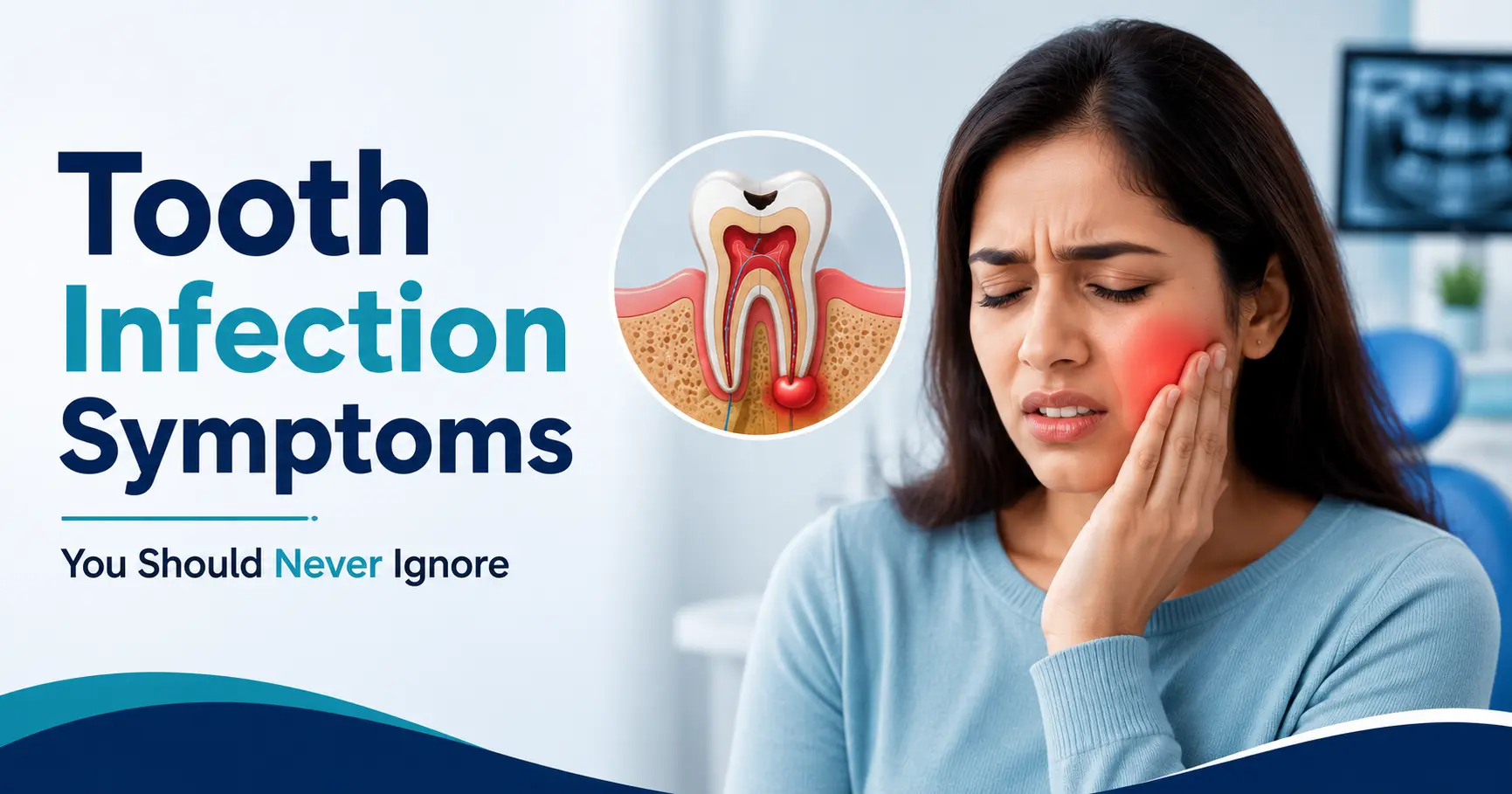
A dull ache that becomes a throb. A cheek that feels warmer than it should. A jaw that aches even when you are not eating. These are not symptoms to sleep off or dismiss as stress — they may be your body signalling a tooth infection that needs urgent dental attention.
Tooth infections do not improve on their own. When left untreated, the bacteria responsible can spread beyond the tooth, into the jaw, the neck, and in rare but serious cases, into the bloodstream. Recognising the warning signs early is the single most effective thing you can do to protect both your tooth and your overall health.
This guide covers every significant tooth infection symptom, explains when to treat the situation as an emergency, and helps you make the right decision quickly.
What Is a Tooth Infection?
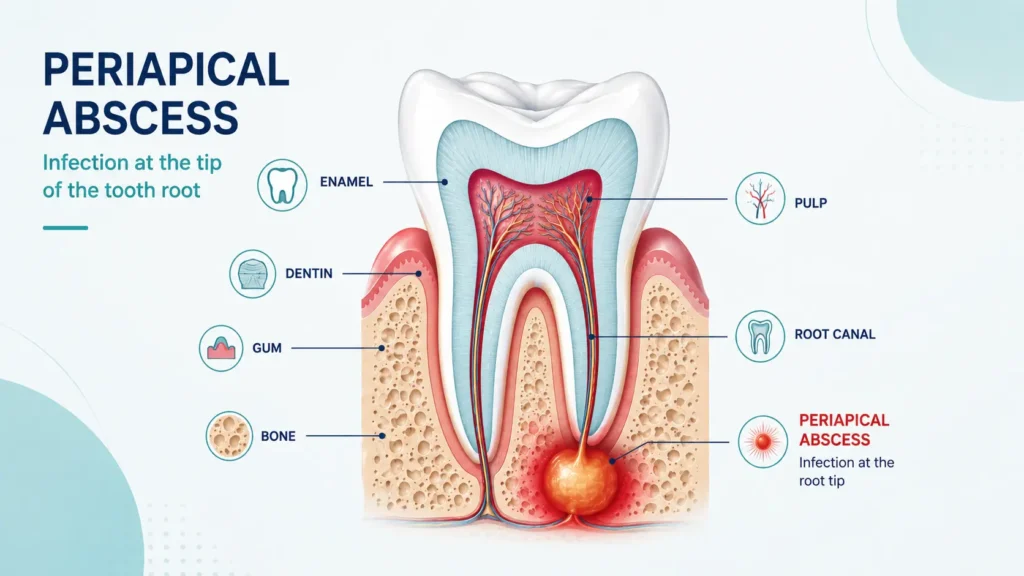
A tooth infection — clinically known as a dental abscess — is a pocket of pus that forms inside or around a tooth due to a bacterial infection. It typically originates in the dental pulp (the innermost layer of the tooth containing nerves and blood vessels) and can spread to the surrounding bone and soft tissue if not treated. Dental abscesses are classified as periapical (at the root tip) or periodontal (in the gum beside the tooth).
Warning Signs of a Tooth Infection
1. Persistent, Throbbing Toothache
The pain associated with a dental abscess is difficult to misidentify. It is not the mild sensitivity you might feel after eating something cold — it is a deep, relentless throbbing that can radiate into your jaw, ear, and neck.
The pain often worsens when you lie down, because the increased blood pressure to the head amplifies the sensation. Many patients describe it as pain that wakes them from sleep. If a toothache has persisted for more than two days and shows no sign of resolving, treat it as a significant symptom.
2. Sensitivity to Heat and Cold That Lingers
Most people experience brief tooth sensitivity to hot or cold foods at some point. With an infection, that sensitivity lingers for 30 seconds or more after the stimulus is removed.
This is because the dental pulp is inflamed or infected. The nerve inside the tooth is reacting abnormally, and the pain that follows a sip of hot tea or an ice-cold drink may take several uncomfortable minutes to subside.
3. Swelling in the Face, Jaw, or Cheek
Visible swelling — particularly of the cheek, jaw, or under the eye — is one of the most telling infected tooth signs. The swelling is caused by the abscess expanding as the body sends immune cells to fight the infection.
Facial swelling from a dental abscess can develop quickly — sometimes within hours. Do not apply pressure to the swelling or attempt to drain it yourself. This is a situation that requires professional treatment.
4. Tender, Swollen Lymph Nodes Under the Jaw
Run your fingers gently along the underside of your jaw and neck. If you find swollen, tender lumps — especially on the side corresponding to the painful tooth — this indicates that your immune system is actively responding to the infection.
Swollen lymph nodes are a systemic sign. They confirm that the infection is not limited to the tooth itself, and that your body is working hard to contain it. This symptom in combination with dental pain should prompt you to call a dentist the same day.
5. Fever and General Unwellness
A fever associated with dental pain is a serious warning sign. It indicates that the infection has begun to affect the body systemically — that it has moved beyond the local tissue around the tooth.
Patients often also report fatigue, general malaise, headaches, or a vague sense of being unwell. These symptoms together — fever, fatigue, and a known dental problem — require urgent dental evaluation, not a wait-and-see approach.
6. Difficulty Swallowing or Breathing
This symptom has no threshold for waiting. Difficulty swallowing or breathing in association with dental pain or swelling is a dental emergency.
It may indicate that the infection has spread into the deep spaces of the neck or chest — a life-threatening complication called Ludwig’s angina or descending necrotising mediastinitis. If you or a family member is experiencing this, go to the nearest hospital emergency department or call emergency services immediately.
7. A Pimple-Like Bump on the Gums
A small raised bump on the gum — sometimes called a dental fistula or gum boil — is actually a drainage tract. It forms when the abscess builds sufficient pressure and creates a pathway to release pus.
The bump may appear whitish or yellowish and can be painful, though sometimes it temporarily reduces pressure and the pain subsides slightly. This temporary relief does not mean the infection has resolved. It means the abscess is draining — but the infection source remains.
8. Bad Taste or Foul Smell in the Mouth
If you notice a sudden foul, bitter, or salty taste in your mouth — particularly near a painful or swollen area — pus may be draining from an abscess into your oral cavity. A persistent bad smell that is not resolved by brushing is another indicator of active infection.
These are significant infected tooth signs that should not be attributed to diet or poor oral hygiene alone. A clinical examination is needed.
Which Symptoms Require Emergency Dental Care?
Not all tooth infection symptoms carry the same urgency. This table will help you assess where you fall.
| Symptom | Urgency Level | Action Required |
| Persistent throbbing toothache (>2 days) | High | Call dentist same day |
| Swelling of face or jaw | High | Call dentist same day |
| Fever with dental pain | High | Call dentist same day |
| Swollen lymph nodes under jaw | High | Call dentist same day |
| Pimple-like bump on gums | Moderate | Schedule within 24–48 hours |
| Lingering sensitivity to heat/cold | Moderate | Schedule within a few days |
| Foul taste or bad breath from one area | Moderate | Schedule within a few days |
| Difficulty swallowing or breathing | Critical Emergency | Go to hospital immediately |
How Does a Tooth Infection Develop?
Understanding the cause helps patients prevent recurrence. A dental abscess typically begins with:
- Untreated tooth decay that has progressed deep enough to reach the pulp
- A cracked or chipped tooth that allows bacteria to enter the inner layers
- Advanced gum disease that creates deep pockets where bacteria thrive
- A failed or damaged dental restoration that no longer seals the tooth adequately
- Trauma to a tooth that damages the pulp without any visible crack
In each case, bacteria gain access to tissue that cannot effectively defend itself, and an infection takes hold.
Myths vs Facts About Tooth Infections
| Myth | Fact |
| “The pain went away, so the infection must be gone.” | Pain may reduce if the abscess drains, but the infection remains and continues to spread. |
| “Antibiotics will cure a tooth infection.” | Antibiotics reduce bacterial spread and manage fever, but they cannot eliminate the source. Dental drainage or treatment is always required. |
| “A tooth infection is not a serious health risk.” | Untreated dental abscesses can become life-threatening if the infection spreads to the jaw, neck, or bloodstream (sepsis). |
| “Only teeth with cavities get infected.” | Cracked teeth, traumatised teeth, and teeth with gum disease can all develop infections with no visible cavity. |
| “I can wait until after the weekend.” | Dental infections can escalate rapidly. Waiting significantly increases the risk of spread and complication. |
What Happens If You Ignore These Symptoms?
A tooth infection does not stabilise and wait for you to deal with it at your convenience. Without treatment:
- The abscess grows larger and becomes increasingly difficult to manage.
- The infection can erode the surrounding jawbone (osteomyelitis).
- Bacteria can enter the lymphatic system and bloodstream, causing a condition known as sepsis — a medical emergency with a significant mortality risk.
- The infection can spread to adjacent teeth, requiring multiple extractions.
- In rare cases, it can track into the airway, obstructing breathing.
The dental pain that feels tolerable today can escalate into a hospital admission within days. Early intervention is always the safest and most cost-effective path.
How Is a Tooth Abscess Treated?
Treatment depends on the location and severity of the infection. A dentist will evaluate the tooth clinically and with X-rays before recommending one of the following:
Root Canal Treatment: The infected pulp is removed, the canals are cleaned and disinfected, and the tooth is sealed and restored. This is the most common approach and preserves the natural tooth.
Incision and Drainage: The abscess is opened under local anaesthesia to allow pus to drain, providing immediate relief and reducing the bacterial load.
Tooth Extraction: If the tooth is too damaged to restore, removal followed by appropriate rehabilitation (implant, bridge, or partial denture) may be the recommended course.
Antibiotics: Prescribed alongside dental treatment to manage systemic spread, not as a standalone cure.
At City Smiles Dental Care in South Kolkata, patients presenting with tooth abscess symptoms are assessed promptly. The goal is always to resolve the infection, relieve pain, and preserve the tooth wherever clinically possible.
Frequently Asked Questions
Q1. How do I know if my toothache is caused by an infection? A toothache caused by infection tends to be persistent, throbbing, and worsening — rather than sharp and triggered only by specific stimuli. Accompanying symptoms like facial swelling, fever, or swollen lymph nodes strongly suggest infection. A dental X-ray is needed for a definitive diagnosis.
Q2. Can a tooth infection spread to other parts of the body? Yes. If left untreated, bacteria from a dental abscess can spread to the jaw, neck, chest, and bloodstream. This can result in serious conditions including sepsis and Ludwig’s angina. Early treatment prevents this progression.
Q3. Will a tooth infection go away on its own? No. A dental abscess will not resolve without professional treatment. The pain may temporarily subside if the abscess drains spontaneously, but the underlying infection continues and the risk of spread remains.
Q4. Can I take painkillers and wait to see a dentist? Painkillers may reduce discomfort temporarily but do not address the infection. They are not a substitute for dental care. If you are using painkillers to manage dental pain, you still need to see a dentist urgently.
Q5. Is a swollen face from a toothache an emergency? Yes. Facial swelling associated with dental pain should be evaluated by a dentist on the same day. If the swelling is severe or affecting your ability to open your mouth, swallow, or breathe, go to a hospital emergency department immediately.
Q6. Can a tooth infection cause a fever? Yes. Fever indicates the infection is affecting your body systemically. A fever alongside dental pain or swelling is a red flag that requires urgent dental attention.
Q7. How long does it take to recover from a tooth abscess? With appropriate treatment, most patients experience significant relief within 24–48 hours of drainage or the start of root canal therapy. Full resolution depends on the severity of the infection and the treatment required.
Q8. Is root canal treatment painful? Root canal treatment is performed under local anaesthesia. Most patients report that the procedure itself is far less uncomfortable than the infection that prompted it. Modern techniques make root canal therapy a manageable, routine procedure.
Q9. How much does tooth abscess treatment cost in South Kolkata? Treatment costs vary depending on whether root canal therapy, drainage, or extraction is required, and the complexity of the case. Patients from areas like Garia, Baghajatin, and Jadavpur are welcome to book a consultation at City Smiles Dental Care for a proper clinical assessment and treatment plan.
Q10. How can I prevent tooth infections? Regular dental check-ups every six months, prompt treatment of cavities, good brushing and flossing habits, and addressing cracked teeth early are the most effective preventive measures. Most abscesses are entirely preventable with routine dental care.
Do Not Wait — See a Dentist in South Kolkata Today
Tooth infection symptoms do not improve with wishful thinking. The throbbing pain, the swelling, the fever — these are your body’s urgent signals that something is wrong and that it needs professional help to resolve it.
At City Smiles Dental Care in South Kolkata, we see patients presenting with dental pain and tooth abscess symptoms as a priority. Whether you are coming from Tollygunge, Santoshpur, Dhakuria, or Baghajatin, our team is equipped to assess your condition promptly, provide immediate relief, and create a clear treatment plan that protects your tooth and your health.
Do not let a manageable infection become a medical emergency. Book your appointment online or find us on Google Maps and come in as soon as possible. Early care is always better care.