


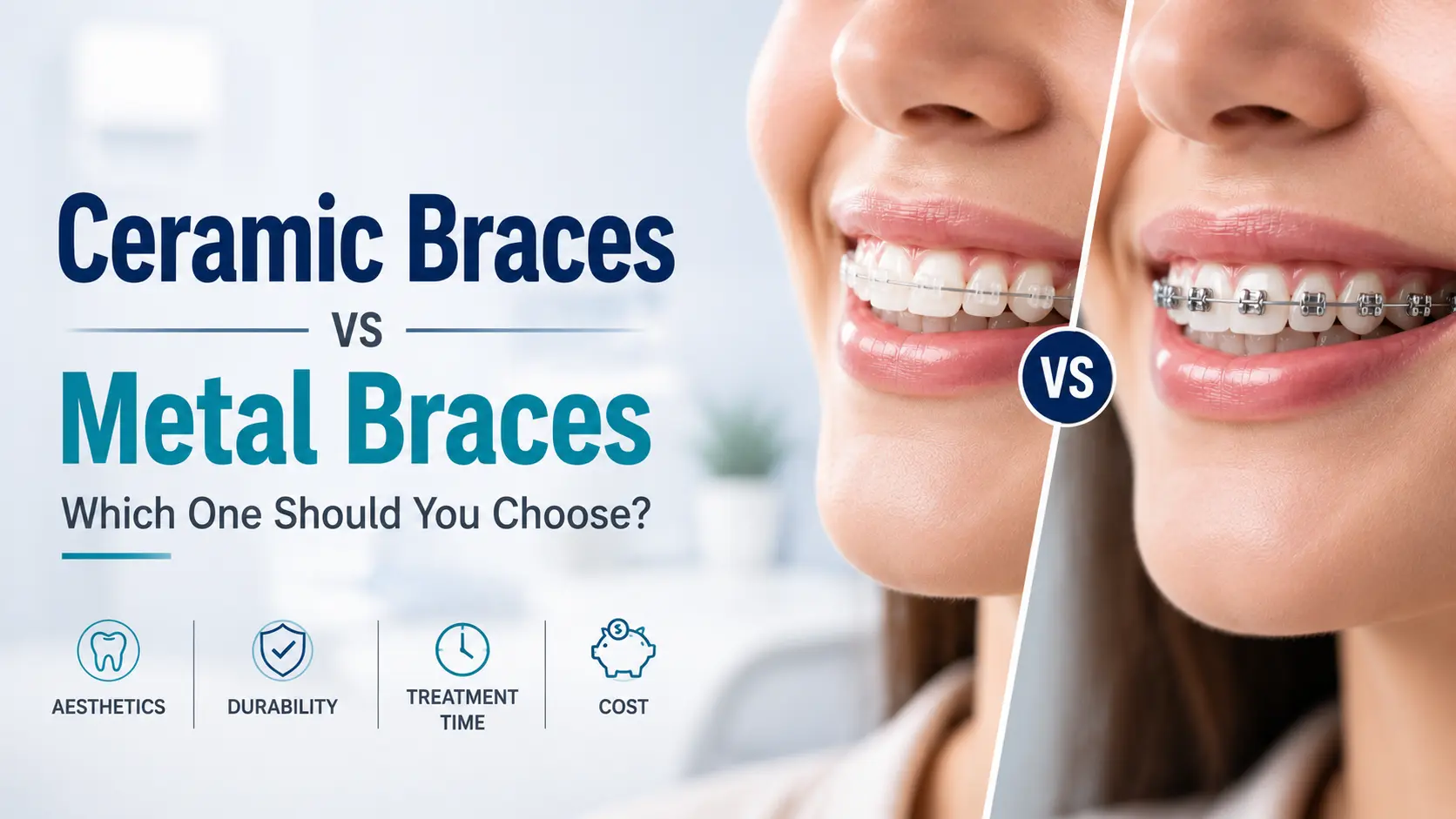
If you or your child needs braces, one of the first decisions you’ll face is ceramic braces vs metal braces. Both straighten teeth using the same time-tested wire-and-bracket system, but they differ in appearance, cost, and day-to-day care. This guide breaks down the real differences so you can walk into your consultation at City Smiles Dental Care in South Kolkata already informed.
What Are Ceramic Braces?
Ceramic braces are fixed orthodontic appliances that use tooth-coloured or clear brackets instead of metal ones. They work exactly like traditional braces — brackets bonded to each tooth, connected by an archwire — but blend in with your natural tooth shade, making them a popular choice for teens and adults who want effective treatment without a very visible metal smile.
Ceramic brackets are typically made from a translucent or tooth-shaded composite or polycrystalline material. The wire itself is usually still metal, though some clinics offer tooth-coloured wires for an even more discreet look. This makes ceramic braces a middle ground between traditional metal braces and clear aligners.
What Are Metal Braces?
Metal braces are the classic form of orthodontic treatment: stainless steel brackets bonded to the teeth and connected with a metal archwire, tightened periodically to guide teeth into alignment. They are the most established, extensively studied, and generally the most budget-friendly braces option available today.
Because stainless steel is stronger and more resistant to wear than ceramic, metal braces are often preferred for complex bite corrections, younger children, or patients who want the most predictable and cost-effective route to a straighter smile.
Ceramic Braces vs Metal Braces: Key Differences at a Glance
Here’s a side-by-side comparison to help you evaluate both options quickly.
| Factor | Ceramic Braces | Metal Braces |
| Visibility | Tooth-coloured, far less noticeable | Clearly visible metallic brackets |
| Material | Composite/ceramic brackets | Stainless steel brackets |
| Relative Cost (India) | Higher | Lower, most economical option |
| Durability | Slightly more prone to chipping | Very strong, highly durable |
| Staining Risk | Can discolour if hygiene is poor | Not prone to staining |
| Bracket Size | Slightly bulkier | Compact and low-profile |
| Treatment Duration | Comparable, occasionally marginally longer | Standard duration |
| Best Suited For | Teens/adults prioritising appearance | Complex cases, children, budget-conscious patients |
| Oral Hygiene Effort | Slightly higher (staining-prone) | Standard brushing/flossing routine |
Quick takeaway: If appearance is your top priority and your bite isn’t highly complex, ceramic braces are worth considering. If you want maximum durability and the most economical route, metal braces remain the reliable standard.
Appearance and Aesthetics
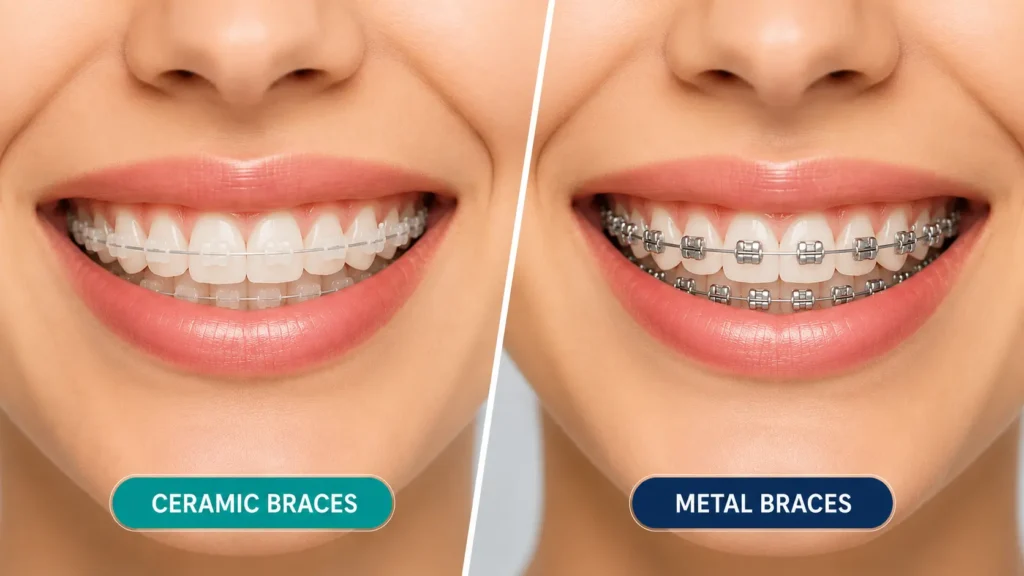
Appearance is the single biggest reason patients choose ceramic braces over metal ones. Tooth-coloured brackets blend into the natural tooth surface, making them significantly less noticeable in photos, video calls, and everyday conversation compared to silver metal brackets.
This matters most to:
- Working professionals who interact with clients or attend meetings regularly.
- Teenagers self-conscious about a “metal mouth” look during school years.
- Adults returning to orthodontic treatment later in life who prefer subtlety.
Metal braces, on the other hand, are unmistakably visible — though many younger patients now embrace this, even personalising them with coloured elastic ligatures around each bracket.
Cost Comparison in India
Orthodontic treatment cost in India varies widely by city, case complexity, treatment duration, and the clinic’s technology and experience. As a general guide for the Indian market:
- Metal braces typically fall at the lower end of fixed-braces pricing, making them the most accessible option for most patients.
- Ceramic braces usually cost noticeably more than metal braces — often 30–60% higher — due to the bracket material and, in some cases, more careful handling during placement and adjustment.
- Clear aligners, for comparison, generally sit above both options in overall cost.
These are general market ranges, not clinic-specific quotes. Your exact cost at City Smiles Dental Care will depend on the complexity of your bite, the number of adjustment visits required, and your treatment plan — all confirmed only after a clinical examination and X-rays.
Strength, Durability and Staining
Metal brackets are inherently stronger than ceramic ones. Stainless steel resists chipping and cracking under everyday biting forces, which is one reason many orthodontists still recommend metal braces for younger children or patients with heavier bite corrections.
Ceramic brackets have improved substantially over the years, but they remain somewhat more brittle than metal and can occasionally chip if a patient bites down on very hard foods. Ceramic brackets can also be more prone to picking up stains from tea, coffee, turmeric-based foods, or tobacco if oral hygiene isn’t maintained diligently — the surrounding elastic ligatures are especially susceptible to discolouration between adjustment visits.
Neither issue is common with proper care, but it’s a genuine trade-off worth knowing before choosing ceramic.
Treatment Duration and Effectiveness
Both ceramic and metal braces move teeth using the same biomechanical principle: controlled, gradual pressure via an archwire. In most straightforward-to-moderate cases, treatment duration is comparable between the two.
In some situations, ceramic braces may require marginally more careful adjustment or slightly longer overall treatment time, since the brackets can create marginally higher friction against the wire. For complex bite corrections, many dentists still lean toward metal braces for their strength and predictability. Your dentist will confirm expected duration based on your specific case, not the bracket type alone.
Comfort and Oral Hygiene During Treatment
Both options feel similar day-to-day. Any new brace — ceramic or metal — can cause mild soreness for the first few days after placement or adjustment, which typically settles within a week.
Caring for Ceramic Brackets
- Brush after every meal to prevent surface staining.
- Avoid excessive tea, coffee, turmeric-heavy curries, and tobacco where possible.
- Use a soft-bristled brush and non-abrasive fluoride toothpaste.
- Avoid biting directly into hard foods (apples, hard bread crusts) — cut them into smaller pieces instead.
Caring for Metal Brackets
- Standard brushing and flossing after meals is usually sufficient.
- Use interdental brushes or a water flosser to clean around wires and brackets.
- Avoid sticky or hard foods that can bend wires or dislodge brackets.
- Attend scheduled adjustment visits to keep treatment on track.
Who Should Choose Ceramic Braces?
Ceramic braces tend to suit patients who:
- Want a noticeably less visible treatment than traditional metal braces.
- Have mild-to-moderate alignment issues rather than a highly complex bite.
- Are committed to consistent oral hygiene to prevent staining.
- Are comfortable with a somewhat higher treatment cost for improved aesthetics.
Who Should Choose Metal Braces?
Metal braces tend to suit patients who:
- Are prioritising the most cost-effective fixed-braces option.
- Have a more complex bite correction requiring maximum bracket strength.
- Are younger children who may be less consistent with hygiene routines around ceramic brackets.
- Aren’t concerned about the visibility of the appliance during treatment.
A short consultation with your dentist — including a clinical exam and, where needed, X-rays — is the only reliable way to know which option fits your specific bite and goals.
Myths vs Facts About Ceramic Braces
Myth: Ceramic braces are the same as clear aligners. Fact: They are not. Ceramic braces are fixed brackets bonded to your teeth, while clear aligners are removable plastic trays. They’re often confused, but the treatment experience is quite different.
Myth: Ceramic braces always turn yellow. Fact: Staining is a risk only with inconsistent oral hygiene and heavy exposure to staining foods or tobacco — not an inevitable outcome.
Myth: Ceramic braces don’t work as well as metal braces. Fact: Both move teeth using the same mechanical principle. Effectiveness depends on the treatment plan and patient compliance, not the bracket material alone.
Myth: Ceramic braces are painful. Fact: Discomfort levels between ceramic and metal braces are generally similar — mild soreness after adjustments that fades within days.
How City Smiles Dental Care Helps You Decide
At City Smiles Dental Care in South Kolkata, orthodontic treatment planning always begins with a full clinical examination rather than a one-size-fits-all recommendation. Every patient’s bite, jaw alignment, lifestyle, and aesthetic priorities are different, and the ceramic-vs-metal decision is made collaboratively based on those specifics.
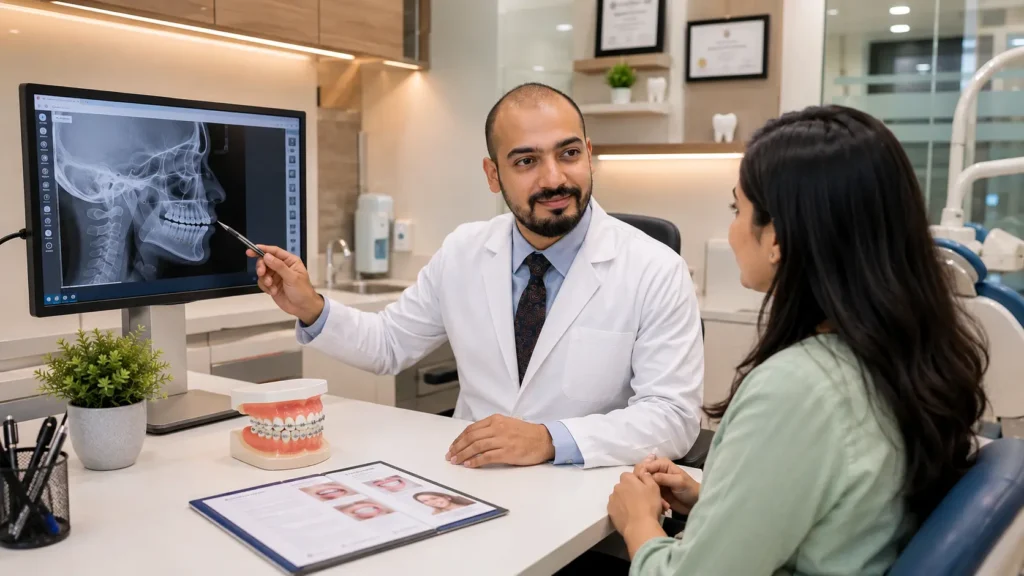
Patients from Garia, Baghajatin, Jadavpur, Tollygunge, Santoshpur, Dhakuria, and nearby South Kolkata neighbourhoods visit the clinic for orthodontic consultations where treatment options, expected duration, and cost estimates are explained clearly before any commitment is made. If you’re still weighing your options, an in-person consultation is the most reliable next step — X-rays and a hands-on bite assessment reveal details a comparison article simply cannot.
Frequently Asked Questions
1. Are ceramic braces more expensive than metal braces? Yes. Ceramic braces generally cost more than metal braces in India, primarily due to the bracket material, though exact pricing depends on your specific treatment plan.
2. Do ceramic braces stain easily? Ceramic brackets can pick up staining from tea, coffee, turmeric-based food, or tobacco if oral hygiene isn’t consistent, but staining is preventable with regular brushing and mindful eating habits.
3. Are ceramic braces as effective as metal braces? Yes, ceramic and metal braces use the same wire-and-bracket mechanism and are generally equally effective for most alignment and bite corrections, based on the treatment plan rather than bracket material.
4. Do ceramic braces take longer to straighten teeth? In most standard cases, treatment duration is similar; in some complex cases, ceramic braces may require marginally longer adjustment time due to slightly higher wire friction.
5. Can adults wear ceramic braces? Yes, ceramic braces are a popular choice among adults specifically because they are far less noticeable than metal braces in professional and social settings.
6. Are ceramic brackets more likely to break? Ceramic brackets are somewhat more brittle than stainless steel and can chip if you bite directly into very hard foods, though modern ceramic materials have improved significantly.
7. Is ceramic braces the same as clear aligners like Invisalign? No. Ceramic braces are fixed brackets bonded to the teeth, while clear aligners are removable trays — they are different treatment types with different day-to-day experiences.
8. Which is better for children: ceramic or metal braces? Metal braces are often recommended for children due to their strength and lower cost, though the right choice depends on the child’s bite complexity and ability to maintain consistent oral hygiene.
9. How do I know which type of braces is right for me? The right choice depends on your bite complexity, budget, and aesthetic priorities, which can only be confirmed through a clinical examination and consultation with a dentist.
10. Does City Smiles Dental Care offer both ceramic and metal braces? Yes, treatment options are discussed and personalised during your consultation based on a clinical assessment of your specific orthodontic needs.
Conclusion: Making the Right Choice for Your Smile
Choosing between ceramic braces vs metal braces ultimately comes down to how you weigh appearance, budget, and the complexity of your bite. Ceramic braces offer a more discreet, tooth-coloured option for patients prioritising aesthetics, while metal braces remain the strongest and most economical choice, particularly for more involved corrections or younger patients.
Neither option is universally “better” — the right one depends on your individual smile goals and clinical needs, which is why a personalised consultation matters more than a generic recommendation. If you’re in Garia, Baghajatin, Jadavpur, Tollygunge, Santoshpur, Dhakuria, or elsewhere in South Kolkata and ready to explore your options, the team at City Smiles Dental Care can walk you through a tailored treatment plan.
Ready to find out which braces are right for you? Book a consultation at City Smiles Dental Care or check patient reviews on our Google Business Profile before your visit.
1 Comment