


Healthy gums rarely make headlines — until they start to bleed. If you want to prevent gum disease and keep your natural teeth for life, the good news is that most of the work happens at home, with simple habits you can start today. Natural, everyday gum care is powerful, and for most people it is the difference between healthy gums and a slow, silent problem.
At City Smiles Dental Care in South Kolkata, we see this every week: patients from Garia, Jadavpur, Tollygunge and Baghajatin who could have avoided treatment entirely with a few small changes. This guide explains exactly what works, what is overhyped, and when it is time to let a dentist help.
Quick answer: You prevent gum disease naturally by cleaning plaque off the gumline every day — brushing twice daily, cleaning between your teeth once daily, eating a low-sugar diet, avoiding tobacco and paan, and getting a professional cleaning about every six months.
What Is Gum Disease, and Why Early Action Matters
Gum disease is an infection of the tissues that hold your teeth in place, caused mainly by plaque — a sticky film of bacteria that builds up along the gumline. In its early stage it is reversible. Left alone, it can gradually loosen and even cost you teeth. Catching it early is the whole game.
The two stages: gingivitis vs periodontitis
Understanding the difference helps you act at the right time.
| Stage | What’s happening | Reversible? |
| Gingivitis | Gums are inflamed, red, and bleed easily. Bone is not yet affected. | Yes — with good home care and a professional cleaning. |
| Periodontitis | Infection has spread below the gumline; gums pull away and supporting bone is lost. | No, but it can be controlled and stopped from worsening. |
The takeaway is simple: natural, consistent gum care is most effective at the gingivitis stage. Once it becomes periodontitis, home care alone cannot reverse it — professional treatment becomes essential.
Early warning signs you shouldn’t ignore
Your gums usually warn you before anything serious happens. Watch for:
- Gums that bleed when you brush or floss
- Red, swollen, or tender gums
- Persistent bad breath or a bad taste
- Gums that look like they are shrinking away from the teeth
- Teeth that feel slightly loose or sensitive near the gumline
Bleeding is the one most people wave away. In reality, healthy gums do not bleed during normal brushing. Treat bleeding as an early signal, not a normal event.
How to Prevent Gum Disease Naturally: Daily Habits That Work
To prevent gum disease naturally, remove plaque from the gumline every single day before it hardens. That means brushing twice daily with proper technique, cleaning between your teeth once a day, and keeping your tongue clean. These three habits, done consistently, prevent the large majority of gum problems.
Brushing the gumline, not just the teeth
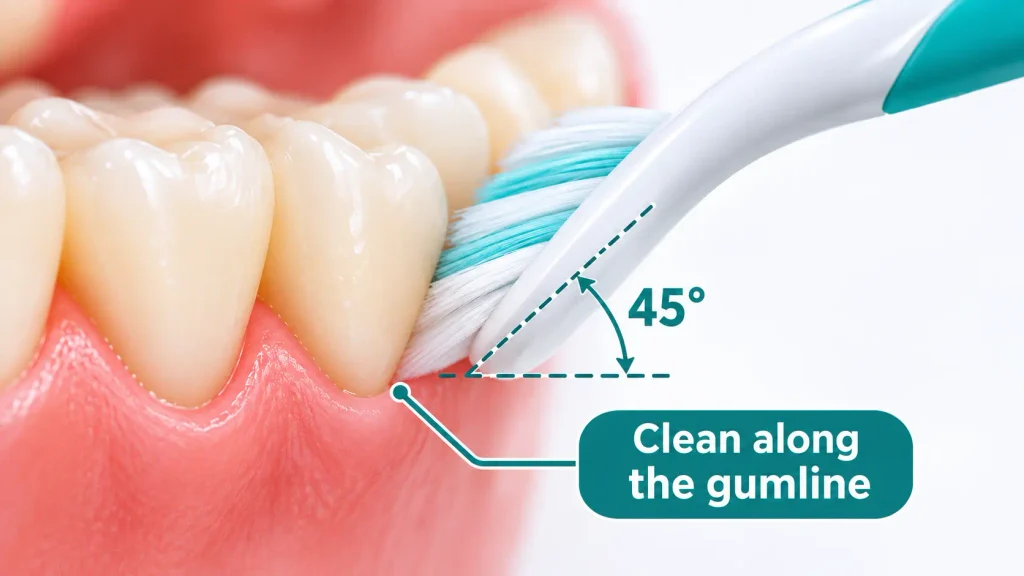
Most people brush their teeth but miss the exact spot where gum disease begins — the junction where tooth meets gum.
- Use a soft-bristled brush and angle it at about 45 degrees toward the gumline.
- Brush gently in small circles for two minutes, twice a day.
- Hard scrubbing does more harm than good; it wears enamel and pushes gums back.
- Replace your brush every three months, or sooner if the bristles splay.
A soft brush used gently beats a hard brush used aggressively, every time.
Cleaning between the teeth every day
A toothbrush cannot reach the surfaces between your teeth — and that is exactly where gum disease loves to start. Once a day, clean these gaps using dental floss or interdental brushes. If flossing feels awkward, interdental brushes are often easier and just as effective. A water flosser is a helpful addition, especially around bridges or braces, though it works best alongside brushing rather than replacing it.
Tongue cleaning and the bad-breath connection
The tongue harbours bacteria that contribute to both bad breath and gum irritation. A quick daily pass with a tongue cleaner removes that coating and freshens your mouth — a small habit with a noticeable payoff.
Natural Gum Care: What Actually Helps (and What’s Overhyped)
Several natural gum care methods genuinely support healthy gums — but it helps to separate real benefit from internet myth. The honest rule is this: natural remedies are supporters of good hygiene, not replacements for it, and never a substitute for a dentist when disease has set in.
Salt-water rinses, oil pulling, and herbal options
- Warm salt-water rinse: A time-tested way to soothe irritated gums and reduce temporary inflammation. Useful as a comfort measure — not a cure.
- Oil pulling (swishing coconut or sesame oil): May modestly reduce surface bacteria for some people. It does not remove tartar or treat gum disease, and should never replace brushing.
- Green tea and vitamin-C-rich foods: A nutrient-rich diet supports gum tissue and healing. Think of these as helping your gums stay resilient, not as medicine.
- Herbal/neem-based pastes: Fine as part of routine cleaning if you like them, but what matters most is the brushing technique, not the paste.
Myths vs Facts
| Myth | Fact |
| “If my gums bleed, I should brush them less.” | Bleeding usually means plaque is building up. Gentle, consistent cleaning helps gums heal. |
| “Natural remedies can cure gum disease at home.” | They can support healthy gums, but established gum disease needs professional care. |
| “Harder brushing means cleaner teeth.” | Hard brushing damages gums and enamel. Gentle and thorough wins. |
| “No pain means no problem.” | Gum disease is often painless until it is advanced. Silence is not safety. |
| “I only need a dentist when something hurts.” | Routine checks catch problems while they are still easy and inexpensive to fix. |
Food, Lifestyle, and Gum Health Tips for Kolkata Households
What you put in your mouth matters as much as how you clean it. A few lifestyle choices have an outsized impact on your gums — and in our region, one of them stands far above the rest.
Tobacco, paan and gutka — the biggest local risk
If you use tobacco in any form — cigarettes, gutka, khaini, or paan masala — it is, without exaggeration, the most damaging thing you can do to your gums. Tobacco weakens the gums’ defences, hides early warning signs by reducing bleeding, and makes gum disease progress faster and respond poorly to treatment. Cutting it out is the single most powerful natural step you can take for gum health. If you need support to quit, your dentist can guide you.
Diet, sugar and the mishti question
Bengal runs on tea and mishti, and you do not have to give either up. A few mindful habits go a long way:
- Enjoy sweets with a meal rather than as frequent standalone snacks — constant sugar exposure feeds plaque bacteria.
- Rinse with water after sweet or sticky foods when you cannot brush.
- Go easy on sugar in repeated cups of tea through the day.
- Eat crunchy vegetables and fruits, and stay hydrated to support healthy saliva, your mouth’s natural cleanser.
Managing conditions like diabetes also matters, as uncontrolled blood sugar is closely linked to gum disease. (If you notice a persistently dry mouth, that is worth mentioning to your dentist too, since reduced saliva raises gum risk.)
When Natural Gum Care Isn’t Enough: Professional Prevention
Even with perfect home care, plaque hardens into tartar that no toothbrush can remove — and only a professional cleaning (scaling) can take it off. That is why daily natural care and twice-yearly professional cleanings work as a team, not as alternatives.
| Home / Natural Care | Professional Care | |
| Removes soft plaque | Yes, daily | Yes |
| Removes hardened tartar | No | Yes (scaling) |
| Reverses early gingivitis | Often | Yes |
| Treats periodontitis | No | Yes |
| Spots problems early | Limited | Full examination |
| Best frequency | Every day | About every 6 months |
Think of it this way: your daily habits prevent most problems, and a routine dental visit catches the rest while they are still small. Whether treatment is ever needed, and what kind, always depends on an in-person clinical examination — no article can diagnose your gums.

Caring for Your Gums at City Smiles Dental Care, South Kolkata
At City Smiles Dental Care, gum health is built into every routine visit. Our team examines your gums, removes tartar with gentle professional cleaning, and gives you a personalised home-care plan suited to your mouth — not a generic checklist. We serve patients across South Kolkata, including Garia, Baghajatin, Jadavpur, Tollygunge, Santoshpur and Dhakuria, with a focus on calm, clear, and comfortable care.
Our philosophy is prevention first: we would far rather help you keep your gums healthy than treat a problem that could have been avoided. If you have noticed bleeding or sore gums, a simple check-up now can save you time, discomfort and expense later.
Frequently Asked Questions
Can gum disease be reversed naturally at home? Early gum disease (gingivitis) can often be reversed with consistent home care — gentle brushing along the gumline, daily cleaning between teeth, and a low-sugar diet. Advanced gum disease cannot be reversed at home and needs professional treatment.
How can I prevent gum disease naturally without expensive products? The essentials are inexpensive: a soft toothbrush, fluoride toothpaste, floss or interdental brushes, and warm salt-water rinses. Technique and consistency matter far more than costly products.
Do my gums bleeding mean I have gum disease? Bleeding gums are the most common early sign of gingivitis. It is usually reversible, but persistent bleeding should be checked by a dentist to rule out anything more serious.
Is salt water good for gums? Yes, a warm salt-water rinse can soothe irritated gums and reduce temporary inflammation. It is a helpful comfort measure, not a cure for gum disease.
Does oil pulling cure gum disease? No. Oil pulling may slightly reduce surface bacteria for some people, but it does not remove tartar or treat gum disease. Use it only as an extra, never in place of brushing.
How often should I get a professional dental cleaning? For most people, every six months. Your dentist may suggest more frequent cleanings if you are prone to tartar build-up, use tobacco, or have a history of gum problems.
Can gum disease cause tooth loss? Yes. Untreated gum disease can destroy the bone that supports your teeth, eventually making them loose. This is why early prevention and timely treatment matter so much.
Is bleeding gums during pregnancy normal? Hormonal changes can make gums more sensitive and prone to bleeding during pregnancy. Good home care and a dental check-up are recommended, as gum health is especially important at this time.
Which foods help keep gums healthy? Crunchy vegetables, vitamin-C-rich fruits, and plenty of water support healthy gums. Reducing frequent sugary snacks and sweet drinks helps most of all.
Conclusion
You do not need anything complicated to prevent gum disease — you need the right daily habits done consistently, a diet that supports your gums, no tobacco, and a professional cleaning about twice a year. Natural gum care is genuinely powerful at the early stage, and for most people it is enough to keep gums healthy for life. Where it falls short, timely professional care closes the gap.
If your gums bleed, feel sore, or look like they are receding, do not wait for pain to arrive. A short visit now is the simplest, kindest thing you can do for your smile.
Book Your Gum Check-Up at City Smiles Dental Care
Healthy gums are the foundation of a confident smile — and they are easiest to protect early.
👉 Book an appointment online with City Smiles Dental Care, South Kolkata. 📍 Find us and read patient reviews on our Google Business Profile.
Whether you are in Garia, Jadavpur, Tollygunge or anywhere nearby, our team is ready to help you keep your gums healthy, naturally and professionally. Book your check-up today.